Germany is reportedly set to deliver Patriot interceptor missiles from its own military stockpiles to Ukraine as part of a broader European initiative to strengthen air defenses against sustained Russian aerial attacks.
The move reflects growing concerns among Western allies about Ukraine’s capacity to protect critical infrastructure through the winter months ahead. German Defense Minister Boris Pistorius confirmed the contribution as part of a multinational effort to provide Ukraine with nearly 1,000 Patriot interceptor missiles, particularly advanced PAC-3 variants designed to counter ballistic threats.
What Happened
Germany joined a coalition of allied nations in committing air-defense resources to Ukraine. The contributing countries include Britain, Norway, the Netherlands, Poland, Spain, Sweden, Lithuania, and Estonia, each providing different types of military support ranging from advanced interceptor systems to drone technology and ammunition. The collective effort underscores a coordinated European response to Russia’s campaign of targeting Ukrainian cities and power infrastructure.
The Patriot interceptors represent one of the most capable elements of this assistance. These weapons are specifically engineered to address threats from Russian ballistic missiles and cruise missiles that have regularly damaged electrical grids, water systems, and civilian areas across Ukraine. The actual impact of the initiative will ultimately depend on how quickly missiles can be delivered, how many remain available for deployment, and how effectively they can be integrated into existing Ukrainian air-defense networks.
The Reaction
Ukraine has been actively seeking Western air-defense support for months, recognizing that its existing systems face constant strain under repeated Russian bombardment. The German announcement represents a tangible response to those requests, though officials have been cautious about overstating immediate effects. Delivery schedules and operational availability remain uncertain variables in determining whether the promised arsenal will substantially alter the military balance in the coming months.
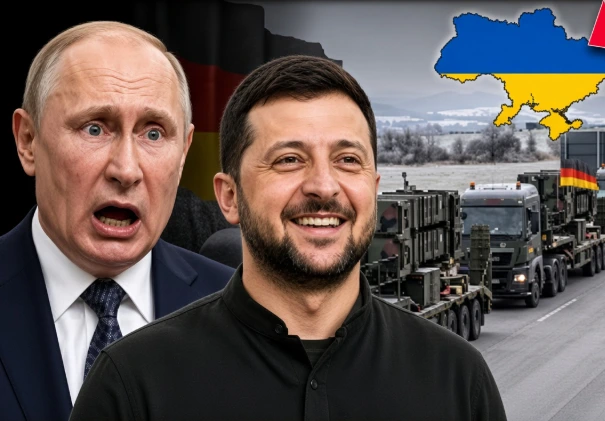
Russia has not publicly commented directly on the German decision, though Moscow has consistently warned Western nations against escalating military support to Ukraine. The addition of sophisticated interceptor missiles could complicate Russian planning for large-scale aerial operations, particularly those designed to overwhelm Ukrainian defenses through saturation attacks using multiple missile and drone waves.
What This Means
The challenge for Ukraine extends beyond simply acquiring more missiles. Its forces must maintain sufficient launcher systems, distribute interceptors across vulnerable locations, train personnel to operate complex equipment, and coordinate defensive responses across multiple regions. Even advanced air-defense systems can become saturated when facing the sustained volume of attacks Russia has conducted in recent months.
For the broader conflict, additional Patriot interceptors could improve Ukraine’s ability to protect critical infrastructure during winter, a period when damage to power systems poses acute risks to civilian populations. However, Patriot missiles remain expensive and production-limited commodities, while Russia continues manufacturing diverse types of aerial weapons. Ukraine will likely need to combine high-end interceptors with other air-defense layers, including systems designed to counter drones and lower-cost threats.
The winter ahead will test whether coordinated European assistance can sustain Ukraine’s defensive capabilities. Success will hinge not only on the quantity of weapons delivered but also on the speed of delivery, the ability to maintain and repair systems in an active conflict zone, and the capacity to distribute defenses across a vast territory facing multiple simultaneous threats.



