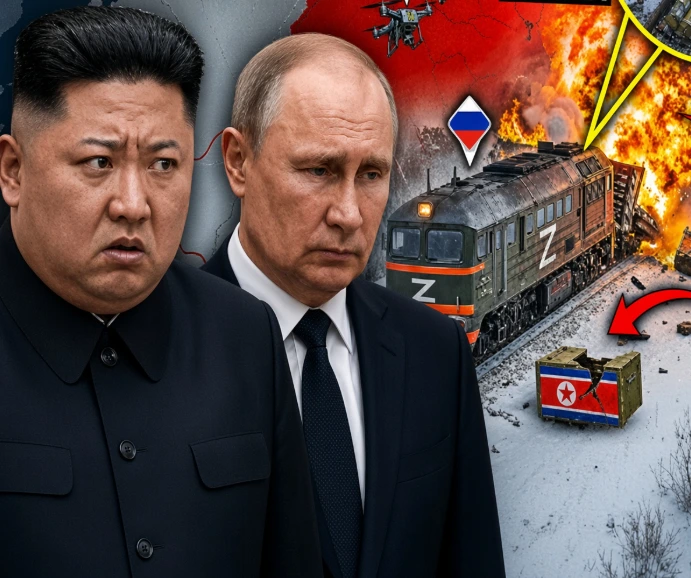
Ukraine may have targeted a Russian military supply train carrying North Korean ballistic missiles and ammunition in Siberia thousands of kilometers behind the front line, marking a potential turning point in how Kyiv strikes at Moscow’s distant logistics networks.
The reported sabotage of the train, if confirmed, would represent one of the war’s most geographically distant Ukrainian operations and expose a critical vulnerability in Russia’s expanding military relationship with Pyongyang. The alleged cargo included KN-23 and KN-24 ballistic missiles, weapons that have become central to Russian artillery and missile campaigns throughout the conflict.
What Happened
The operation targeted a military transport deep within Russian territory, an area previously considered beyond the reach of Ukrainian strike capabilities. The train reportedly carried not only ballistic systems but also large quantities of artillery ammunition that Russia depends on to sustain its sustained bombardment campaigns across eastern Ukraine.
Moscow has increasingly relied on North Korean military imports as its own production capacity faces strain from wartime demands and international sanctions. The weapons involved in the alleged shipment represent a significant portion of Russia’s incoming missile inventory, making the supply chain a critical lifeline for sustaining current operational tempo.
The Reaction
The deepening Russia-North Korea military partnership extends far beyond weapons transfers. Reports indicate that hundreds of suspected North Korean workers have been integrated into Russian companies, raising international concerns about sanctions evasion and providing Pyongyang with critical foreign currency reserves.
Intelligence assessments suggest that North Korean military personnel may also be positioned within Russian infrastructure near Voronezh, potentially advising on systems deployment or conducting technical training. Their proximity to Ukrainian territory could expose them to strikes as Kyiv continues expanding the range and precision of its long-range attack capabilities.
The bilateral arrangement represents a strategic exchange where Russia gains manpower and weapons stocks while North Korea obtains financial benefits, access to Russian military technology, and practical combat experience from one of the world’s major ongoing conflicts.
What This Means
If the Siberian train operation is verified, it would signal Ukraine’s evolving ability to strike at Russian logistics far removed from active combat zones. The strike would not only disrupt immediate weapons supplies but also demonstrate that Moscow’s distant rear areas, once thought secure, now face potential targeting.
The apparent vulnerability in Russia’s North Korea supply network could force Moscow to reconsider how it moves weapons over long distances and may prompt increased military protection of transport corridors. For Ukraine, the operation illustrates how expanding strike range transforms the calculus of modern warfare by allowing attacks on the opposing side’s strategic infrastructure regardless of distance from the battlefield.



