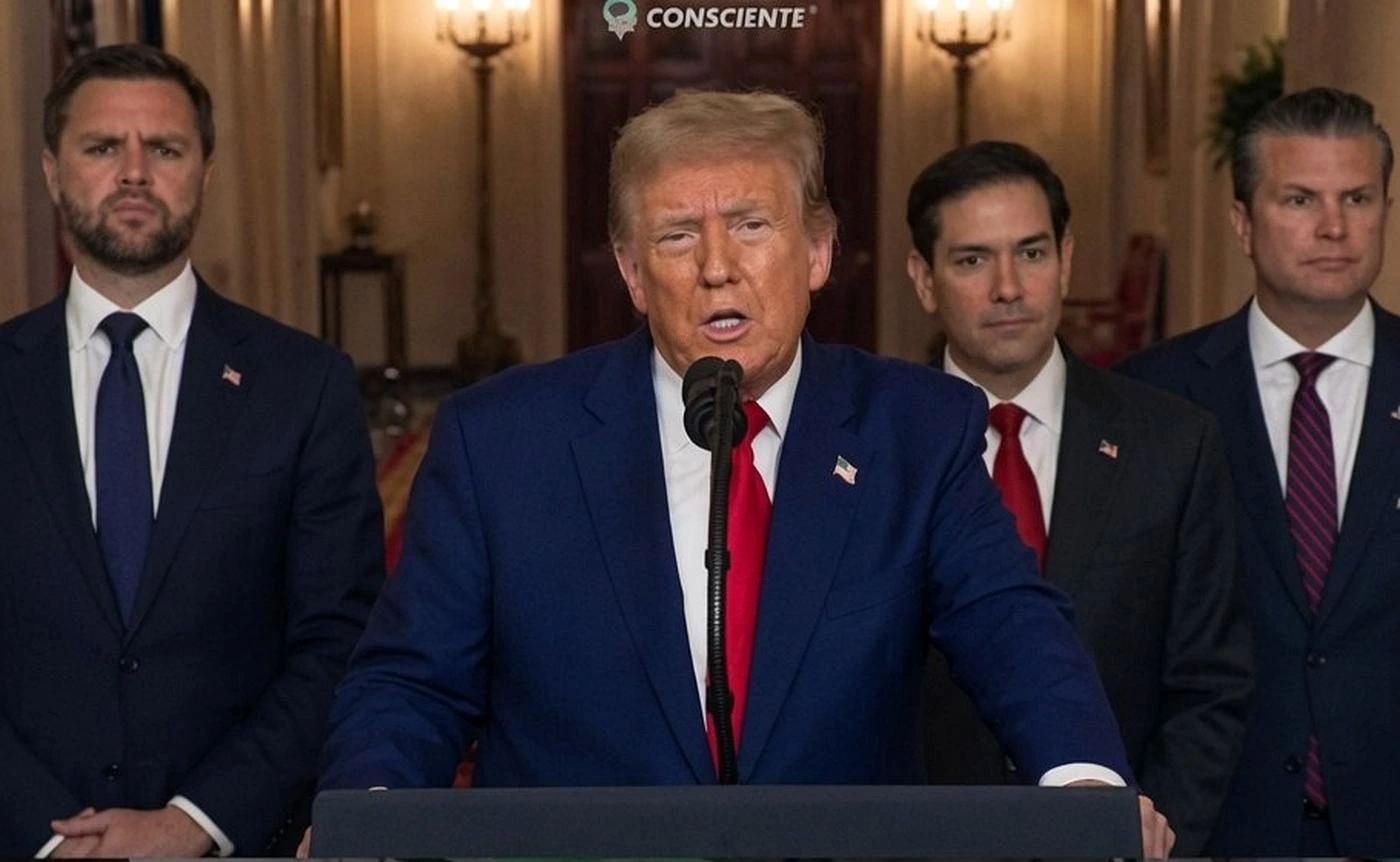
President Trump announced Thursday that he canceled planned U.S. military strikes against Iran after high-level negotiations with Iranian leadership, declaring the conflict between the two nations has ended.
Trump made the announcement during a telephone rally supporting Georgia Republican Lt. Governor Burt Jones. He said Iran had agreed to abandon its nuclear weapons program, which he framed as the core objective of renewed diplomatic efforts.
What Happened
“I don’t know if you heard, but we ended the war with Iran today,” Trump said during the rally. “They have agreed never to have a nuclear weapon, something that we insisted on; that was the whole purpose. That was 95 percent of it.”
Trump posted a statement on Truth Social detailing the decision, noting that discussions with Iran had reached the highest levels of Iranian leadership and been formally approved. He said the decision to cancel strikes came after all parties—including the United States, Israel, Saudi Arabia, the United Arab Emirates, Qatar, Turkey, Pakistan, Bahrain, Kuwait, Jordan, and Egypt—had approved the framework in both concept and detail.
The U.S. Navy blockade of the Strait of Hormuz will remain active until a formal agreement is finalized, Trump said. He indicated that signing ceremonies would take place in Switzerland, with the location and timing to be announced shortly. Reports suggested the agreement could be signed as soon as Sunday, ahead of the G7 summit scheduled in Europe.
The Reaction
Israeli Prime Minister Benjamin Netanyahu’s office confirmed Trump had briefed him on the developing agreement. Netanyahu welcomed Trump’s commitment to ensuring any final deal would restrict Iran’s nuclear capabilities and address other destabilizing activities by the Iranian government, though Israel clarified it was not a direct participant in negotiations.
Financial markets reacted positively to the diplomatic developments. European stocks rallied sharply Friday, with the pan-European Stoxx 600 rising 1.8% and most major indexes gaining roughly 2% in morning trading. Energy prices also shifted downward as traders assessed reduced risk of supply disruptions in the region.
U.S. crude oil futures for July delivery fell 1.61%, while August Brent crude futures dropped 1.75%. The Strait of Hormuz, through which roughly 25% of the world’s seaborne oil shipments and about 20% of global liquefied natural gas exports pass, remained a focal point given its strategic importance to global energy supplies.
What This Means
The announcement marked a reversal after Trump had warned Fox News correspondent Trey Yingst about imminent U.S. military action against Iran just hours before strikes were launched earlier in the week. Trump had posted on Truth Social that Iran’s military infrastructure faced severe consequences for failing to reach an agreement, describing Iran’s military capabilities as “a complete and total mess.”
The shift toward diplomacy signals a potential pivot in U.S.-Iran relations after years of tension. Whether negotiations can proceed to a formal signing and ratification remains uncertain, as multiple parties must finalize technical and political details over the coming days. The blockade’s continuation underscores that military pressure remains a lever in talks even as direct strikes have been suspended.



