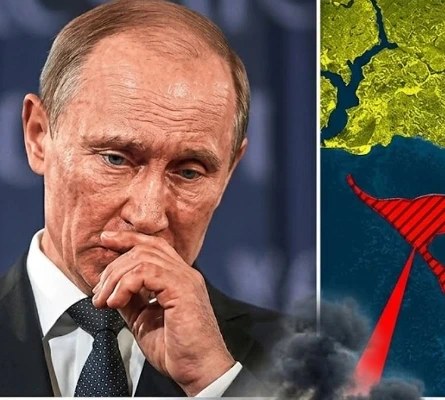
Ukrainian forces are intensifying military operations against approximately 2,500 Russian troops stationed on the Kinburn Spit, a strategically important peninsula extending into the Black Sea, as Kyiv targets supply routes and isolates the garrison through drone strikes and artillery bombardment.
The Kinburn Spit, stretching roughly 70 kilometers from mainland Ukraine into the Black Sea, has remained a contested position throughout the conflict. Control of the peninsula carries significance for Russian naval operations and logistics across the southern front.
What Happened
Ukrainian military sources report that strikes against Russian positions on Kinburn Spit have accelerated in recent weeks, targeting both personnel and infrastructure with sustained pressure. The campaign appears designed to disrupt the supply lines connecting the peninsula to Russian-held mainland territory, constraining the ability of troops to receive reinforcements and provisions.
Ukrainian forces have deployed drone strikes, artillery bombardment, and electronic warfare capabilities against the Russian garrison. Additionally, unmanned ground systems and robotic technologies have been integrated into operations to conduct reconnaissance, transport supplies, and coordinate attacks while limiting exposure to return fire—a tactical advantage in heavily contested territory.
The Reaction
Russian military officials have offered limited public commentary on the operational situation at Kinburn Spit, though Moscow has acknowledged ongoing Ukrainian pressure in the region. Russian state media has characterized Ukrainian operations as costly and difficult to sustain, though independent verification of casualty figures and tactical assessments remains difficult to confirm.
Ukrainian officials frame the campaign as part of a broader strategy to degrade Russian military capacity along the Black Sea. By isolating specific garrisons and disrupting logistics networks, Kyiv contends it can force Moscow to either commit additional forces at significant cost or gradually concede territory.
What This Means
The situation on Kinburn Spit reflects the evolving character of modern warfare, where precision strikes, supply-line interdiction, and unmanned systems have become central to military strategy. The peninsula’s geographic position makes it a focal point for both sides, as control directly affects broader operations in the Black Sea region and southern Ukraine.
Terminology describing Russian troops as “trapped” requires careful assessment. Military isolation differs fundamentally from complete encirclement, and Russian forces retain the capacity to defend their positions or execute withdrawal if ordered. However, sustained operational pressure and constrained resupply do substantially complicate Moscow’s strategic options on the peninsula.
The campaign demonstrates how modern conflict increasingly hinges on technological advantage and logistical sustainability rather than conventional positional engagement alone. The outcome at Kinburn Spit will likely depend on whether Ukraine can maintain operational intensity and coordination over the coming weeks and months.



