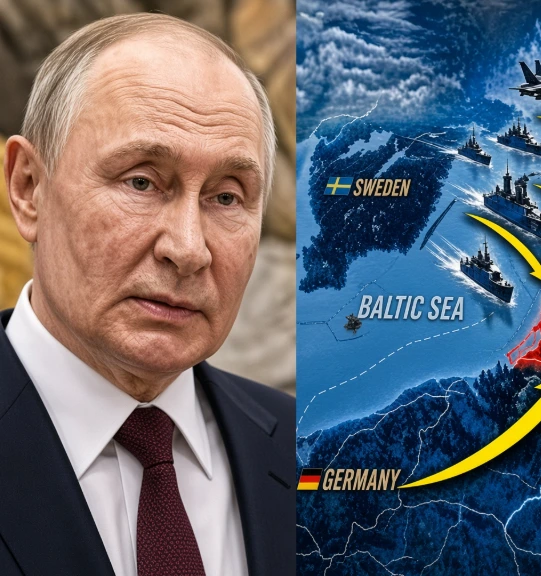
NATO is bolstering its military presence along its eastern border as tensions with Russia intensify, drawing scrutiny to Kaliningrad—the Russian exclave wedged between Poland and Lithuania that serves as a heavily militarized gateway to Baltic sea routes.
The alliance’s strategic repositioning reflects mounting concerns over regional stability following Russia’s invasion of Ukraine. Military officials say the reinforcements aim to deter aggression and reassure vulnerable member states in the Baltic region and Eastern Europe.
What Happened
NATO Supreme Allied Commander Europe General Alexus Grynkewich underscored the alliance’s operational readiness, signaling that member forces can respond swiftly to crisis scenarios. Poland is expanding its Eastern Shield defensive program, a multi-year initiative to fortify border defenses and military infrastructure along its eastern boundary. Germany, meanwhile, is establishing its Lithuania Brigade, a dedicated unit designed to strengthen NATO’s permanent presence in the Baltic.
These deployments are part of a broader reinforcement effort that includes rotational aircraft patrols, additional air defense systems, and U.S. Abrams tank contingents positioned across the region. The scale and coordination of these movements underscores NATO’s commitment to visible deterrence along Russia’s western borders.
Kaliningrad itself remains a focal point of strategic concern. The exclave, home to Russia’s Baltic Fleet headquarters and equipped with advanced missile systems and S-400 air-defense batteries, overlooks critical shipping lanes and NATO’s smallest member state, Lithuania. The surrounding terrain—particularly the Suwalki Corridor linking Poland and Lithuania—represents one of Europe’s most geopolitically sensitive chokepoints.
The Reaction
NATO’s Steadfast Noon exercise has added another layer to regional tensions, with the alliance’s nuclear deterrence training demonstrating its commitment to extended deterrence across all member states. The exercise involved deployments of strategic bombers and advanced fighter aircraft, signaling to adversaries that the alliance maintains combat-ready nuclear forces capable of rapid mobilization.
Allied officials have emphasized that these operations reflect routine deterrence posturing rather than preparation for imminent conflict. Spokespersons noted that the exercises are planned annually and designed to maintain crew proficiency and alliance interoperability.
Some analysts have pointed to indicators suggesting Russian force concentrations in Kaliningrad may have declined due to troop commitments in Ukraine. However, the precise status of Russian ground unit deployments and air-defense system positioning requires independent verification. Intelligence assessments remain fluid as the Ukraine conflict continues to shape military dispositions across Eastern Europe.
What This Means
NATO’s military buildup reflects heightened deterrence and contingency planning, not evidence that armed conflict is imminent or that Kaliningrad faces immediate encirclement. The alliance is positioning itself to respond rapidly to crises while maintaining strategic stability in one of Europe’s most volatile regions.
The developments carry implications for NATO’s long-term strategy in Eastern Europe. If Russian capabilities in the exclave have been degraded by Ukraine commitments, NATO’s relative military advantage in the region may have shifted. Conversely, persistent Russian military infrastructure and geographic proximity to Baltic capitals ensure that Kaliningrad will remain a focal point for alliance strategic planning in the years ahead.
The convergence of NATO reinforcements, nuclear exercises, and ongoing uncertainty over Russian intentions suggests that the alliance will maintain elevated readiness levels throughout the region for the foreseeable future. The pace and scope of NATO’s preparations indicate assessment of serious long-term risk, even as immediate crisis indicators remain uncertain.



