President Trump’s endorsed slate of Republican candidates secured decisive primary victories across Arizona on Tuesday, reinforcing his sway over the GOP and setting the stage for competitive November midterm races against Democratic incumbents.
The wins span statewide and congressional races, with Trump-backed nominees now positioned to challenge Democrats in several competitive Arizona districts. The results underscore the continued alignment between the former president’s political priorities and the direction of the state Republican Party.
What Happened
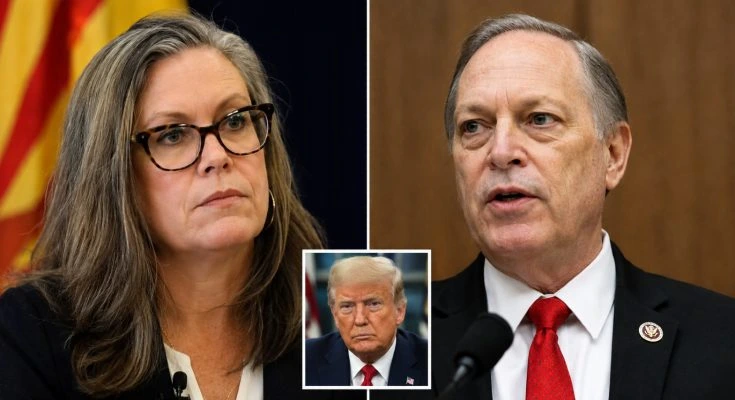
U.S. Rep. Andy Biggs won the Republican gubernatorial nomination by a substantial margin, defeating fellow Rep. David Schweikert and other challengers. Biggs, a longtime conservative known for his America First stance and previous chairmanship of the House Freedom Caucus, campaigned on tax cuts, border security, and law and order.
The general election will pit Biggs against Democratic Gov. Katie Hobbs, who advanced unopposed in her party’s primary. Hobbs narrowly defeated Kari Lake, a Trump-backed candidate, in the 2022 gubernatorial race.
In Arizona’s 1st Congressional District, former Arizona Cardinals kicker and sports analyst Jay Feely captured the Republican nomination with Trump’s backing. Feely will face Democrat Amish Shah in the competitive suburban district that includes portions of Scottsdale and northeastern Maricopa County.
Former Pinal County Sheriff Mark Lamb won the Republican primary in the 5th Congressional District, a deep-red seat Biggs is vacating. Lamb’s campaign emphasized border security, tax cuts, and support for law enforcement and the military.
In the 6th Congressional District, incumbent Rep. Juan Ciscomani advanced unopposed, securing the Republican nomination. Trump also backed other Arizona House Republicans including Reps. Eli Crane, Paul Gosar, and Abe Hamadeh, signaling broad party alignment around his agenda.
The Reaction
Trump issued endorsements across the state’s Republican races, highlighting his backing for both Biggs and Feely through social media posts before Biggs officially entered the gubernatorial race. “I hate to lose him from Congress, but he’ll be a great governor,” Trump said of Biggs at a Phoenix rally.
The primary victories reflected voter preference for candidates aligned with Trump’s policy priorities. Biggs and his fellow nominees pledged to coordinate with the Trump administration on border security, economic policy, and regulatory reform.
On the Democratic side, Gov. Hobbs secured her party’s nomination without opposition. Rep. Greg Stanton in the 4th Congressional District defeated a challenge from a progressive opponent, preserving the Democratic incumbent’s path to the general election.
What This Means
The Arizona primary results demonstrate Trump’s continued influence over Republican candidate selection and messaging in a key battleground state. His endorsement slate won consistently, indicating party unity around border security and economic themes that are expected to dominate the midterm campaign.
The outcomes set up several competitive general election races. Biggs’ nomination creates a high-stakes rematch in the governor’s race, where both candidates will contest control of the state’s executive branch roughly 100 days before Election Day. The congressional races in the 1st and other districts will test Republican strength in suburban areas that have shown volatility in recent cycles.
Arizona’s position as a Sun Belt battleground makes these races closely watched indicators of broader midterm momentum. The Republican primary results suggest party cohesion behind Trump-aligned candidates, though the general election contests will determine whether that alignment translates into November victories.



