Ohio Republicans are heading into the final weeks of the 2026 midterm elections with early voting data showing a significant advantage, as new projections released in late October reveal Republicans leading among voters with established partisan classifications as GOP Sen. Jon Husted seeks to maintain his seat against Democrat Sherrod Brown.
The analysis, which examined over 800,000 early and mail-in ballots cast in the state, suggests Republicans have built what could be a consequential lead before Election Day. The findings come as GOP-aligned groups deploy hundreds of millions of dollars nationwide and key Ohio constituencies express support for Republican candidates.
What Happened
Election analyst E DataGuy released projections based on 838,018 early and absentee ballots cast in Ohio, identifying 469,219 as Republican and 360,979 as Democratic, with 4,092 classified separately. The data produced a projected Republican advantage of 108,240 ballots among voters with confirmed partisan affiliations.
The analyst’s modeling suggested Republicans could capture between 52% and 58% of the eventual statewide vote, compared with a projected 41% to 47% for Democrats, with estimated overall turnout near 55%. These figures represent modeled partisan classifications rather than confirmed votes for specific candidates, meaning final outcomes remain subject to voter behavior on Election Day and in remaining voting periods.
Husted, appointed to the Senate seat after Vice President JD Vance’s departure, faces Brown, the former three-term Democratic senator, in one of the nation’s most closely watched Senate races. The early voting data represents one of several indicators Republicans point to as evidence of strength heading into November.
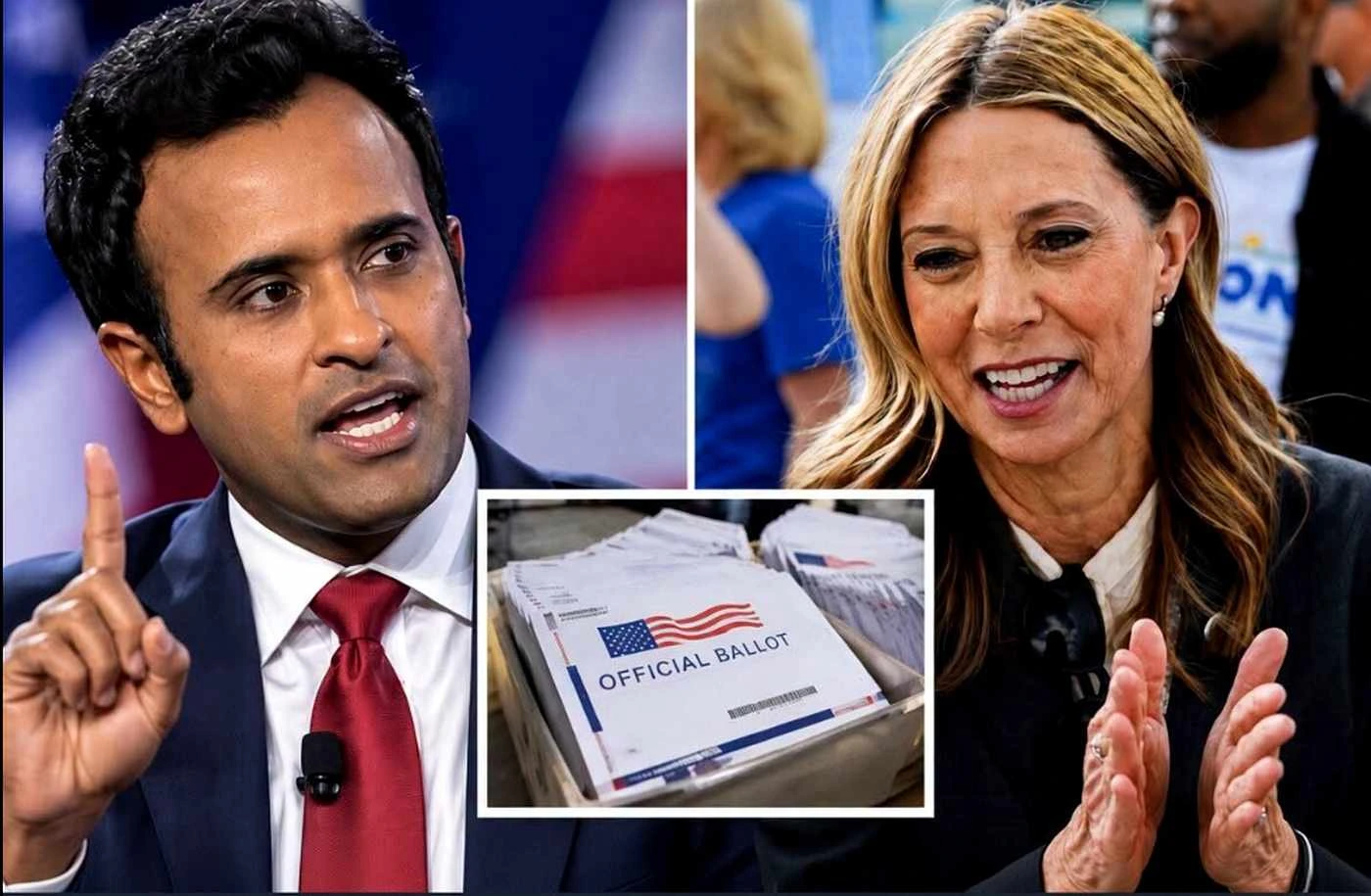
The Reaction
The financial landscape underscores Republican organizational advantages. Trump-aligned super PAC MAGA Inc. entered September with nearly $416 million in available funds, according to federal campaign finance disclosures. The organization subsequently transferred $200 million to No Going Back PAC and $25 million to Safety and Affordability PAC, fueling Republican advertising efforts nationwide.
Trump’s political operation has deployed nearly $277 million since September and indicated it intends to spend more than $400 million before Election Day. Even after those transfers, MAGA Inc. retained more than $164 million as of mid-October, leaving substantial resources for the campaign’s final weeks. Contributors to Republican-aligned efforts include billionaire Elon Musk, Diane Hendricks, Stephen Schwarzman and Steve Wynn.
Republican national committees finished September with approximately $187 million in available cash, and the National Republican Congressional Committee alone raised $50 million during the third quarter. Ohio’s largest law enforcement union, the Fraternal Order of Police of Ohio, announced endorsements of Husted and Republican gubernatorial candidate Vivek Ramaswamy in July, citing their commitment to public safety and law enforcement.
What This Means
The convergence of early voting projections, financial resources, and institutional endorsements suggests Republicans approach the final weeks of the Ohio campaign with multiple potential advantages. However, early voting data represents a snapshot rather than a guarantee, and the modeled partisan classifications do not confirm how specific voters will ultimately cast their ballots.
Observers of the 2026 midterms will watch whether Ohio’s early voting patterns hold and whether Republican financial spending translates into voter persuasion or turnout gains. The state’s shift toward Republicans in recent presidential elections provides additional context for GOP confidence, though midterm dynamics often differ from presidential contests. The actual test of these advantages arrives November 3, when Ohio voters determine the outcome of contests that will shape the balance of power in Washington.



