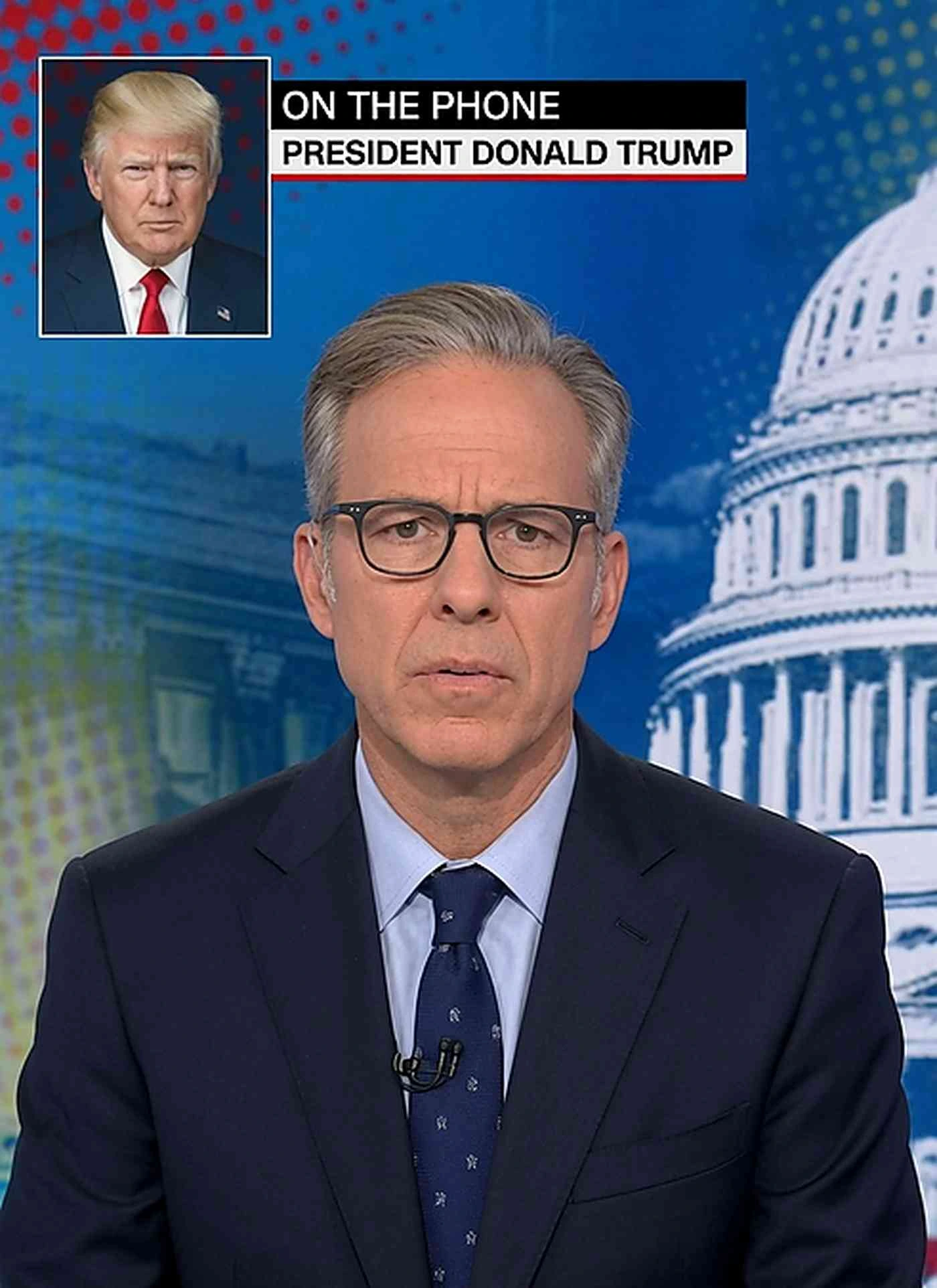
During a live interview on CNN’s airwaves Sunday, President Trump told anchor Jake Tapper that his administration is actively working to steer the direction of the network, a statement that immediately raised questions about media independence and press freedom in the United States.
Trump did not qualify or soften the remark. “We’re trying to have CNN go on a normal path, and we’ll do that,” he said during the call-in segment. The statement marked an unusual moment: a sitting president openly discussing efforts to influence coverage at a major American news outlet on that outlet’s own platform.
What Happened
Trump phoned into CNN’s programming Sunday to discuss Senator Lindsey Graham’s recent death. The president limited his participation to that single topic and declined to address other pending questions, including recent U.S. military strikes on Iran. Tapper did not challenge these constraints, accepting the boundary without objection and closing the segment by inviting Trump to return.
“Well, I’m on a normal path right here, sir, and I appreciate your time. And thank you for calling in,” Tapper said in response to Trump’s remark about steering the network’s direction.
The Reaction
Social media users quickly flagged the exchange as troubling. Online commentators described the interaction as an “enabler” dynamic and questioned whether Tapper had fulfilled journalism’s core function. Some observers drew broader concerns, noting that a president should not hold the power to “direct the ‘path’ any news organization follows.” One commenter suggested that if CNN were accepting such direction, the network should “close their doors, or officially merge with Fox.”
The statement also arrived as the Justice Department cleared Paramount Skydance’s acquisition of Warner Bros. Discovery, CNN’s parent company. That regulatory approval depends partly on maintaining favorable standing with the current administration, adding context to Trump’s reference to putting the network on a “normal path.”
What This Means
The moment underscores an ongoing tension between political power and editorial independence. When a president exerts leverage over a media company’s owners while simultaneously discussing the network’s direction, journalists face questions about their ability to report without influence. Just months earlier, Tapper himself stated on air that CNN’s job “is not to try and please the president or only report the statements he likes.” Sunday’s exchange highlighted the gap between that principle and its practice.
The incident reflects broader concerns about media ownership concentration and regulatory decisions that may factor politics into business approvals. How major newsrooms navigate interviews with sitting presidents—and whether they set editorial boundaries independently—will likely remain central to debates over press freedom in coming months.