A Utah judge on Wednesday rejected a defense request to display all exhibits during a preliminary hearing in connection with a fatal shooting on a college campus, as prosecutors presented forensic evidence to establish probable cause against the defendant.
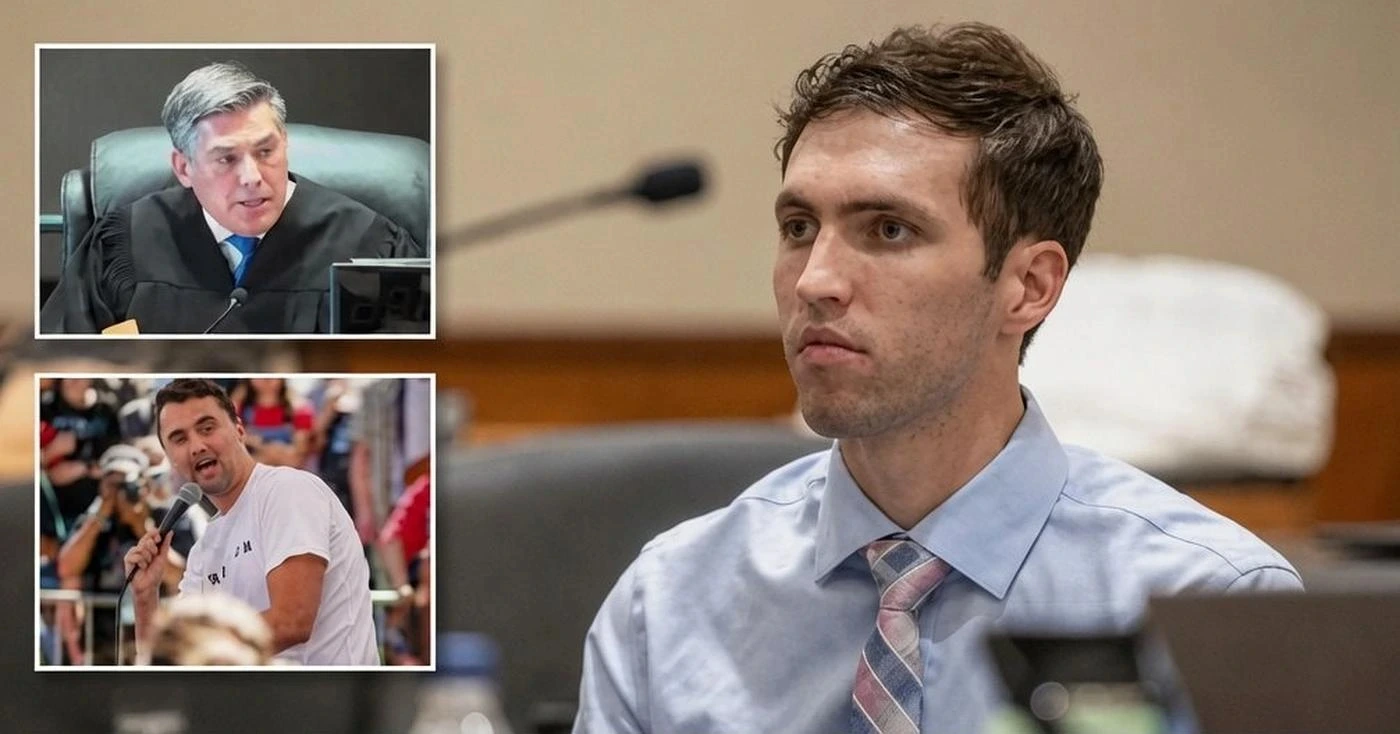
Judge Tony Graf issued the ruling during the second day of proceedings for Tyler Robinson, who faces charges in the death of Charlie Kirk. The decision came as investigators testified about DNA recovered from items found at the scene.
What Happened
Jennifer Faumina, a sergeant with the Utah Department of Public Safety assigned to the State Bureau of Investigation, testified Wednesday about DNA analysis performed on items collected during the investigation. Her findings identified male DNA belonging to Lance Twiggs, Robinson’s romantic partner, on two key pieces of evidence recovered from the scene.
“Male DNA was obtained from item 7-1. Item 7-1 was interpreted as originating from two individuals, one of whom is Twiggs,” Faumina said. She described a second item similarly marked as item 8-1, which was also interpreted as containing DNA from two individuals, including Twiggs.
The two items in question were a screwdriver found on the rooftop of the Losee Center for Student Success and a towel wrapped around a rifle that authorities say was used in the shooting. FBI forensic examiner Amanda Bakker previously testified that Robinson’s DNA profile matched approximately 95 percent of genetic material recovered from the items, while Twiggs’ DNA aligned with roughly 5 percent.
The Reaction
The defense team sought to compel the court to publicly display all exhibits as evidence was presented, arguing that full transparency would serve the interests of justice. Judge Graf denied the motion, maintaining restrictions on what materials could be shown outside the courtroom during the preliminary phase.
This denial aligns with the judge’s earlier decisions managing electronic and media access to the proceedings. The defense has challenged multiple pretrial rulings by Graf, including determinations about camera access and which evidence could be introduced during the preliminary hearing stage.
The Utah Supreme Court declined last week to review two of the defense’s appeals of Graf’s earlier decisions. The state’s highest court determined that the defense had not satisfied the legal threshold required for appellate intervention and rejected a motion to pause proceedings.
What This Means
The preliminary hearing is advancing with limited public disclosure of certain exhibits, even as prosecutors present forensic evidence to establish probable cause. Graf retains discretion to decide case-by-case whether electronic media coverage will be permitted, and he has rejected most defense requests seeking stricter camera restrictions.
Robinson remains charged with Kirk’s death. The prosecution must demonstrate sufficient evidence during this phase to proceed to trial. The case has generated public interest in debates surrounding judicial transparency, the balance between defendant privacy and public access, and the scope of courtroom camera restrictions in high-profile criminal proceedings.



