Vice President JD Vance told an interviewer this week that he and President Trump have explored parliamentary procedures to advance the SAVE America Act in the Senate, though he acknowledged the effort would likely fail due to Republican defections.
The disclosure marks a rare public accounting of internal White House discussions about using Senate procedural authority to overcome legislative gridlock. Vance’s comments, released in an interview Tuesday with Vince Coglianese, detail months of planning around mechanisms that would fundamentally reshape how Senate business operates.
What Happened
Vance described conversations between himself and Trump about taking control of Senate floor proceedings, including a scenario in which he would assume the chair and remove the Senate parliamentarian. “We have wargamed this to every detail,” Vance said, explaining that the discussions extended over months as the administration sought pathways forward on voting legislation.
The SAVE America Act would require proof of citizenship before voter registration and restrict mail-in balloting with limited exceptions for illness, disability, military service, and travel. Supporters characterize the measure as necessary to protect election integrity, while Democrats and some Republicans have blocked its advancement in the Senate.
Vance asserted that he possesses the constitutional authority to remove the parliamentarian, a position that would represent an extraordinary invocation of vice presidential power. If 50 Republican senators remained aligned with him, Vance argued, the maneuver could proceed alongside an elimination of the filibuster to advance the bill and other legislative priorities.
The Reaction
Yet Vance himself concluded the strategy would not succeed. He predicted that four, five, or as many as ten Republican senators would side with Democrats to block a newly installed chair, making the procedural gambit futile before any floor vote on the underlying legislation.
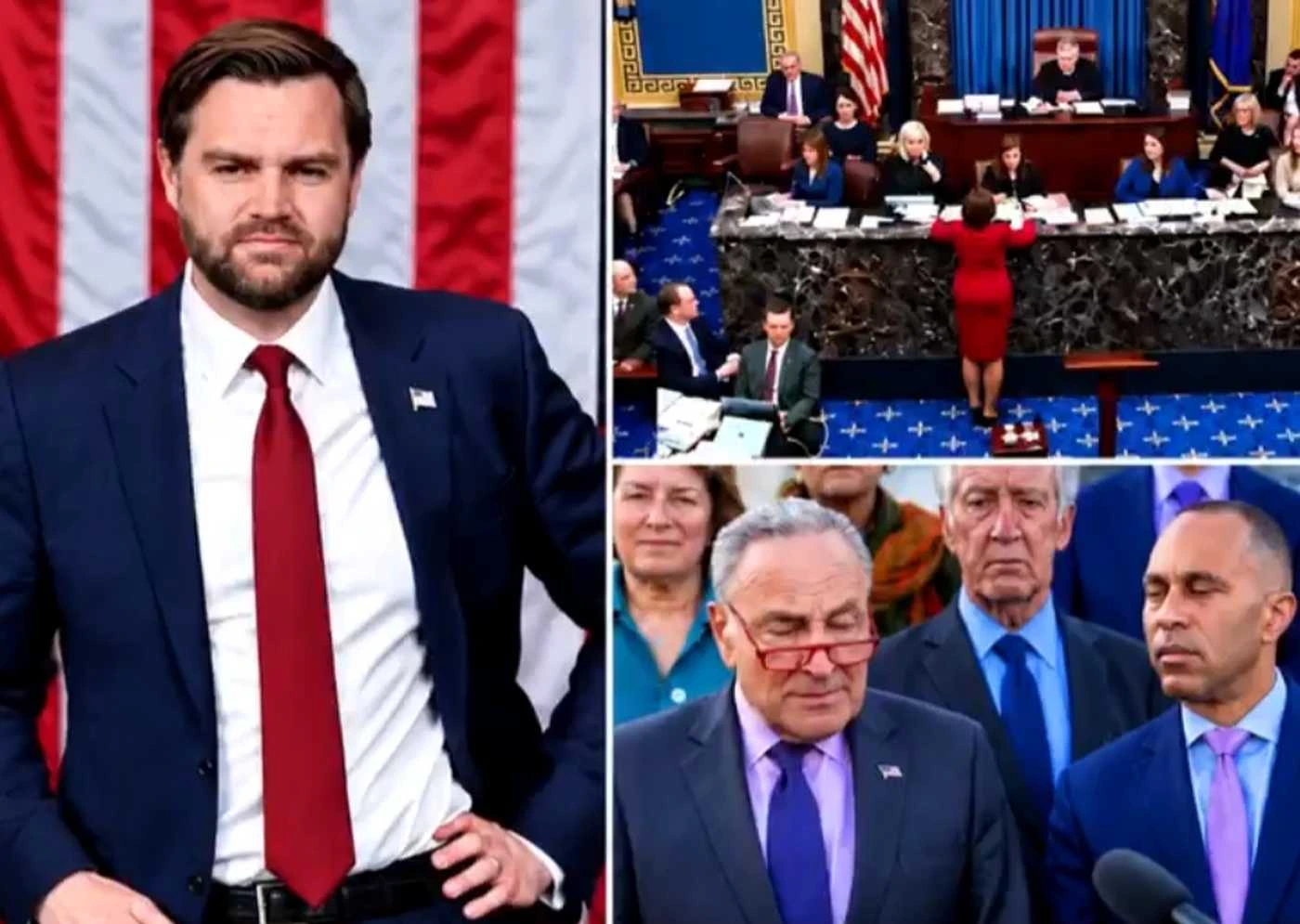
Vance specifically named Mitch McConnell, John Cornyn, Thom Tillis, and Lisa Murkowski as Republicans he believes would vote with Democrats to stop the maneuver. His criticism extended beyond those individuals, referring to other members of his party as “mediocre Republican senators” unwilling to prioritize the legislation.
The comments reflected an unusually direct confrontation between the Trump administration and Senate Republicans over both election policy and the chamber’s procedural rules. Senator Ron Johnson of Wisconsin previously offered a similar assessment of the stalemate, attributing the bill’s blockage to Democratic opposition while noting Republicans lack the votes to overcome a filibuster.
Utah Senator Mike Lee has separately highlighted Senate scheduling practices as a lost opportunity, pointing to repeated promises from colleagues to address the measure when floor time became available. Lee noted that other priorities, including Department of Homeland Security funding debates, have repeatedly displaced consideration of the election bill.
What This Means
The disclosure underscores the narrow mathematics constraining Republican legislative ambitions in an evenly divided Senate. Vance’s acknowledgment that internal planning found no viable shortcut to passage suggests the administration has exhausted procedural alternatives and must now focus on persuading individual senators.
Whether the SAVE America Act advances will depend on gaining additional Republican support or changing the dynamics that have stalled the measure since its introduction. The vice president’s public comments, while revealing the depth of internal deliberation on unconventional tactics, appear designed to redirect attention toward Senate votes rather than parliamentary mechanics—and to signal that pressure on individual Republicans may intensify as the administration explores its limited options.



