Louisiana Senator John Neely Kennedy convened an unscheduled press conference in Washington, D.C., on Tuesday afternoon to deliver a personal reflection that moved attendees beyond the scope of routine political messaging.
The senator’s appearance marked a departure from standard Capitol Hill proceedings, drawing journalists and observers curious about the unexpected nature of the gathering. Kennedy had offered minimal advance notice, allowing only a brief window for media to assemble.
What Happened
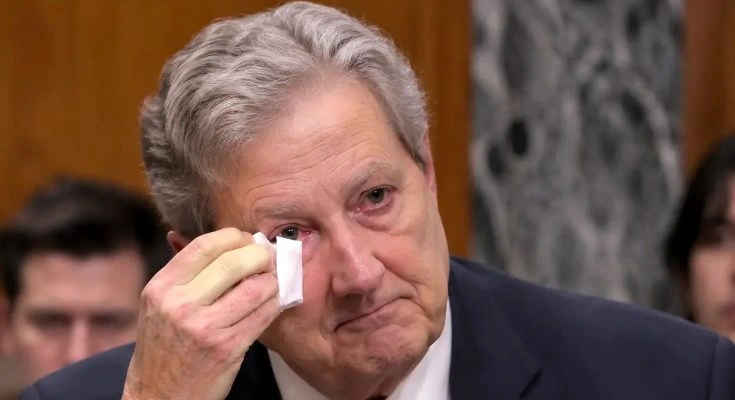
Kennedy approached the podium at the downtown Washington venue and paused for several moments before beginning to speak. His remarks focused on a personal matter that had weighed on him, one he said he felt compelled to address directly rather than through typical channels.
The senator spoke deliberately, choosing his words with apparent care. His tone differed noticeably from his customary public demeanor, signaling to those present that the occasion held genuine significance for him. “There are moments when what needs to be said requires more than a statement,” Kennedy said, maintaining steady eye contact with the assembled press.
Throughout his remarks, Kennedy referenced personal experiences that had shaped his perspective on matters he would not detail further in the immediate moment. He acknowledged the vulnerability required to step before cameras without a prepared script or political framework.
The Reaction
Observers in the room noted the apparent sincerity of the senator’s delivery. Several journalists indicated afterward that the setting and tone had created an unusual dynamic compared to typical political press events. The brevity of the announcement—Kennedy took no questions—heightened curiosity about his underlying purpose.
Capitol Hill analysts and political observers began analyzing what the press conference might signal about Kennedy’s future priorities or messaging direction. The personal nature of his remarks suggested he viewed the moment as distinct from routine legislative or campaign communication.
What This Means
Kennedy’s willingness to address the media in such a direct, unscripted manner raised questions about how senior lawmakers balance public and private matters in an era of constant political scrutiny. His decision to speak without advance spin or prepared talking points reflected a choice to prioritize authenticity over message control.
The incident demonstrates how even routine political communications can acquire significance when delivered with genuine emotional stakes. As Congress continues its work on pending legislation and committee hearings, the senator’s unusual press conference may prompt broader conversation about the role of personal reflection in public life.



