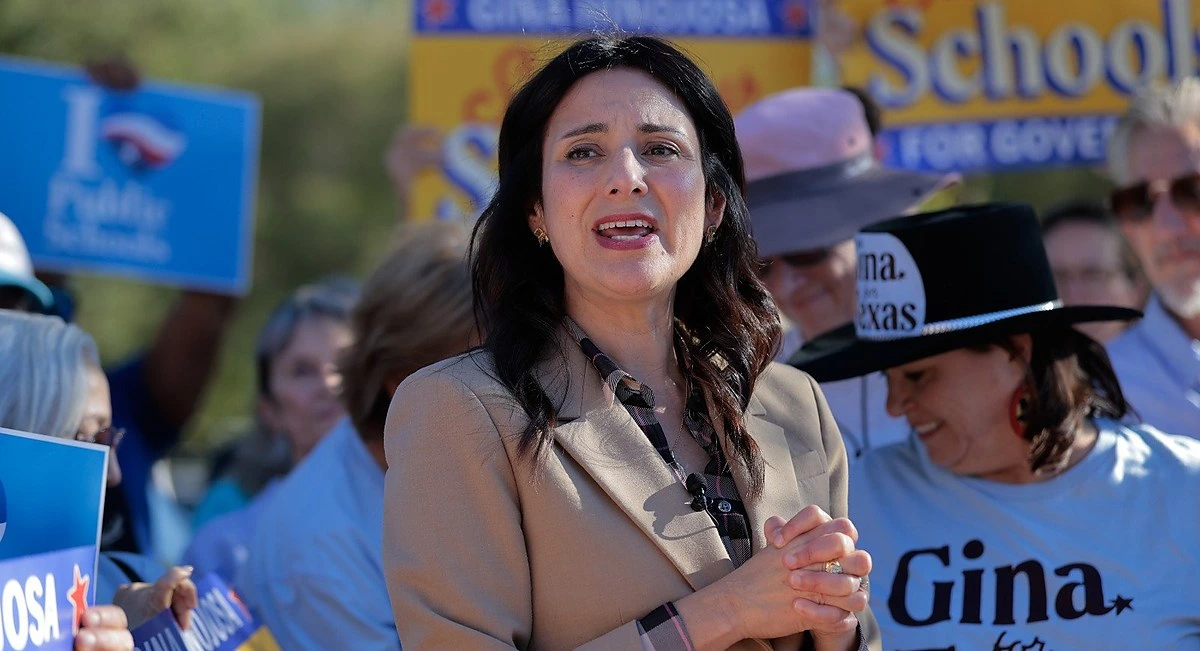
Texas Governor-elect Gina Hinojosa, a Democratic state representative from Austin, defeated three-term Republican Greg Abbott on Tuesday but has not committed to continuing his signature Operation Lone Star border security program that has cost the state over $11 billion since 2021.
Hinojosa’s victory marks the return of a Democratic governor to Texas for the first time since Ann Richards left office in 1995. The election immediately raises questions about the trajectory of one of the nation’s most expansive state-led immigration enforcement operations, which has deployed more than 10,000 National Guard members and constructed sections of border barriers along Texas’s 1,250-mile international boundary with Mexico.
The incoming governor’s statements on border security have painted a complex picture of her priorities, distinguishing between what she characterizes as effective public safety spending and what she calls wasteful political theater.
What Happened
Hinojosa has repeatedly criticized Abbott’s handling of Operation Lone Star and voted against its initial funding. However, rather than pledging outright elimination of the program, she has left open the possibility that portions could continue under different parameters. “As governor, I’ll put in the work to secure the border, not waste working Texans’ money on political theater,” Hinojosa said during the campaign.
When pressed during recent interviews to identify specific border security spending she would eliminate, Hinojosa declined to provide detailed targets. Instead, she highlighted what she views as fiscal inefficiency in the current approach, arguing that billions have been spent prosecuting migrants for trespassing while simultaneously financing their legal representation through state resources.
Hinojosa has drawn specific lines on certain border initiatives. She has opposed additional border wall construction in the Big Bend region, contending that barriers are not necessary in that terrain. She has also expressed sharp criticism of Immigration and Customs Enforcement and Texas’s participation in certain federal immigration operations.
During earlier public statements, Hinojosa accused Abbott of converting Texas into a “staging ground” for federal enforcement operations that she argued harmed families while benefiting political donors. Her commentary reflected broader Democratic criticism of state-federal immigration cooperation during the Biden administration.
The Reaction
Hinojosa’s election positions suggest a potential realignment in Texas’s relationship with federal immigration enforcement, particularly significant given the state’s geographic position as the nation’s largest border state. Her victory came despite Abbott’s substantial financial advantage in campaign spending, with Hinojosa instead focusing her message on affordability, public education, and corporate influence in state government.
The incoming governor has acknowledged a more nuanced immigration position than her criticism of Abbott might initially suggest. She has praised Trump administration policies for reducing illegal border crossings, noting that such reductions make certain enforcement decisions less urgent. Earlier, she had pointed to cooperation with Mexico and federal authorities as more effective than some of Abbott’s state-directed enforcement efforts, citing a previous episode in which she contacted Biden administration officials regarding negotiations with Mexican authorities over an international bridge closure.
Republican control of the Texas Senate may constrain Hinojosa’s legislative agenda on border matters, potentially forcing negotiations over future Operation Lone Star appropriations and limiting her ability to unilaterally reshape state immigration policy.
What This Means
The future of Operation Lone Star will likely depend on budget negotiations between Hinojosa and the Republican-controlled legislature, as well as executive decisions she makes following her January inauguration. Her measured language on border security spending—emphasizing efficiency and public safety rather than categorical opposition—suggests the program may continue in some form, albeit with potential restructuring or redirection of resources.
The changing conditions at the southern border under Trump administration policies provide additional context for Hinojosa’s decision-making. Reduced illegal crossings alter the enforcement landscape she will inherit, potentially offering flexibility in determining which aspects of Operation Lone Star remain necessary or cost-effective. Her approach will ultimately test whether Democratic governance in Texas can recalibrate border security strategy while navigating both Republican legislative opposition and evolving conditions at the southern boundary.



