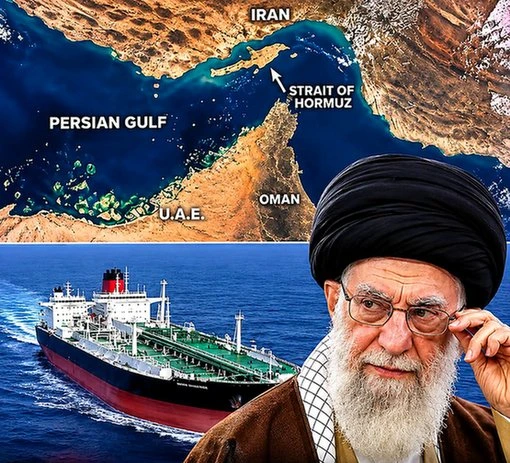
The U.S. military struck three Iranian crude oil tankers operated by the Islamic Revolutionary Guard Corps after Iranian forces launched ballistic missiles at American naval vessels in the Persian Gulf on Saturday.
U.S. Central Command confirmed that a carrier strike group and guided-missile destroyer operating in regional waters successfully evaded the Iranian attack without any American personnel injured. In response, CENTCOM disabled or destroyed the three tanker vessels, which the command described as part of a revenue-generating network supporting the IRGC and its regional operations.
What Happened
Iranian ballistic missiles targeted two U.S. Navy warships in what CENTCOM characterized as an unprovoked attack. The vessels evaded the incoming fire, and no damage or casualties resulted from the Iranian strikes.
Following the missile launch, American forces conducted targeted strikes against the IRGC tanker fleet. CENTCOM said it permanently disabled the M/T Downy near Kharg Island and the M/T Stark 1 in waters near Jask. A third vessel, the M/T Kylo, was completely destroyed in the Gulf of Oman after its crew evacuated, according to military statements. The command released video documentation showing explosions across multiple critical sections of each vessel.
U.S. military officials said the strikes were designed to impose a direct economic cost on Tehran. CENTCOM commander Admiral Brad Cooper stated: “If you shoot at two of our ships, we will impose an even higher economic cost — taking out three of yours. We will not hesitate to defend American forces, and if necessary, destroy Iran’s limited and exposed oil fleet.”
The Reaction
The exchange represents another iteration in escalating military confrontations between Washington and Tehran in recent days. U.S. officials told news outlets that targeting the tankers would strain Iran’s oil-dependent economy, as the IRGC lacks easy access to replacement vessels of similar capacity.
Egyptian Foreign Minister Badr Abdelatty called for renewed negotiations Saturday, urging both nations to return to dialogue and reduce tensions in the Middle East. The appeal came during a conversation with his Omani counterpart and reflected regional concerns about further military exchanges.
Meanwhile, U.S. diplomatic posts across the Middle East and beyond issued heightened security warnings. The State Department and multiple embassies cautioned Americans to remain alert, citing the possibility of Iranian or proxy-aligned retaliation against civilian and government targets. The U.S. Embassy in Bahrain specifically warned that Iran has previously targeted hotels and civilian infrastructure in the region and could continue such operations as current tensions persist.
What This Means
The strikes and Iranian response have triggered broader security concerns throughout the Middle East and globally. Warnings from State Department officials indicate that U.S. interests overseas—including businesses, educational institutions, and diplomatic facilities outside the region—could face targeting.
The succession of military actions underscores the fragility of stability in Persian Gulf waters, where American naval operations and Iranian military activities frequently intersect. As both sides demonstrate willingness to strike back quickly, officials from neighboring countries have intensified calls for diplomatic channels to prevent the cycle from continuing.



