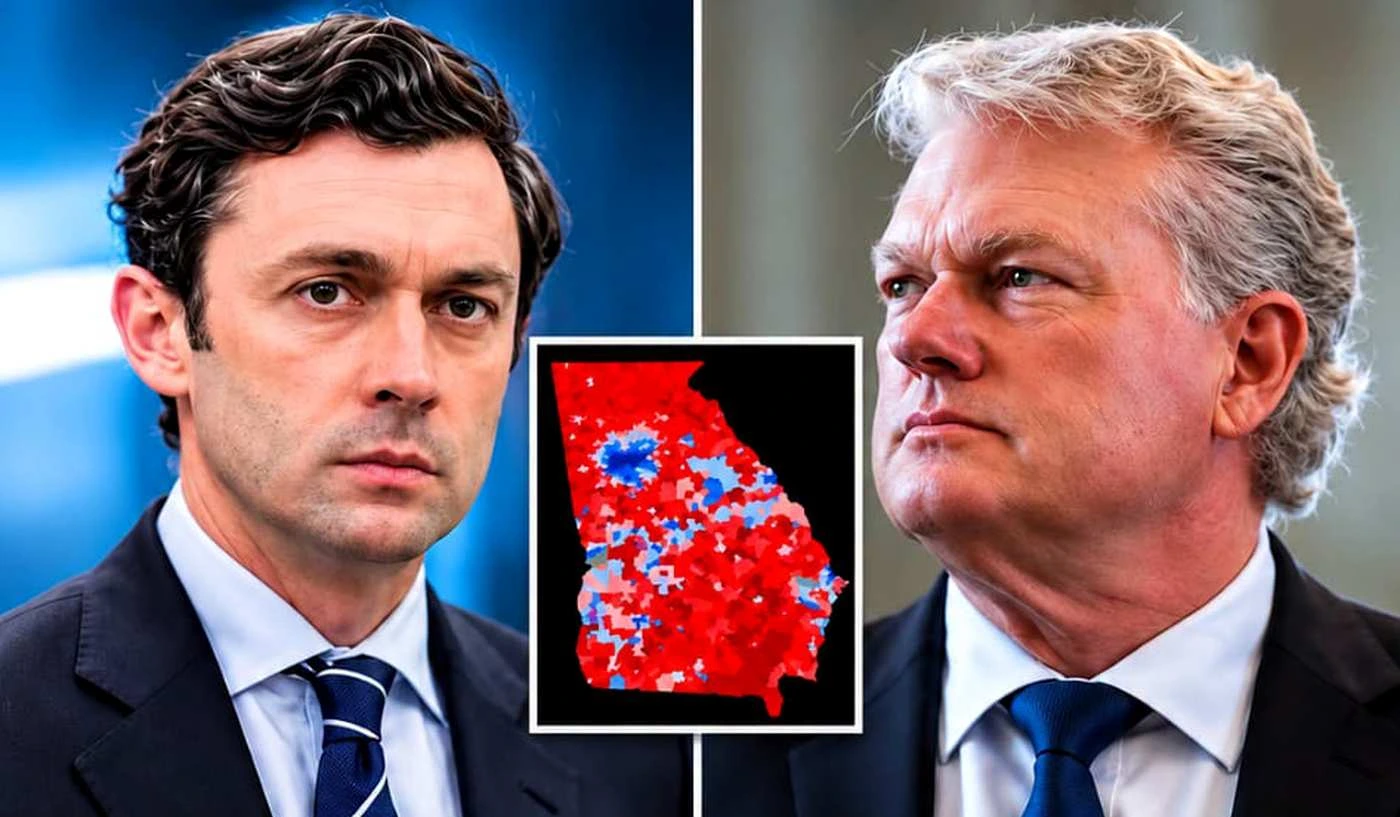
Democrat Sen. Jon Ossoff has been projected to win re-election in Georgia’s closely watched U.S. Senate race against Republican Rep. Mike Collins on Tuesday, preserving Democratic control of a seat Republicans sought to flip.
The Georgia outcome arrives as Republicans hold a narrow 53-seat Senate majority and face Democratic gains needed to shift control of the chamber. Democrats and their independent allies hold 47 seats, meaning they require a net gain of four seats to take the majority.
Ossoff’s victory reflects the competitive nature of Senate contests across the country, where fundraising disparities and national spending campaigns have grown substantially. The race became a focal point for both parties as they mobilize resources ahead of Election Day.
What Happened
Collins, a sitting House member, mounted a challenge to the Democratic incumbent in a race that drew significant national attention and resources. Ossoff’s projected win marks a significant outcome in a cycle where Republicans control the Senate but face challenging political headwinds in some states.
The Georgia result underscores the unpredictability of even well-funded campaigns. While Republicans have established substantial financial advantages in many races, individual contests turn on state-specific dynamics and voter preferences.
The Reaction
Republican leaders have emphasized their financial position heading into the final stretch of the election cycle. The Republican National Committee raised approximately $341.5 million through October 14 and reported $76.2 million remaining in cash despite extensive transfers and campaign expenditures, providing resources for voter contact, organizing, and advertising across competitive states.
Trump-aligned political groups have deployed extraordinary sums into the race environment. MAGA Inc., the former president’s flagship super PAC, transferred $200 million to No Going Back PAC and $25 million to Safety and Affordability PAC for Republican messaging and advertising, maintaining a cash position above $164 million as of mid-October despite major spending commitments.
Former White House Press Secretary Karoline Leavitt framed the political landscape as one requiring exceptional voter mobilization. “The president is defiant, and he always is optimistic,” Leavitt said in recent remarks, noting that Trump acknowledges historical headwinds in midterm cycles but remains committed to traveling the country to encourage turnout.
“He’s being frank and honest with his voters that ‘I know you don’t turn out in midterm cycles, but we need you to this time,'” Leavitt said of Trump’s messaging strategy. She characterized the election as a choice between Republican candidates focused on tax cuts and border security and what she described as “radical extreme liberal” Democratic opponents.
Leavitt also highlighted the cash advantage Republicans have established. “We have a huge cash advantage across the country. We are making sure voters understand again what’s at stake in this election and why it’s so important that we win,” she said.
What This Means
The Georgia race demonstrates that financial advantages, while significant, do not guarantee electoral outcomes in contested Senate races. Republicans enter the final phase of the election cycle with substantial financial superiority over Democratic committees, with GOP groups holding approximately $187 million compared with roughly $100 million held by Democratic groups as of September’s end.
Coordinated Republican spending between July and September reached approximately $137 million, compared with $55 million by Democrats, according to available filings. Trump-aligned groups have mobilized nearly $277 million in spending since early September, reflecting the scale of outside investment in competitive races.
As campaigns enter their final weeks, the balance between institutional spending, outside investment, and candidate-specific appeal will continue shaping outcomes across competitive Senate, House, and gubernatorial contests. The Georgia result adds another data point to an election cycle defined by substantial resource disparities and intense focus on swing states and districts.



