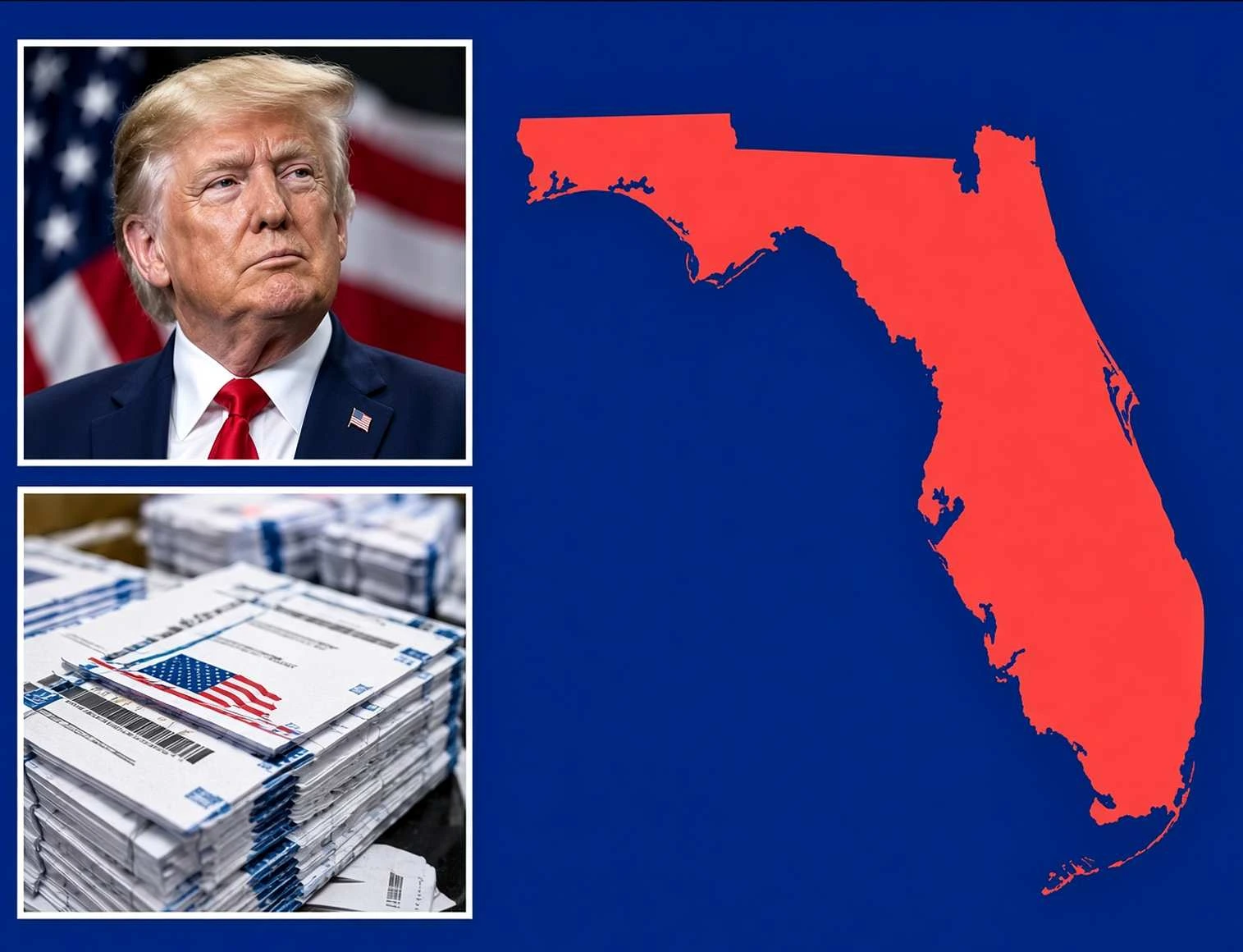
Republicans received an early‑voting update in Florida on Monday, October 21, showing a participation advantage ahead of the November 3 election.
The data, released by a political analyst, reflects ballots cast through October 19 and provides a snapshot of voter behavior before the statewide mandatory voting window opens. Early trends are being watched closely as both parties allocate resources for the upcoming midterms.
What Happened
State officials recorded 954,353 early and mail‑in ballots as of October 19. The breakdown shows 400,333 ballots cast by voters registered as Democrats, 353,307 by Republicans and 200,713 in a third category that includes independents and unaffiliated voters.
Based on the numbers, the analyst projects that Republicans could capture between 54 % and 60 % of the final vote, while Democratic support is estimated at 39 % to 45 %. The model also assumes a total turnout of roughly 50 % of eligible voters.
Florida tracks party registration rather than the specific candidates selected on each ballot, a distinction the analyst noted could affect the interpretation of early results. “The registration data gives us a baseline, but actual vote choices may shift as the campaign intensifies,” the analyst said.
The Reaction
Statewide GOP leaders have described the early numbers as a positive sign, pointing to past presidential victories by Donald Trump in 2016, 2020 and 2024, as well as Governor Ron DeSantis’s 2022 re‑election. “Florida voters have shown a consistent preference for Republican candidates,” a party spokesperson said.
Financial disclosures from June indicate that Republican party committees collectively held $300.8 million in federal cash, with the Republican National Committee reporting $128.5 million, the National Republican Senatorial Committee $55.9 million, and the National Republican Congressional Committee $92.7 million. These reserves give the party flexibility for advertising, voter outreach and ground operations.
House Speaker Mike Johnson’s fundraising operation contributed more than $91 million to Republican candidates and committees, including $46 million transferred to the NRCC. Meanwhile, the Trump‑aligned super PAC MAGA Inc reported roughly $415 million at the end of August, and national Republican committees held about $234 million, outpacing Democratic balances by roughly $100 million.
What This Means
The early voting advantage, if it holds, could bolster Republican prospects in the Senate race that will determine whether the party retains its majority in Washington. Turnout levels remain a key variable, especially in a state where optional county voting days began on October 19 and the mandatory period runs from October 24 through October 31.
The substantial cash on hand provides GOP strategists with options for targeted media buys, data analytics and field operations as the campaign enters its final stretch. While Democrats have out‑raised Republicans in certain individual contests, the overall financial edge may influence the allocation of resources across competitive districts.
Looking ahead, the combination of an early voting lead and robust fundraising positions Florida Republicans to capitalize on voter enthusiasm and potentially extend their success to the broader midterm landscape.



