Texas Republicans entered the final days before Election Day with an early-vote advantage of nearly 700,000 ballots, according to an October 29 data model that suggested GOP voters were participating at significantly higher rates than Democrats across the Lone Star State.
Election Data Guy’s analysis of more than 6.1 million early and mail ballots projected Republicans maintaining a 51 to 57 percent share of votes cast, compared with Democrats’ 40 to 46 percent range. The modeling, which relies on voter behavior rather than party registration since Texas does not register voters by party affiliation, indicated turnout approaching 54 percent statewide—a reflection of unusually heavy participation across the state’s voting population.
Official tallies from the Texas Secretary of State’s office confirmed the velocity of early voting. More than 6.3 million Texans had cast ballots by Friday, a pace running roughly 50 percent ahead of the comparable 2022 early-voting schedule. That acceleration came after an initial slower start to the early-voting period, suggesting Republican mobilization efforts gained momentum in October’s final weeks.
What Happened
The modeling estimates cannot predict individual votes, and Texas elections officials do not release party-based voting data. Still, the Republican advantage reflected in early-vote patterns aligned with what GOP strategists had anticipated after a period of uncertainty about whether their base would turn out in force. The state entered the election with 19,041,684 registered voters—a record high—giving both parties substantial populations to mobilize.
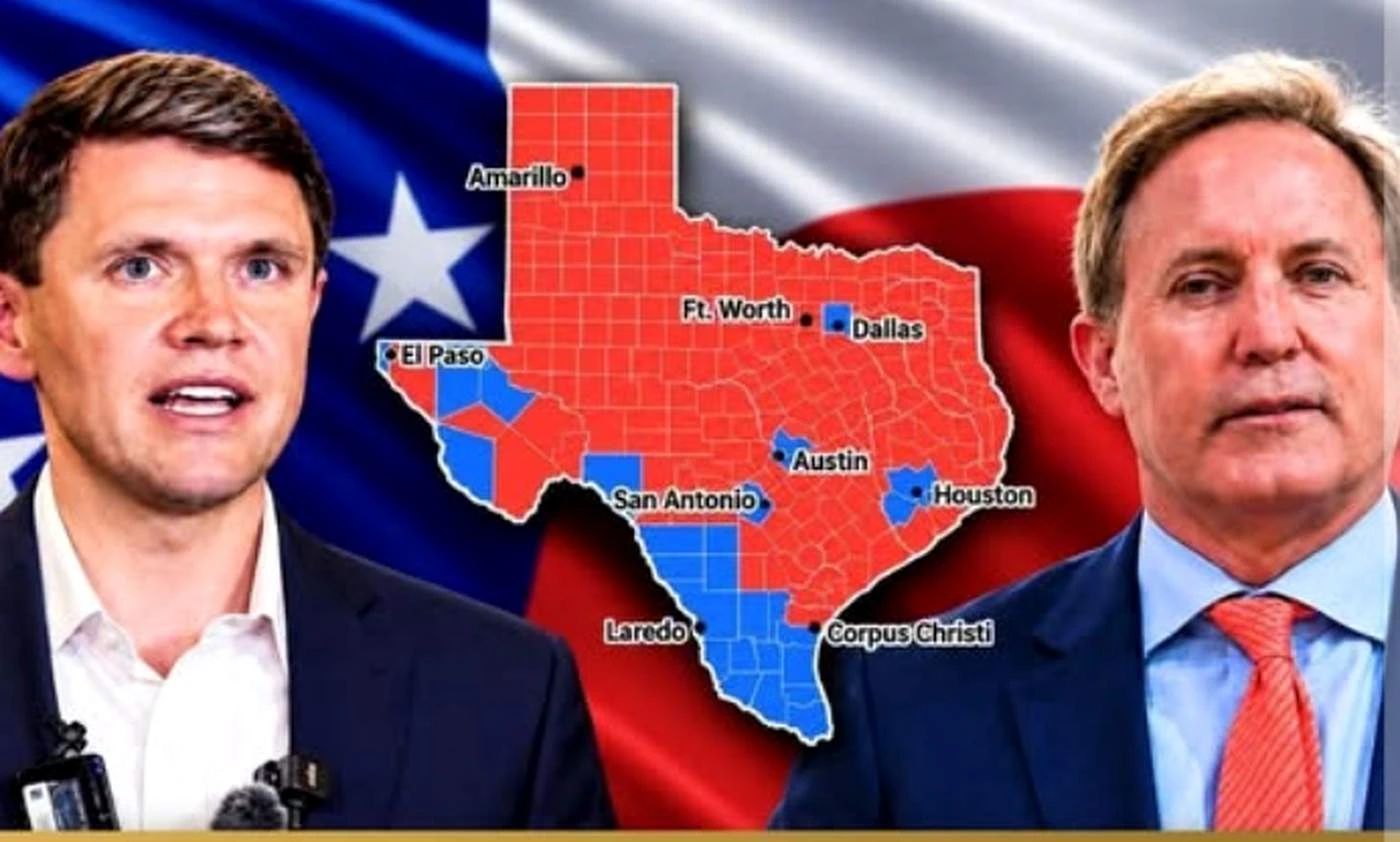
The Texas Senate race between Republican Attorney General Ken Paxton and Democratic state Representative James Talarico emerged as one of the nation’s most expensive and closely watched contests. Paxton won the GOP primary runoff with support from former President Donald Trump and aligned conservatives, setting up a general election matchup against Talarico, who has been raising at historically high levels for a Democrat running statewide in Texas.
The Reaction
Talarico’s campaign raised $64 million during the third quarter, substantially outpacing Paxton’s $18 million over the same period. However, Republican-aligned organizations operating independently of the campaign funneled more than $100 million into the race, fundamentally altering the financial balance. Trump’s political network contributed significantly to that spending, with his flagship super PAC, MAGA Inc., allocating millions against Talarico while supporting Paxton in the closing weeks.
The Republican National Committee entered the final stretch with approximately $76.2 million after expenditures exceeding $303 million. House Republicans built their own financial operation, with the National Republican Congressional Committee raising roughly $250 million through September and holding approximately $61 million in reserves by early October. That financial infrastructure allowed Republican candidates across multiple races to access resources at scale, even in contests where individual candidate fundraising lagged Democratic opponents.
Trump’s broader political operation announced plans to commit over $400 million to supporting Republican candidates before Election Day, with roughly $300 million already allocated to advertising, voter contact, rallies, and turnout operations. Nationally, Republican-aligned groups held roughly $1 billion in available funds compared with approximately $579 million across comparable Democratic organizations—a structural advantage that gave GOP strategists flexibility in allocating resources.
What This Means
The early-vote modeling offered Republicans tangible evidence that their turnout operations were performing, though the estimates inherently carry uncertainty about final margins. Texas has not elected a Democrat to the United States Senate since 1988, and the early-vote patterns suggested the state’s Republican lean remained intact despite Talarico’s fundraising advantage and the state’s demographic shifts.
A Supreme Court ruling eliminating previous limits on party coordination spending allowed Republican committees to deploy resources more efficiently in the final week. That procedural advantage, combined with Trump’s financial firepower and the structural turnout advantage reflected in early-vote data, positioned Republicans to defend the Texas Senate seat while maintaining financial capacity to contest other battlegrounds across the country.
The remaining outcome depends substantially on Election Day turnout and final voting patterns. Early-vote models provide snapshots of participation to date but cannot account for voters casting ballots on November 5 or mail ballots arriving in final days. Republican strategists indicated they expected strong Election Day performance, which would compound the early-vote advantage already reflected in official ballot totals entering the final stretch.



