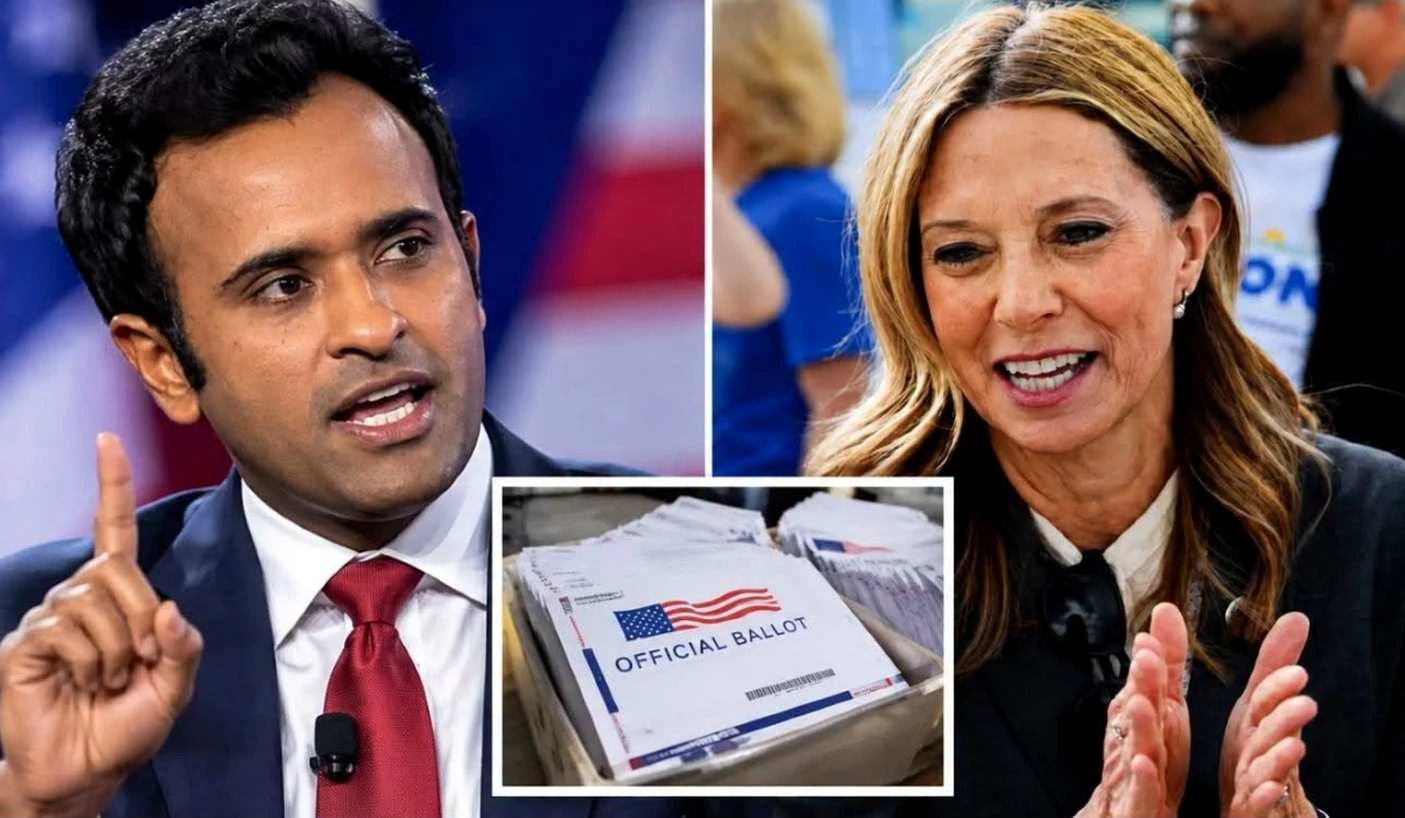
Republicans are pointing to early voting data in Ohio showing a substantial partisan advantage as the state’s closely watched Senate race between Republican Jon Husted and Democrat Sherrod Brown enters its final weeks.
Election analysts tracking mail and early in-person ballots in Ohio reported more than 377,000 ballots cast as of mid-October, with modeling that assigned roughly 214,000 votes to Republicans and 160,000 to Democrats. The projected Republican advantage of approximately 54,600 votes represents what analysts describe as an early vote margin, though it does not indicate actual candidate support—only participation patterns based on voter registration and demographic data.
What Happened
The modeling projected Republicans capturing between 53 and 59 percent of early votes, while Democrats were estimated at 40 to 46 percent. The analysis also incorporated a 55 percent final turnout estimate, though detailed methodology was not disclosed in the data release. These figures reflect Ohio’s recent shift toward Republican candidates in statewide contests, a pattern that has accelerated over the past several election cycles.
Husted, a Republican currently serving as Ohio’s secretary of state, is defending the Senate seat in a rematch of sorts. Brown, a former Democratic senator, lost his 2022 reelection bid to Republican J.D. Vance and is attempting a political comeback. The race has attracted significant national attention and funding as both parties view Ohio as a potential bellwether for broader congressional dynamics.
The Reaction
Republican strategists cited the early voting model as a positive indicator heading toward November, though they cautioned that participation data does not determine voter choice. Secret ballot systems prevent analysts from knowing how individual early voters actually cast their ballots based solely on registration information. Election security officials emphasize that modeling remains a tool for campaign planning rather than a reliable predictor of outcomes.
Financial resources have emerged as a significant factor in the race. Republican organizations nationwide have accumulated substantial war chests, with some estimates placing GOP fundraising above $1.1 billion compared to roughly $600 million for Democrats across different committees and reporting periods. The National Republican Congressional Committee reported $89 million in cash reserves in recent filings, while a planned fundraising dinner featuring President Trump was announced at $36.8 million, signaling the party’s confidence in its organizing capacity.
Brown has demonstrated considerable fundraising strength of his own, preventing Republicans from establishing an unchallenged financial advantage in the state. Outside spending from independent groups aligned with each party has begun appearing in Ohio media markets, reflecting the race’s competitive nature and national implications.
What This Means
Early voting participation patterns can inform campaign strategy by revealing which geographic areas or voter groups are turning out in higher numbers, allowing campaigns to adjust ground operations and advertising placement in real time. A sustained Republican early voting advantage could reduce the pressure on the GOP to maximize turnout on Election Day in conservative-leaning counties, potentially redirecting resources to swing areas.
For Democrats, such data may signal the need to intensify get-out-the-vote efforts in urban areas where their strongest support typically concentrates. However, election outcomes ultimately depend on which voters cast ballots and how they vote, factors that cannot be determined from registration patterns alone.
Ohio’s Senate race remains fluid entering the final campaign period, with both candidates holding name recognition and organizational capacity. The early voting advantage Republicans are touting offers one data point among many that will shape the closing weeks, but November’s certified results remain the only definitive measure of voter preference.



