Texas Democratic Governor-elect Gina Hinojosa plans to rescind the state’s classification of the Council on American-Islamic Relations as a terrorist organization, reversing an order issued by outgoing Republican Governor Greg Abbott in November 2025.
The move would undo one of Abbott’s final major security initiatives and signal a significant policy shift in how the incoming administration approaches oversight of organizations his predecessor flagged as potential national security threats. The reversal, however, faces procedural constraints and would not automatically resolve ongoing state litigation or affect federal terrorism classifications.
What Happened
In an interview with The Washington Post, Hinojosa said she intends to rescind Abbott’s designation of CAIR and the Muslim Brotherhood as foreign terrorist organizations under Texas criminal law. Abbott issued the proclamation citing national security concerns and connections to federal terrorism investigations, and separately classified both groups as transnational criminal organizations under state property restrictions.
Abbott grounded his November 2025 action partly on the 2008 federal prosecution of the Holy Land Foundation, a Richardson-based nonprofit that the Justice Department had designated as a terrorist organization in 2001. Federal prosecutors proved the foundation had provided approximately $12.4 million in support to Hamas, securing convictions in November 2008 against five leaders and the organization itself.
Among those convicted was Ghassan Elashi, whom Abbott identified in his proclamation as a founding board member of CAIR’s Texas chapter. Elashi received a 65-year prison sentence in May 2009. Federal prosecutors separately identified CAIR as an unindicted co-conspirator in the Holy Land Foundation case in 2007, and a judicial order found “ample evidence” connecting CAIR to organizations examined in those proceedings.
CAIR itself was never criminally charged in the prosecution and continues to deny supporting terrorism. The organization challenged Abbott’s designation in federal court, asserting violations of constitutional protections and Texas law. Republican Attorney General Ken Paxton escalated the enforcement campaign in February 2026 by filing a separate lawsuit against CAIR, its Texas chapters, and the Muslim Brotherhood, seeking to prohibit their operations statewide.
The Reaction
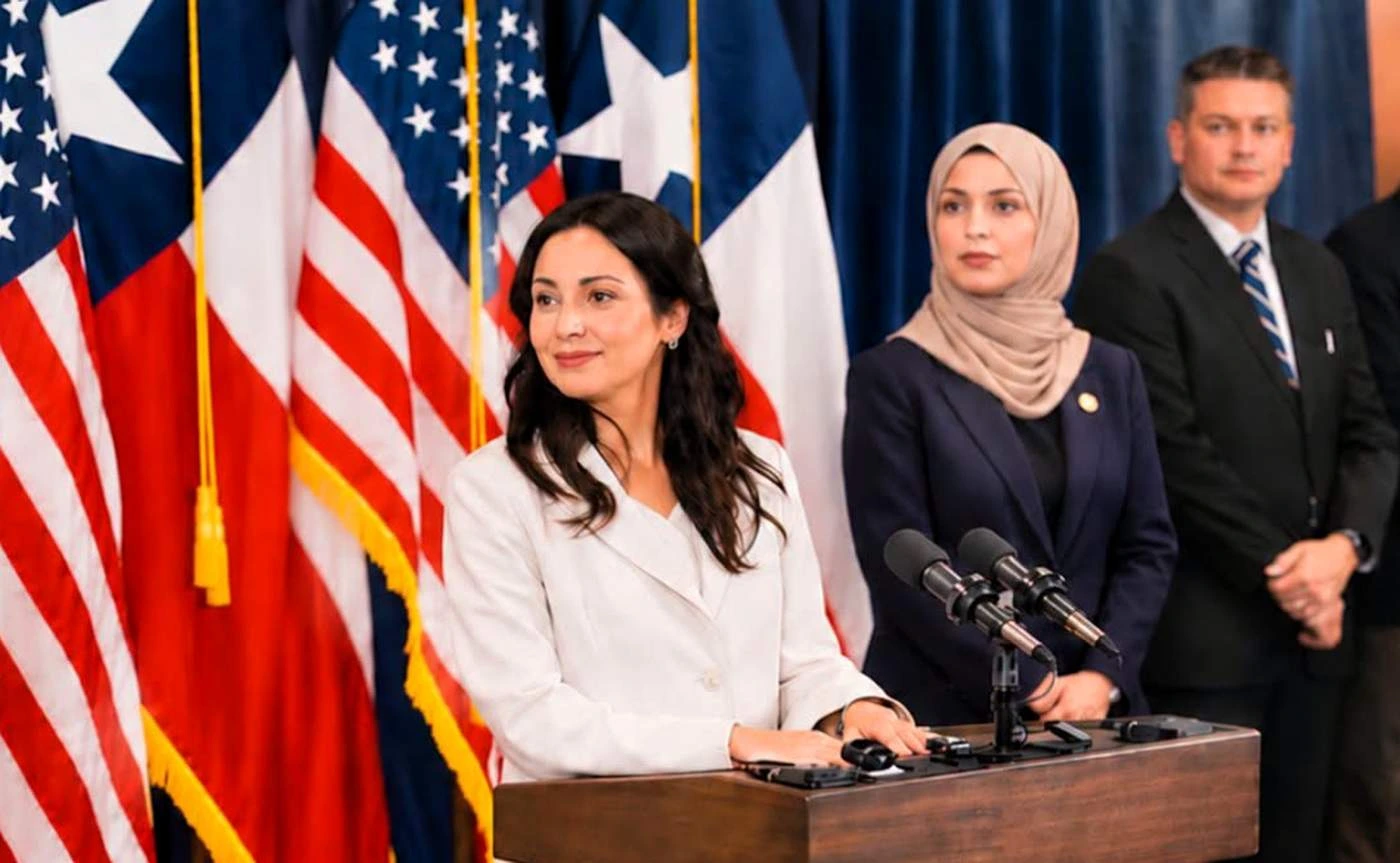
Hinojosa told The Washington Post that “we have to use public safety measures for public safety,” characterizing her administration as moderate despite reversing one of Abbott’s signature security policies. The statement reflects her broader intention to shift the state’s approach toward organizations her predecessor viewed as national security risks.
The incoming governor has not publicly addressed whether she intends to rescind the separate designation of the Muslim Brotherhood or how she plans to navigate the procedural requirements governing removal of organizations from restricted property classifications. Texas law mandates that the governor consult the Department of Public Safety director and the Homeland Security Council before removing such designations, a process that could extend the timeline for any formal reversal.
What This Means
Hinojosa’s executive action, if implemented, would not necessarily terminate Paxton’s ongoing litigation or erase federal court findings established during the Holy Land Foundation prosecution. The underlying Texas statutes that formed the foundation for Abbott’s designations would remain in effect unless lawmakers repealed them or courts determined they were unconstitutional, meaning Republican legislators retain leverage to defend the framework through future legislative sessions.
Federal terrorism enforcement remains entirely within Washington’s authority regardless of state policy shifts. President Trump’s administration designated several international Muslim Brotherhood branches as terrorist organizations earlier this year, and no state governor possesses the power to reverse federal designations. CAIR itself has not received a federal terrorist designation, distinguishing it from the Muslim Brotherhood.
The dispute reflects the broader tension between state and federal authority over terrorism policy, as well as competing approaches to balancing security concerns with organizational rights under constitutional law. Hinojosa’s reversal signals a departure from Abbott’s aggressive stance, though the actual mechanics of removing the designations and resolving related litigation remain uncertain.



