A retired defense attorney and longtime Pennsylvania Democratic Party leader departed the United States for Canada in November after federal officials determined that the 75-year-old had never legally acquired U.S. citizenship, despite having lived in the country since childhood.
Ian Murray, who spent nearly seven decades in the United States and served as Erie County Democratic chairman from 1986 to 1998, believed he had automatically become a citizen through his mother’s status. That assumption unraveled when he applied for his first U.S. passport approximately eighteen months ago while planning a foreign trip.
What Happened
Murray was born in 1951 to Canadian-born parents in Canada. His mother, Dorothea Murray, had moved to the United States in 1939 and was a U.S. citizen. Murray’s family relocated permanently to Erie, Pennsylvania in 1956 when he was five years old.
When Murray submitted his passport application, federal authorities reviewed his citizenship status and his family’s immigration records dating back to the early 1950s. Federal officials determined that Murray’s mother had not satisfied specific residency requirements outlined in the Nationality Act of 1940, which governed automatic citizenship for children born abroad at the time of his birth.
Murray’s mother had spent approximately four years attending the University of Toronto, reducing her qualifying time in the United States. Officials calculated she had accumulated approximately eight-and-a-half to nine years of qualifying U.S. residency, falling short of the required ten years needed to pass citizenship to a child born outside the country.
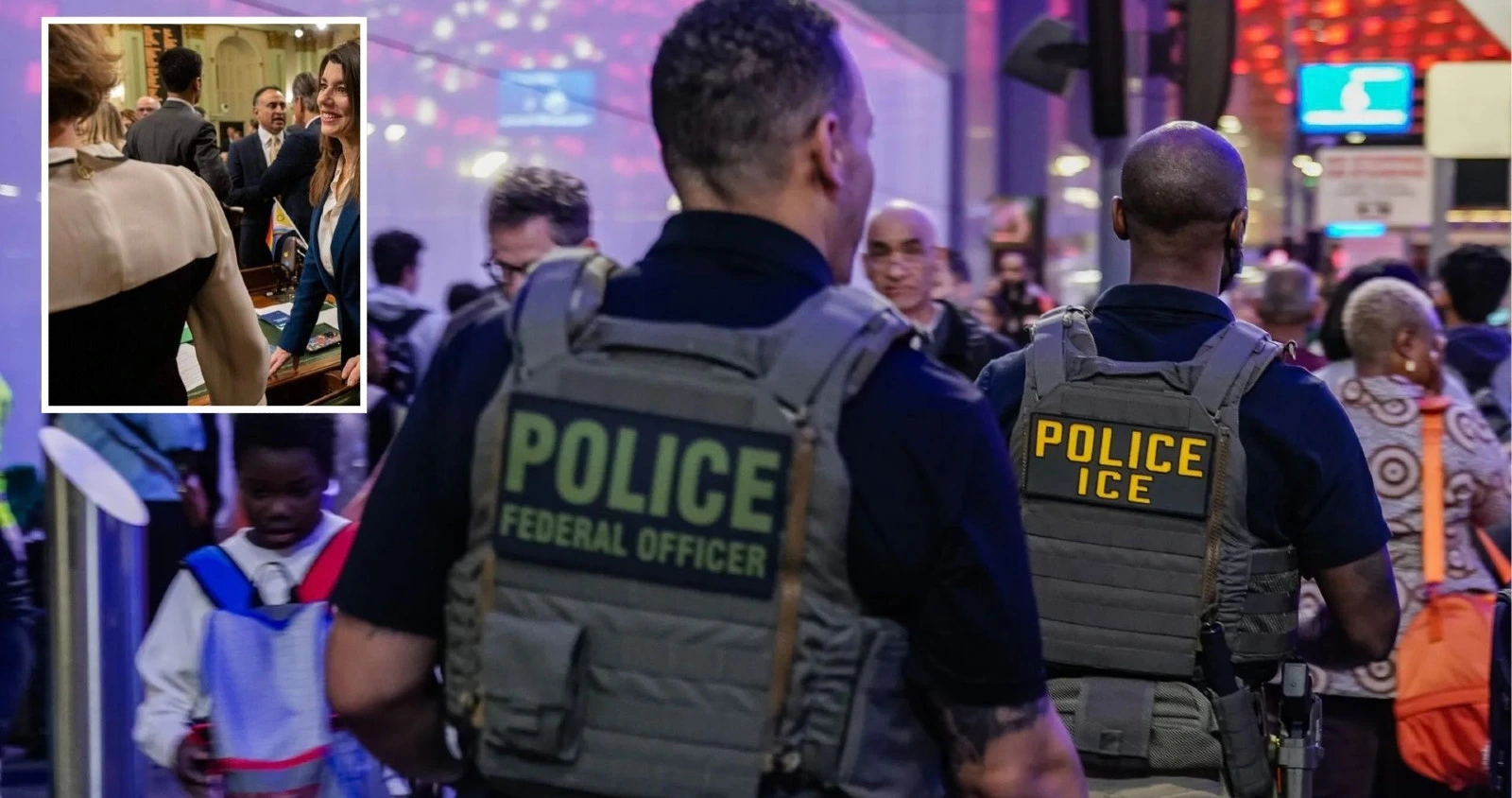
The Department of Homeland Security formally notified Murray of his status in July with a Notice to Appear identifying him as “an alien present in the United States who has not been admitted or paroled.” An immigration judge in the Boston area subsequently granted Murray’s request for voluntary departure on September 1, ordering him to leave by December 30.
Rather than pursue a costly legal battle or face formal removal, Murray decided to depart voluntarily. He and his wife sold their Maine home, and Murray obtained an emergency Canadian passport. He departed for Nova Scotia on November 12.
The Reaction
Murray said the discovery left him bewildered. “I can’t believe this is happening,” he told the Erie Times-News. “It’s almost like I am being erased.”
Throughout his decades in the United States, Murray had possessed what he believed were standard markers of citizenship: a Social Security number and government-issued identification, including a Maine REAL ID. He had never encountered questions about his status during his professional career as a criminal defense attorney or his extensive involvement in Democratic politics.
Murray worked on George McGovern’s 1972 presidential campaign in Erie County and later became one of the region’s most prominent Democratic figures. He served on the Democratic National Committee for decades, participated in numerous Democratic national conventions, served on Erie City Council in the early 2000s, and supported Bill Clinton’s presidential campaigns.
“Who would have thought I was not a U.S. citizen?” Murray said, reflecting on his life in America. “If I had never applied for a passport, I would have never been deported.”
What This Means
Murray’s case highlights how citizenship requirements dating back to the mid-twentieth century can create gaps in administrative records, even for individuals with decades of continuous residence and civic participation. The 1940 Nationality Act’s specific residency thresholds for transmitting citizenship to children born abroad created a narrow but legally binding distinction that proved decisive in his situation.
Murray’s departure came amid heightened federal immigration enforcement under the current administration. His case represents an unusual intersection of strict citizenship verification procedures and an individual with deep roots in American political and professional life who nonetheless fell outside the legal definition of citizenship.
As Murray transitions to life in Nova Scotia with his wife, his experience underscores the potential consequences of incomplete citizenship documentation even for longtime U.S. residents. The case also raises questions about how many individuals living in the United States may hold similar citizenship vulnerabilities rooted in historical immigration and nationality law provisions.



