Turkey and Romania are intensifying military and naval coordination in the Black Sea after Russian operations targeted 22 Turkish commercial vessels, part of a broader pattern of attacks on civilian shipping that has claimed at least one cargo ship and driven up insurance costs across the region.
The escalating threat to maritime commerce has prompted NATO allies to move beyond diplomatic concerns into active operational responses. Regional officials have documented more than 570 attacks on commercial shipping this year alone, with vessels flying multiple flags operating under heightened risk as Russian forces continue strikes in contested waters.
What Happened
Turkish commercial shipping has emerged as a focal point for Russian military pressure in the Black Sea. The reported targeting of 22 Turkish-flagged vessels reflects a pattern that security analysts say is deliberate rather than incidental, particularly given Turkey’s role as a regional maritime hub and NATO member.
The incidents have included the confirmed sinking of the cargo ship Khoryv, underscoring the lethal character of the threat. Insurance premiums for vessels operating in the region have climbed substantially, effectively adding a tax on regional trade and complicating supply chains that depend on Black Sea passage.
Romania has documented a separate incident on October 18, when Romanian F-16 fighters reportedly intercepted two Russian Geran drones over its territory. The interception signals a shift in how regional air defenses are responding to incursions, with armed assets now actively engaging rather than merely tracking hostile activity.
The Reaction
Turkey has responded by deploying an E-7T early-warning aircraft to increase airborne surveillance across contested waters. The move reflects both a capability upgrade and a political signal that Ankara is raising its operational posture to match the intensity of Russian activity.
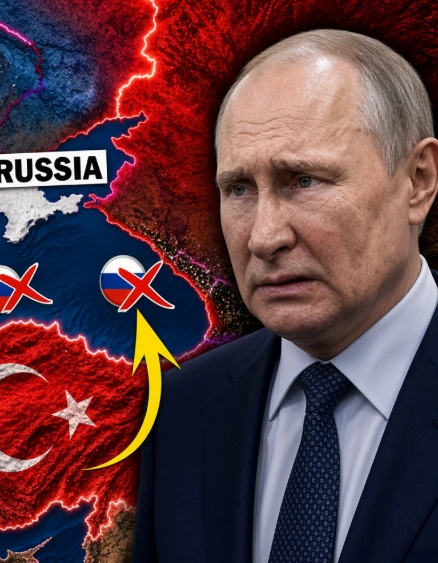
Beyond surveillance, Turkey has assumed a leadership role in Black Sea mine-clearing operations, addressing both the immediate tactical problem of explosive ordnance and the symbolic importance of maintaining freedom of navigation. Romania’s enhanced air-defense response follows a similar logic: visible, tangible actions that demonstrate commitment to regional security without crossing into direct military escalation.
Separately, reports indicate a Ukraine-Moldova agreement focused on drone and electronic-warfare coordination near Transnistria, where Russian forces maintain a presence. While operational details remain limited, the arrangement suggests that NATO-aligned and partner nations are exploring layered defenses across multiple domains.
What This Means
The cumulative effect of these moves is a tightening of regional coordination among Turkey, Romania, and their Western partners. The measures suggest recognition that passive acceptance of shipping losses is no longer politically or economically tenable, even as formal military escalation remains bounded by strategic considerations.
Turkey occupies a distinctive position in this dynamic, balancing substantial NATO commitments against longstanding economic ties with Russia, particularly in energy cooperation. How that balance holds as maritime incidents accumulate will shape both the immediate trajectory of Black Sea security and broader regional alignment in coming months.
The persistence of commercial shipping attacks, combined with mounting economic costs and the visible deployment of military assets for interdiction, suggests that regional powers are moving toward a new equilibrium. Whether coordinated defenses can stabilize Black Sea shipping lanes without triggering a broader confrontation remains an open question as the security environment continues to shift.



