Poland is increasing security measures along its border with Russia’s Kaliningrad exclave through expanded military deployments and enhanced surveillance operations, reflecting NATO’s broader effort to counter hybrid threats on the alliance’s eastern flank.
The escalation involves elite counterterrorism units and military personnel tasked with strengthening border monitoring and rapid-response capabilities in the region. Poland’s moves form part of a wider defensive posture that extends beyond traditional military preparedness.
What Happened
Poland has initiated a special border operation involving joint forces from its counterterrorism and military services aimed at reinforcing defenses along the Kaliningrad boundary. The operation centers on enhanced surveillance systems, rapid-response protocols, and improved coordination between security agencies to detect and respond to potential cross-border incidents.
The deployment includes formation of specialized units, with the newly established 4th Warmian-Masurian Brigade playing a central role in the Warmian-Masurian region. This area, in northeastern Poland, sits directly across from the Russian exclave and serves as a critical monitoring point for NATO’s easternmost members.
Poland’s initiative aligns with the broader East Shield initiative, a comprehensive defensive program designed to fortify Poland’s eastern frontier. The program incorporates physical barriers, surveillance infrastructure, and enhanced military readiness across multiple deployment zones.
The Reaction
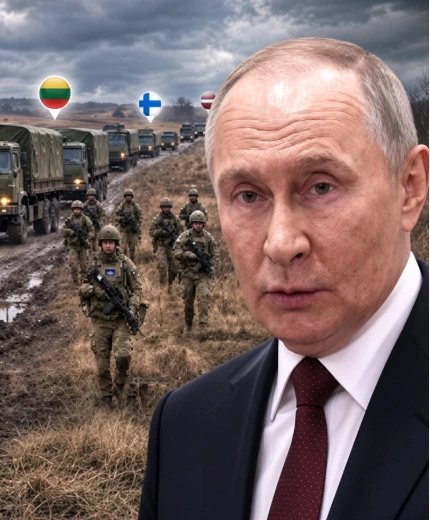
The operations reflect growing concerns among NATO members about Russia’s capacity to conduct sabotage operations and intelligence activities outside of direct military confrontation. These hybrid threats—which can include infrastructure disruption, cyberattacks, and covert infiltration—represent an evolving security challenge for European nations sharing borders with Russia.
Meanwhile, intelligence assessments indicate Russia is developing advanced over-the-horizon radar systems with reported detection ranges extending up to 3,000 kilometers. Such technology would significantly expand Russia’s early-warning capabilities in the region, though experts caution that actual operational performance depends on numerous technical and environmental factors.
What This Means
Poland’s security measures signal NATO’s shift toward a more comprehensive approach to border defense that extends beyond conventional military threats. The emphasis on surveillance, rapid-response infrastructure, and defensive fortifications indicates an expectation of prolonged tension rather than imminent large-scale conflict.
For NATO’s eastern members, these developments underscore the alliance’s commitment to territorial defense through layered security measures. The operations represent a calibrated response to persistent Russian activities in the region, intended to deter hybrid warfare while maintaining defensive rather than offensive postures. As tensions remain elevated across Europe’s eastern border, such preparations are likely to continue as standard security practice for NATO countries in the area.



