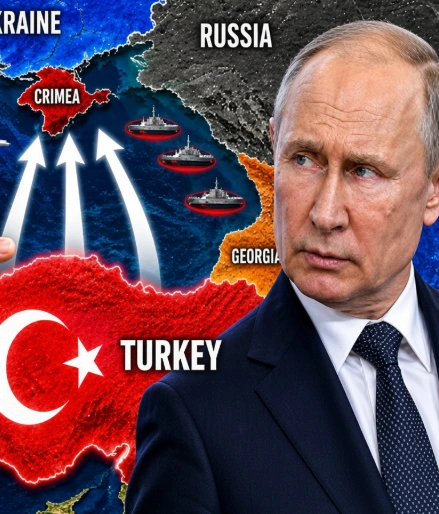
Turkey is leveraging its control of the Turkish Straits and diplomatic ties with both Russia and Ukraine to reshape Black Sea power dynamics, constraining Moscow’s military and economic options while solidifying NATO’s regional influence.
The strategic geography of the Black Sea has long positioned Turkey as a keystone state, but current tensions between Russia and Ukraine have amplified Ankara’s role as a de facto arbiter of regional access and security. President Recep Tayyip Erdoğan has maintained diplomatic channels with Moscow while formally backing NATO commitments, a position that grants Turkey outsized influence over developments that could reshape the balance of power in one of Europe’s most contested waterways.
What Happened
Turkey’s control of the Bosporus and Dardanelles—the two straits connecting the Black Sea to the Mediterranean—gives Ankara enforcement authority over military shipping flows that Moscow heavily depends upon. The Montreux Convention of 1936 establishes the legal framework under which Turkey regulates warship passage, a responsibility Ankara has wielded with increasing assertiveness as the Ukraine conflict extends across years rather than months.
Beyond the straits, Turkey has positioned itself as an intermediary in negotiations affecting Black Sea security. Ankara facilitated grain corridor agreements, hosted diplomatic talks, and maintained energy partnerships with Russia—moves that have kept Turkish influence spanning both sides of the conflict. This multipolar diplomacy gives Erdoğan leverage that neither pure alignment with the West nor accommodation of Moscow alone would provide.
Russia’s Black Sea Fleet faces mounting operational constraints from this arrangement. Restrictions on warship movement, the presence of NATO assets in the region, and uncertainty over Turkish decisions regarding maritime access have degraded Moscow’s ability to project power as it once did. The loss of vessels to Ukrainian strikes compounds these challenges, leaving the Russian navy in a weaker position than any point since the Cold War’s end.
The Reaction
NATO has tacitly endorsed Turkey’s balancing strategy, understanding that Ankara’s independence serves alliance interests better than forced alignment would. The United States and European allies have supported Turkish mediation efforts while maintaining security commitments that subtly constrain Russian options. This creates a framework in which Turkey operates within NATO’s security perimeter while preserving negotiating room with Moscow.
Moscow has responded with diplomatic engagement toward Ankara, seeking to preserve energy relationships and prevent further Turkish tilt toward the West. Russian officials have framed Turkey as a stabilizing force, an argument designed to keep diplomatic channels open and dissuade Ankara from fully weaponizing the straits against Russian interests. The calculated tone of Moscow’s approach reflects awareness that confrontation with Turkey could accelerate the very constraints it wishes to avoid.
Ukraine views Turkish involvement as a mixed outcome. Kyiv benefits from NATO’s strengthened southern flank and Turkey’s willingness to restrict Russian military movements, yet Kyiv also understands that Turkish neutrality preserves channels for future negotiations and limits the risk of direct NATO-Russia escalation.
What This Means
Turkey’s position underscores a fundamental shift in Black Sea geopolitics. The region is no longer a contested space where Russia can operate without constraint, nor is it fully integrated into a NATO-dominated security architecture. Instead, it has become a space where Turkish agency—anchored in geography and diplomatic skill—shapes outcomes that neither Washington nor Moscow can unilaterally control.
The implications extend beyond maritime security. Energy flows, grain exports, defense procurement, and future conflict resolution mechanisms all depend on Turkish decisions. This concentration of influence in Ankara’s hands suggests that any long-term settlement affecting the Black Sea will require Turkish buy-in, a reality that elevates Turkey’s importance to resolution of the broader Ukraine crisis itself.
As the conflict persists, the structural constraints on Russian power will likely harden. Turkey’s willingness to manage—rather than eliminate—its relationships with Moscow suggests these constraints may endure even if direct fighting eventually ceases, reshaping the regional balance for years to come.



