Ukrainian forces are reporting territorial gains and inflicting heavy casualties on Russian troops in the Donbas region, where intense fighting around Slovyansk and Kostyantynivka has stalled Moscow’s offensive momentum in recent weeks.
The reported advances mark a shift in the eastern front after months of grinding Russian assaults. Ukrainian counterattacks are challenging Russian positions across interconnected defensive lines anchored by fortified settlements that have complicated Moscow’s ability to gain ground.
What Happened
Ukrainian military accounts describe a significant shift in territorial control, with forces recovering approximately 460 square kilometers while Russian gains have slowed despite persistent assault operations. The claimed reclaimed area would require independent verification to confirm specific locations and the exact period covered.
Russian casualty figures cited in these accounts total 89,000 over a three-month span. The numbers warrant careful interpretation because military casualty definitions vary—including killed, wounded, missing, and captured personnel—and without standardized reporting methodology, comparisons between different sources become difficult to assess accurately.
Communications disruptions have emerged as a critical factor in the battlefield dynamics. Ukrainian and Western sources point to restrictions on Russian access to Starlink satellite services, which reportedly disrupted coordination networks used for reconnaissance, artillery targeting, and command operations. The magnitude of these effects depends on Russian forces’ ability to rely on alternative radio systems and local network infrastructure.
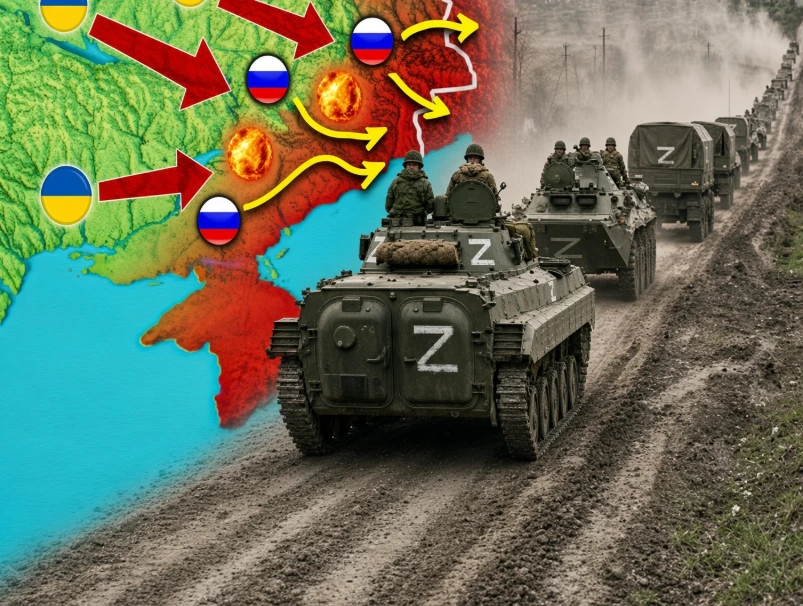
Russian logistical adaptation has also shifted operational tactics. Military observers describe increased use of lighter vehicles—including golf carts and similar small transport—to move personnel and supplies in areas where conventional armored vehicles draw concentrated fire from drones and artillery. Such vehicles offer mobility advantages but provide minimal protection against direct-fire threats.
The Reaction
Ukrainian officials have highlighted the reported territorial recovery and casualty infliction as evidence of successful resistance despite continued Russian pressure. The claims support Kyiv’s narrative of an extended grinding conflict where Ukrainian defensive advantages—fortified positions and local knowledge—offset Russian numerical superiority.
International military analysts have approached the figures with measured skepticism, noting that battlefield claims require independent confirmation and that casualty statistics often reflect different counting methodologies. The complexity of verifying losses in active combat zones means such figures should be treated as directional rather than precise.
What This Means
The situation in the Donbas reflects broader patterns of attritional warfare where defensive fortifications, reliable communications networks, and effective logistics become decisive factors. If the reported territorial changes hold under independent scrutiny, they would indicate that Ukrainian defensive lines remain intact despite sustained Russian assaults.
The strategic significance extends beyond immediate territorial shifts. The reported disruptions to Russian communications and the apparent slowing of offensive operations suggest that Ukraine’s combination of defensive positions and external support systems has created conditions where Russian advances face mounting constraints. However, claims of complete Russian entrapment or imminent frontline collapse remain unverified and should be distinguished from confirmed territorial changes and documented military losses that can be independently assessed.



