President Donald Trump told conservative radio host Hugh Hewitt on Thursday that he aims to “get Cuba done” before his term ends and would consider military intervention against the island’s communist government if necessary.
The remarks came as Trump’s administration continues escalating economic pressure on Havana through sanctions and trade restrictions. The statement represents Trump’s most explicit acknowledgment yet that military options remain on the table as his administration pursues forced political change in Cuba.
What Happened
During the radio interview, Trump told Hewitt he wants to resolve the Cuba question before leaving office. When asked directly whether he would authorize a “short military campaign” to “free Cuba,” Trump said, “I would certainly consider that, yes.”
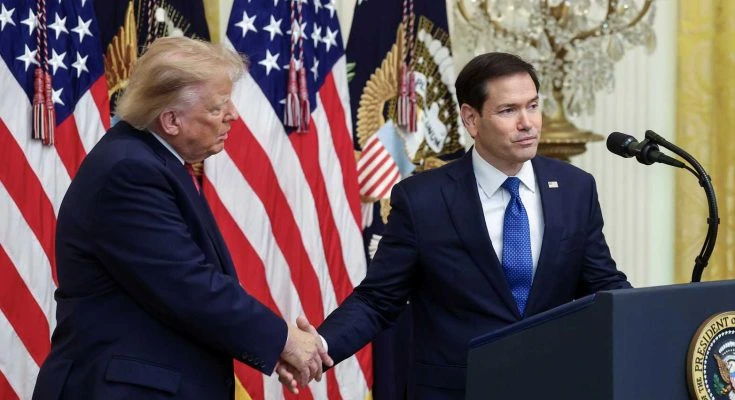
Trump identified Secretary of State Marco Rubio as central to the administration’s Cuba strategy, citing Rubio’s family background. “We have a very good, talented guy for Cuba named Marco. Because Marco’s parents are from Cuba as you probably know. And he would love to do that,” Trump said.
The president characterized Cuba’s current situation as deteriorating. “It’s doing very poorly. It’s essentially a failed nation, whatever you want to call it. It’s failed. And we’re watching it,” he said.
The Reaction
Trump linked his position to Cuban Americans who fled the island’s government, saying he wants to deliver results “for the Cubans that came and were treated really badly, and they came to America.” The administration has significantly increased economic pressure on Havana during Trump’s second term, declaring Cuba an “unusual and extraordinary threat” to the United States earlier this year.
Washington has imposed additional sanctions targeting Cuban officials and government-connected entities while threatening tariffs against countries supplying oil to the island. Cuba has faced severe fuel shortages, recurring blackouts, and broader economic deterioration as a result.
The Cuban government has strongly condemned these policies as an attempt to strangle the economy and force regime change. Cuban officials have stated the country would defend itself against any U.S. military intervention.
What This Means
Trump’s declaration that he wants the Cuba situation resolved before leaving office establishes a clear deadline for one of his administration’s most aggressive foreign-policy objectives. The statement stops short of announcing an imminent military operation or setting a specific timeline, but it signals resolve to pursue change through available means.
Rubio’s elevated role suggests the secretary of state will shape the administration’s approach over the remaining years of Trump’s presidency. Trump has previously predicted Cuba’s communist government is approaching a breaking point, and earlier this week said the country “will fall fairly soon” while suggesting eventual U.S. humanitarian assistance could follow political transition.
The administration’s strategy combines economic isolation with the explicit possibility of military force, leaving the final outcome dependent on developments inside Cuba and decisions made in Washington.



