Unverified social media posts claiming former President Donald Trump was shot in Washington, D.C., circulated rapidly across multiple platforms Monday morning, triggering widespread alarm and speculation, yet no U.S. federal agency, the Secret Service, or major news organizations have confirmed any such incident.
The posts spread through Facebook groups, X threads, and partisan forums starting early Monday, accompanied by dramatic language designed to provoke immediate emotional reactions. Within hours, the absence of official confirmation from law enforcement, hospitals, or news agencies raised serious questions about the claim’s credibility.
What Happened
A cascade of posts began circulating Sunday evening claiming that Trump had been shot again in the nation’s capital. The language was deliberately alarming, designed to provoke immediate emotional responses and rapid sharing across networks. Many of the posts traced back to unverified accounts and private groups with no established track record of reliable reporting, and several recycled footage or relied on misleading captions divorced from their original context.
Digital forensics traced several of the most-shared posts to accounts with documented patterns of sensationalism and minimal engagement in verified reporting. One post had been shared more than 40,000 times within two hours despite carrying no attribution or supporting evidence.
The Reaction
The Secret Service, which maintains constant protective details around former presidents, issued no emergency alert or statement. The Federal Bureau of Investigation, which handles threats to national security, remained silent. Major U.S. and international news outlets—which typically confirm or debunk incidents of this magnitude within minutes—reported no such event. The uniform silence from official channels and established news organizations provided the clearest indicator that the claim lacked factual basis.
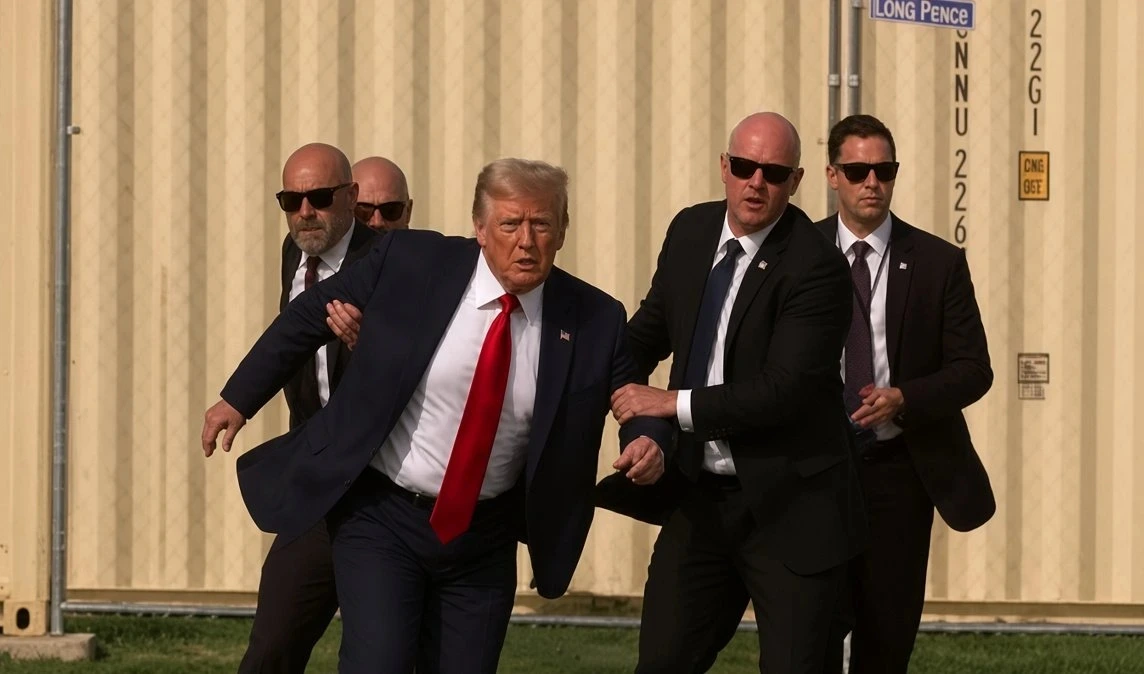
The viral spread prompted confusion and concern across social platforms, with some users expressing genuine fear before deleting or questioning the posts after realizing no official confirmation had emerged. Public safety agencies reported an uptick in calls from citizens seeking information, a common consequence of misinformation campaigns.
What This Means
The incident highlighted the continued challenge of distinguishing verified information from misinformation in real time. False alarms about attacks on national figures place strain on law enforcement, emergency services, and public confidence in news reporting. They also create conditions where genuine threats can be dismissed as hysteria, a phenomenon known as the “boy who cried wolf” effect in security circles.
For context, Trump survived a documented assassination attempt in July 2024 at a rally in Butler, Pennsylvania, where he sustained a wound to his ear. That incident led to federal investigations, a criminal case still in proceedings, and heightened security protocols. The 2024 shooting was extensively covered by established news organizations and confirmed by law enforcement within minutes—a stark contrast to Monday’s unconfirmed viral claims.
Civil rights organizations and media literacy experts flagged the incident as a case study in how unverified claims exploit existing political polarization to generate engagement. Political observers noted that high-profile political figures remain frequent targets for false claims, particularly during election seasons and periods of heightened national tension. Similar rumors have circulated about other prominent officials, but the speed and scale of Monday’s spread underscored how algorithmic amplification can rapidly turn an unverified claim into a trending topic.
Security analysts and public health experts continue to recommend that citizens verify information through official channels before sharing. In an era where a single unverified post can reach millions within minutes, pausing to check sources remains the most effective defense against unnecessary panic and the erosion of trust in legitimate reporting.



