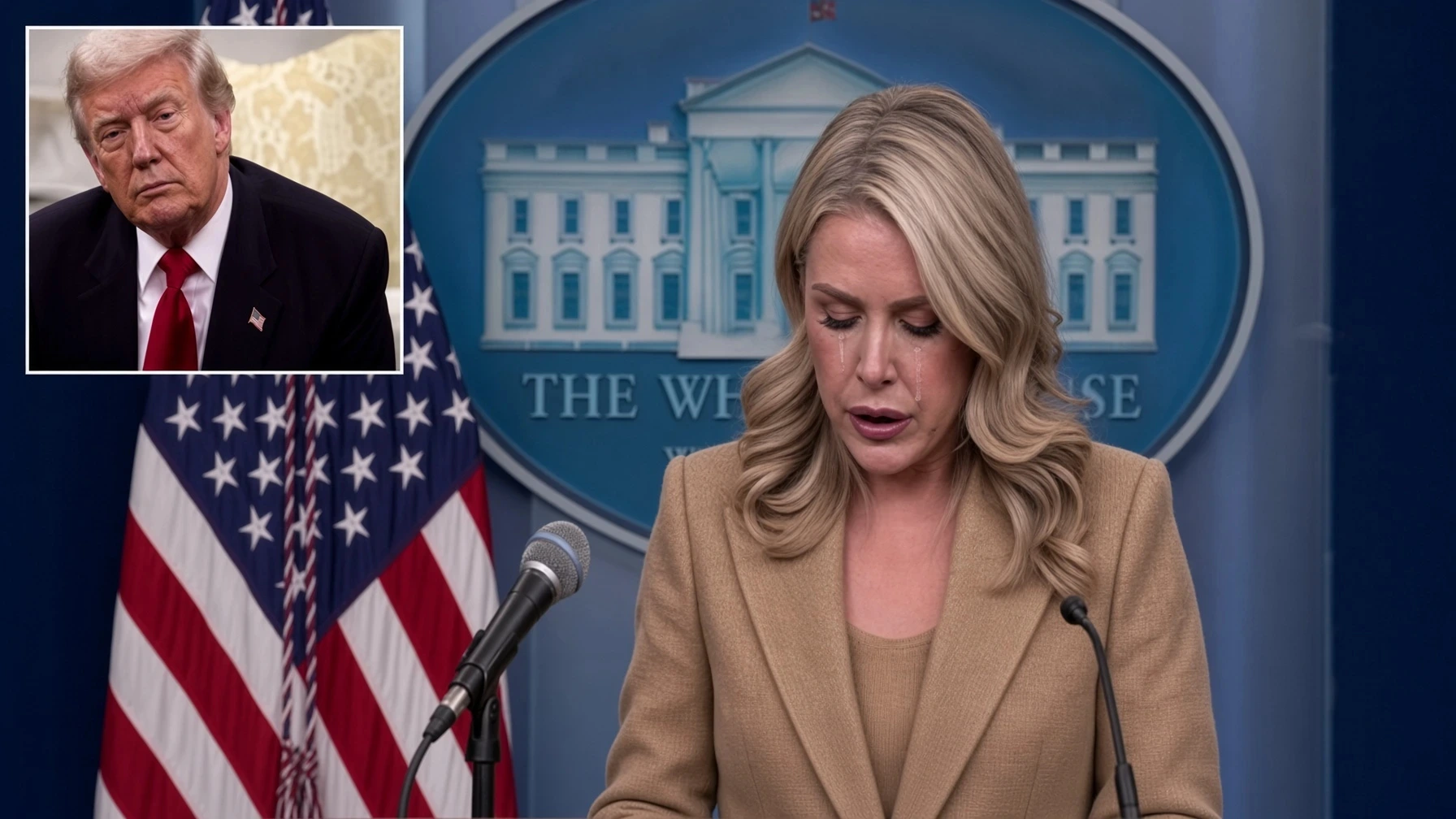
White House Press Secretary Karoline Leavitt on Tuesday defended the Trump administration’s overhaul of press operations, characterizing the displacement of the Associated Press from the traveling press pool as a modernization effort rather than a punitive response to critical coverage.
The 179-year-old wire service has held a fixed seat in the 13-member White House traveling press corps for decades, a position that now faces restructuring under the new administration. The shift has drawn objections from the White House Correspondents’ Association and media advocates who argue that government-controlled access decisions threaten institutional press freedoms.
What Happened
During a public forum, Leavitt outlined the administration’s rationale for rotating legacy wire services out of permanent pool positions in favor of a broader rotation among digital outlets and independent commentators. The move removes the AP from automatic inclusion in Air Force One travel and sensitive White House meetings, a change that marks a significant departure from decades of precedent.
Axios co-founder Mike Allen pressed Leavitt on whether the policy threatened historical documentation, citing photojournalist Evan Vucci’s Pulitzer Prize-winning image of Trump raising his fist after the July 2024 assassination attempt in Butler, Pennsylvania. That photograph, captured under the existing pool structure, underscored the stakes of access decisions during high-profile moments.
Leavitt rejected the characterization that the policy restricts press freedom. She argued that rotating legacy wire services out of fixed positions creates opportunities for contemporary digital-first outlets that better reflect current media consumption patterns. “I don’t view them as restrictions,” she said, noting that hundreds of journalists hold hard White House credentials and thousands more are accredited nationwide, suggesting the current structure artificially privileges a handful of established organizations.
The White House Press Secretary framed the restructuring as an operational update necessitated by a transformed media landscape. “The media landscape has transformed completely, and the West Wing press structure should reflect that reality,” she said, emphasizing that the administration seeks to dismantle what it views as legacy privileges rather than penalize critical reporting.
The Reaction
The White House Correspondents’ Association, a century-old nonpartisan body that independently manages pool rotations and logistics, has maintained that the government should not exercise authority over journalists tasked with scrutinizing the executive branch. Leavitt directly challenged that institutional framework, arguing that an unelected media board should not hold exclusive power over which journalists board Air Force One or access sensitive diplomatic meetings.
Instead, Leavitt contended that the executive branch has the authority to curate an expansive media environment that distributes access beyond what she characterized as a legacy cartel. This assertion represents a fundamental challenge to the WHCA’s traditional role in managing independent pool operations.
The dialogue also addressed quantitative measures of presidential accessibility. Allen cited an Axios analysis showing that Trump had conducted 468 combined press conferences and interviews at a comparable point in his current term, compared to 164 for former President Joe Biden. Leavitt cited this disparity as evidence of an exceptionally open administration, though media analysts note such figures often conflate formal conferences with impromptu exchanges and radio appearances.
What This Means
The dispute signals a substantial institutional shift in how the executive branch manages journalist access and structures media operations. Press freedom advocates contend that government-curated pools invite ideological favoritism, allowing administrations to reward sympathetic outlets while excluding rigorous watchdogs. The administration counters that its media strategy reflects a necessary reckoning with an outdated press structure that no longer serves a fragmented, digital-first news ecosystem.
As traditional news bureaus defend established protocols, the White House’s actions indicate that access to the presidency is increasingly discretionary and subject to evolving administrative preferences about which outlets and journalists merit proximity to the commander in chief. The resolution of this institutional dispute may reshape how future administrations manage media access and define the relationship between the executive branch and the press corps.



