The Supreme Court of the United States issued a unanimous decision this week reversing a federal appeals court ruling and siding with the Trump administration in a dispute over speech restrictions imposed on federal immigration judges.
In an unsigned order, the justices overturned a Fourth Circuit Court of Appeals decision and reinstated a lower-court dismissal of a lawsuit brought by the National Association of Immigration Judges. The case centers on a Justice Department policy requiring immigration judges to obtain approval before participating in certain public speaking engagements classified as “official” in nature.
What Happened
Under the contested policy, immigration judges must receive authorization to speak at venues including immigration law conferences and pro bono legal training sessions. Court records indicate judges retain the ability to deliver speeches in their personal capacity, provided the topics do not directly address immigration policy or employment matters within their agency.
The immigration judges’ association initially challenged the policy in federal court in Alexandria, Virginia, contending it violated their First Amendment rights by preventing them from expressing private views on immigration matters or commenting on their employer. U.S. District Judge Leonie Brinkema, appointed during the Clinton administration and serving the Eastern District of Virginia, dismissed the lawsuit by determining that Congress had intended such claims to proceed through the Civil Service Reform Act’s specialized review framework rather than traditional federal court litigation.
The Fourth Circuit later revived the case and remanded it to district court, expressing concerns about whether the Congressional review structure actually functioned as intended. The appeals court identified two systemic issues: the Merit Systems Protection Board had experienced periods without sufficient members to operate, creating backlogs that observers said undermined the system’s effectiveness, and the Trump administration’s stated legal position that the president may remove MSPB members and Office of Special Counsel officials at will raised questions about the independence of federal employee oversight mechanisms.
The Reaction
The administration petitioned the Supreme Court, characterizing the case as a “clear candidate for summary reversal” and arguing the Fourth Circuit had adopted a legal theory the parties had not presented. Justice Clarence Thomas, joined by Justice Amy Coney Barrett in a separate writing, stated the appeals court had also erred on the underlying legal questions.
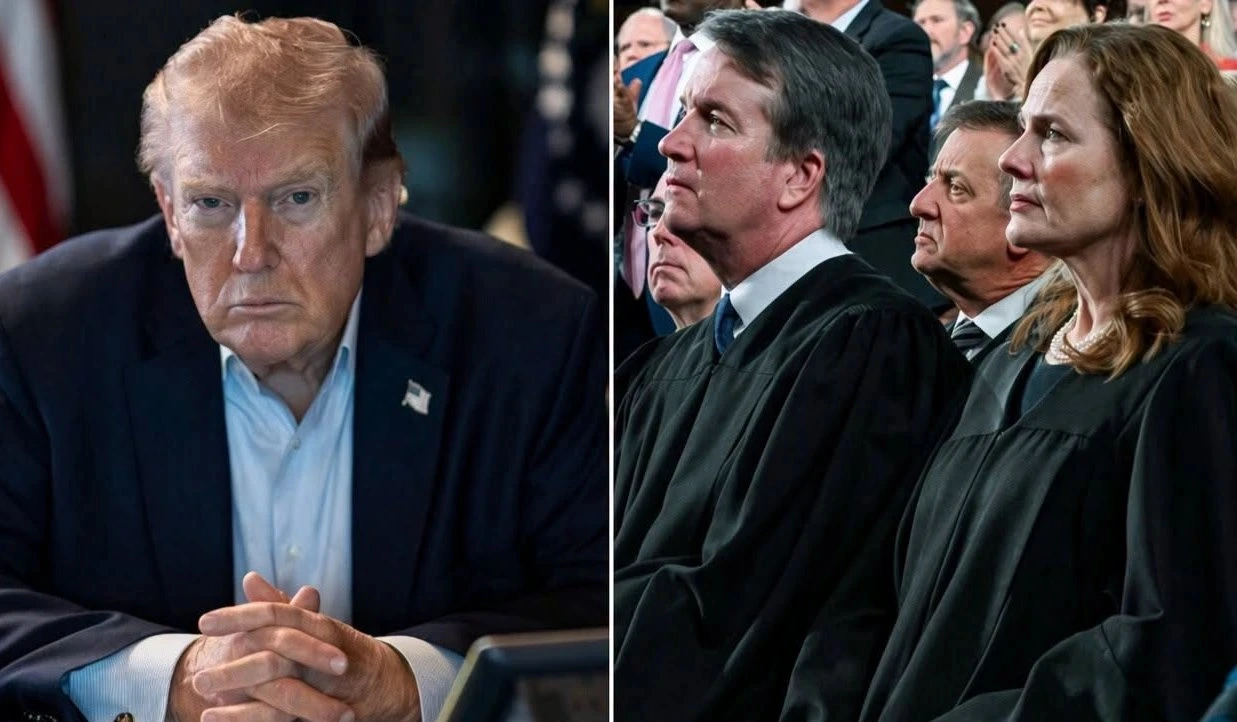
The unanimous decision marks a significant shift from lower courts’ approach to the speech restrictions. The justices’ order provided no explanation for the reversal, consistent with Supreme Court practice on summary decisions, leaving limited guidance on the constitutional questions raised by the immigration judges.
The ruling arrived alongside the Court’s separate decision to decline a Trump petition concerning the E. Jean Carroll defamation cases. On Monday, the justices refused to take up the president’s bid to overturn a New York jury’s $5 million verdict finding him liable for sexual abuse and defamation. The Court provided no rationale for declining the petition, a standard procedure when the high court turns away applications for review.
What This Means
The immigration judges ruling establishes that restrictions on official speaking engagements do not necessarily trigger First Amendment protections through federal court review, potentially affecting how federal employees across agencies navigate similar policies. The decision also reinforces the government’s ability to regulate employee speech in official contexts through existing civil service procedures rather than constitutional litigation.
This marks the second time this year the Supreme Court has rejected Trump’s effort to overturn the Carroll civil verdict. Carroll has postponed collection efforts during the extended appeals process, while Trump’s legal team continues to contest a separate $83.3 million defamation award from a related trial, with lawyers asserting he is entitled to presidential immunity.
The combined rulings reflect the Court’s posture on cases involving the Trump administration and related legal challenges as the political and legal landscape continues to shift. The immigration judges decision removes a significant procedural hurdle for the government’s ability to impose speech restrictions on federal employees, while the Carroll petition denial leaves the lower-court liability findings in place.



