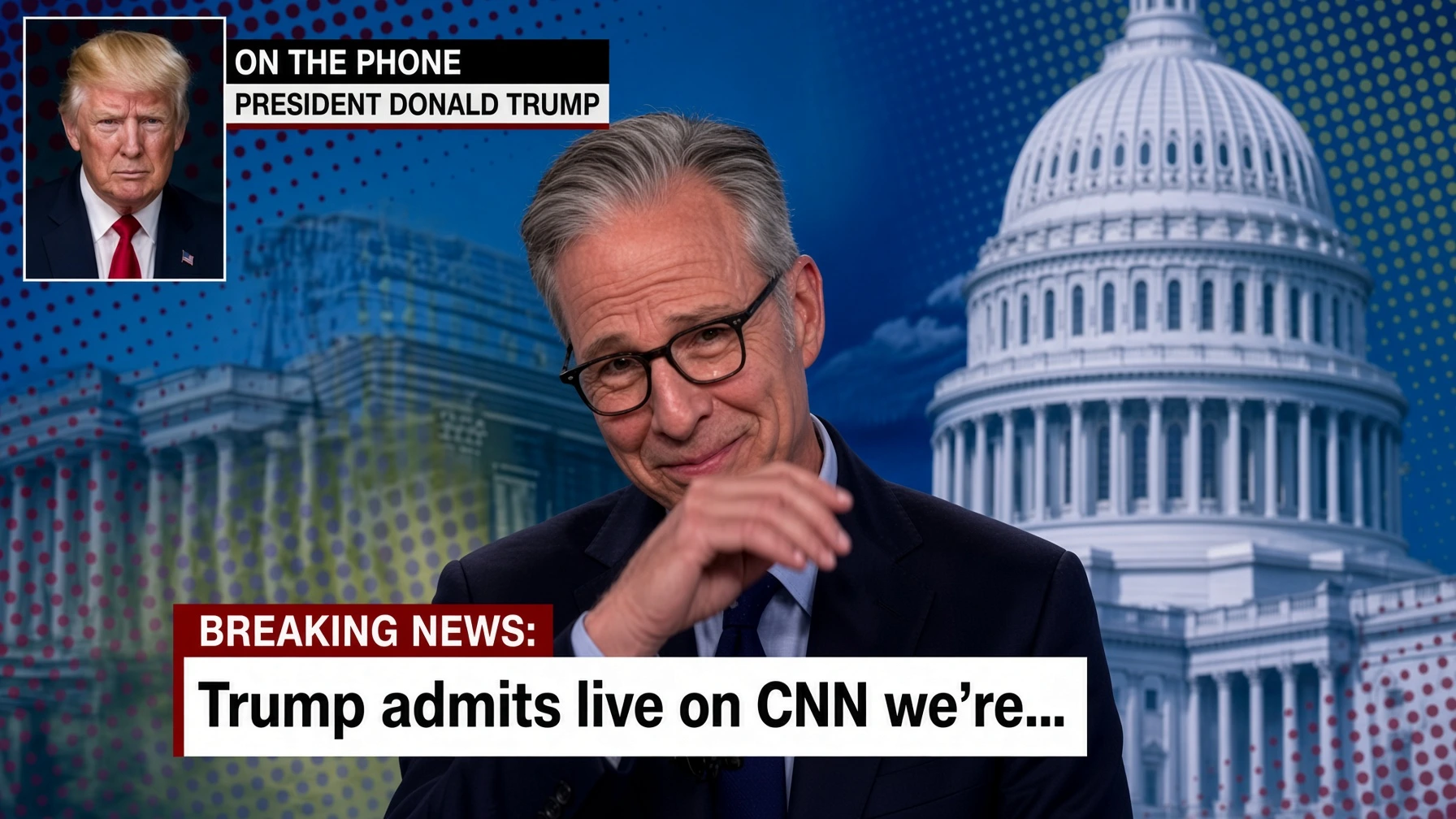
During a live call to CNN’s State of the Union on July 12, 2026, President Donald Trump broke a years-long boycott of the network to pay tribute to deceased Senator Lindsey Graham, then signaled his belief that CNN needs to move toward what he called a “normal path.”
The appearance marked Trump’s first significant interaction with CNN in years, ending a period of public antagonism during which he had repeatedly branded the outlet “fake news.” The call came just as questions about CNN’s editorial independence intensified following regulatory approval of Paramount’s acquisition of its parent company, Warner Bros. Discovery.
What Happened
Anchor Jake Tapper invited Trump to discuss his relationship with Graham, the South Carolina Republican who had recently died. Trump accepted the call and spoke respectfully about their friendship, declining Tapper’s attempts to steer the conversation toward policy matters like the escalating Iran conflict. As the interview wound down, Tapper extended a standard invitation for the president to return for a longer segment.
Trump agreed, but before the line disconnected, he added a final remark. “We’re trying to have CNN go on a normal path,” he said. “And we will do that.” Tapper responded by defending his own journalism, saying he was already on a normal path. Trump simply affirmed his statement and the call ended.
The Reaction
The exchange ricocheted through media commentary within minutes. What struck observers was not the substance of Trump’s claim—which he left entirely undefined—but rather the candid nature of the admission itself. Trump did not explain what “normal path” meant, did not outline specific editorial changes he wanted, and offered no mechanism by which a White House might influence coverage.
Instead, the moment functioned as an unguarded window into Trump’s long-held view that CNN operates outside acceptable bounds and that he views himself as having a role in correcting its direction. The comment raised immediate questions about whether it represented mere rhetorical posturing or signaled deeper pressure on the network’s editorial decisions in the months ahead.
What This Means
The timing amplifies potential concerns. In June, the Justice Department’s Antitrust Division cleared Paramount’s $110 billion acquisition of Warner Bros. Discovery, which would merge CNN and CBS News under single corporate ownership. That consolidation has triggered intense debate about editorial independence at both outlets. To address regulatory concerns, Paramount CEO David Ellison agreed to establish an editorial-independence board at CNN and CBS, though media analysts have questioned whether such a board—composed of individuals with ties to ownership—could withstand pressure from a media-skeptic administration.
Trump’s comment on July 12 suggests he is watching this ownership transition closely and intends to weigh in. While the call itself does not constitute evidence of imminent government censorship or direct newsroom intervention, it signals that the White House views the changing media landscape as an opportunity to shape coverage at one of the country’s largest news organizations. For CNN, the episode underscores that as its corporate structure shifts, it faces scrutiny from a president who has already declared his intent to influence its trajectory.



