A federal judge on Thursday lifted a procedural barrier to President Trump’s executive order requiring states to supply voter eligibility lists and unique barcodes on mail ballots, following a Supreme Court decision that had initially cleared the way for the U.S. Postal Service to enforce the new federal standards on mail voting systems administered by individual states.
The action represents the latest turn in a fast-moving legal dispute over Trump’s March directive on election administration. The Supreme Court last month overturned a nationwide injunction, finding the challenge premature since the Postal Service had not yet finalized the rule. But courts have since blocked key portions of the finalized regulation, leaving the policy’s implementation uncertain heading into November voting.
What Happened
Federal Judge Denise Talwani initially blocked Trump’s mail voting order with a nationwide injunction. The Supreme Court overturned that ruling in August, concluding the legal challenge arrived too early—before USPS had issued concrete regulations implementing the executive order. Following the Supreme Court’s decision, Talwani lifted her own injunction, appearing to clear a path for the Postal Service to proceed.
That window proved brief. Once USPS finalized the rule in late August, Democratic-led states and voting rights organizations returned to court with fresh legal challenges. On August 27, Talwani issued a new temporary order blocking key provisions of the finalized regulation while litigation continues. The Justice Department has appealed that order to the First Circuit Court of Appeals and filed an emergency request with the Supreme Court for intervention.
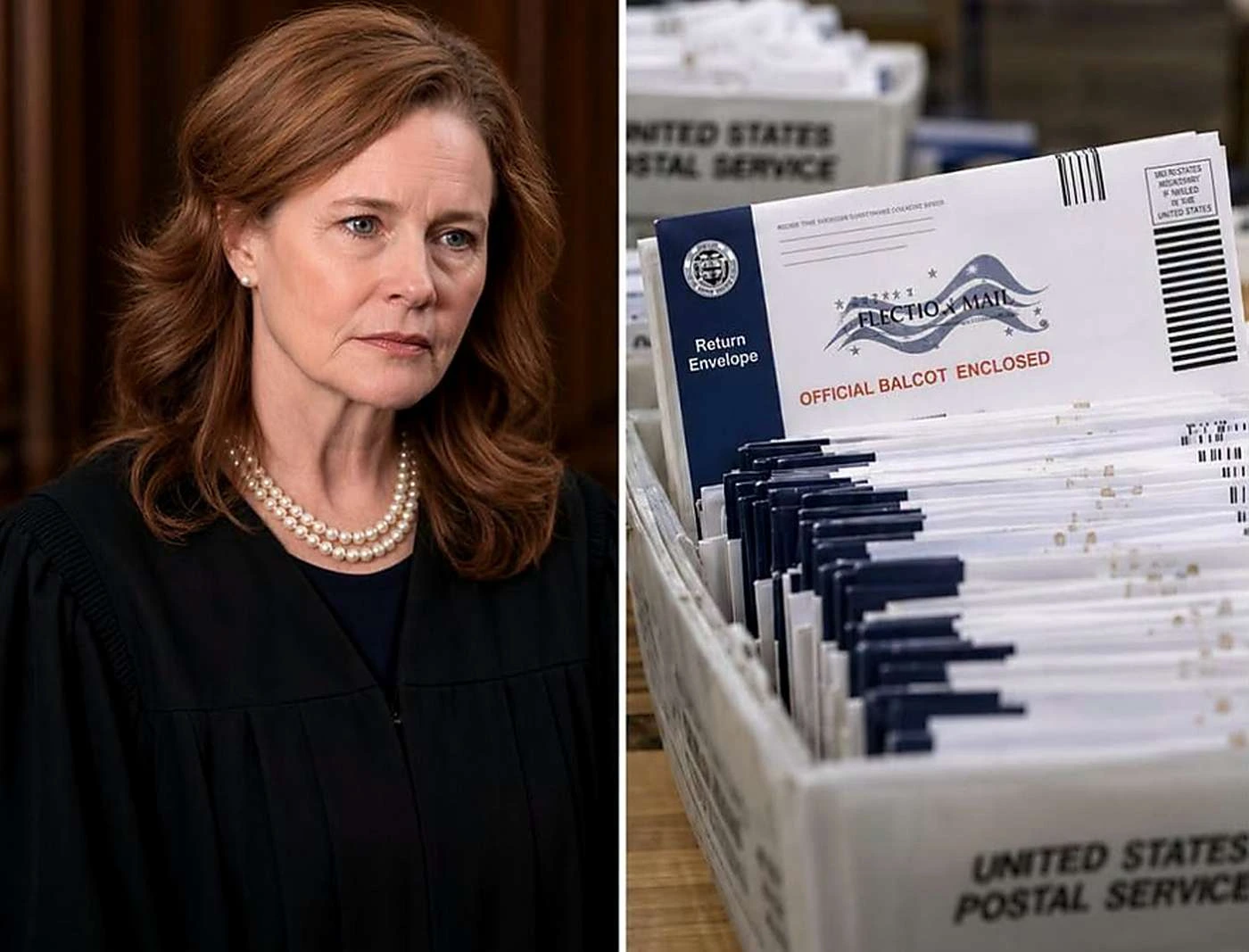
The disputed rule would require states to submit lists of voters approved to receive mail ballots, with USPS delivering ballots only to names on those state-provided lists. Ballot envelopes would carry unique barcodes for tracking. The administration maintains that the Postal Service possesses legal authority to establish these requirements and that states retain control over ballot eligibility determinations.
The Reaction
Election officials from multiple states have warned courts that ballot envelopes are already printed and election systems are configured for November voting, leaving insufficient time to implement new federal requirements. North Carolina became the first state to send mail ballots on Friday, with others following throughout September, compressing the timeline further. A Postal Service whistleblower alleged this week that USPS rushed development of the computer portal states would use to upload voter lists, raising concerns about technical failures affecting ballot distribution.
Opponents of the rule argue that the executive branch and Postal Service are improperly imposing federal controls on an election process traditionally administered by states. Legal challengers contend that USPS lacks authority to refuse valid ballots based on federal requirements Congress did not enact. Judge Talwani has previously expressed substantial skepticism about the policy’s legality, concluding in an earlier ruling that opponents were likely to succeed in proving the administration exceeded its authority.
The administration disputes these concerns, arguing that USPS can coordinate with state officials to meet the new requirements without widespread disruption. Government lawyers note that states will continue determining their own mail-ballot eligibility standards. Trump has characterized mail voting as requiring stronger safeguards and has made election administration a centerpiece of his second-term policy agenda.
What This Means
The litigation leaves states facing significant uncertainty about governing rules for mail voting in November. The Supreme Court’s earlier ruling removed one procedural obstacle but explicitly preserved the underlying constitutional dispute for renewed litigation once USPS took concrete action. Now, with a finalized rule in place and new court orders blocking its enforcement, the administration has again turned to the Supreme Court—this time in a dispute that more directly presents questions about federal government authority over mail ballot handling.
For now, Talwani’s latest order remains in effect, preventing USPS from enforcing the challenged provisions while appeals proceed. The portal for states to upload voter lists was not fully operational as of this week, though USPS said work continued. The competing legal rulings and compressed election timeline have created operational challenges for state election officials already deep in preparations for the November vote. How the courts ultimately resolve the authority question will determine whether these federal mail voting standards take effect during this election cycle or remain blocked pending further judicial review.



