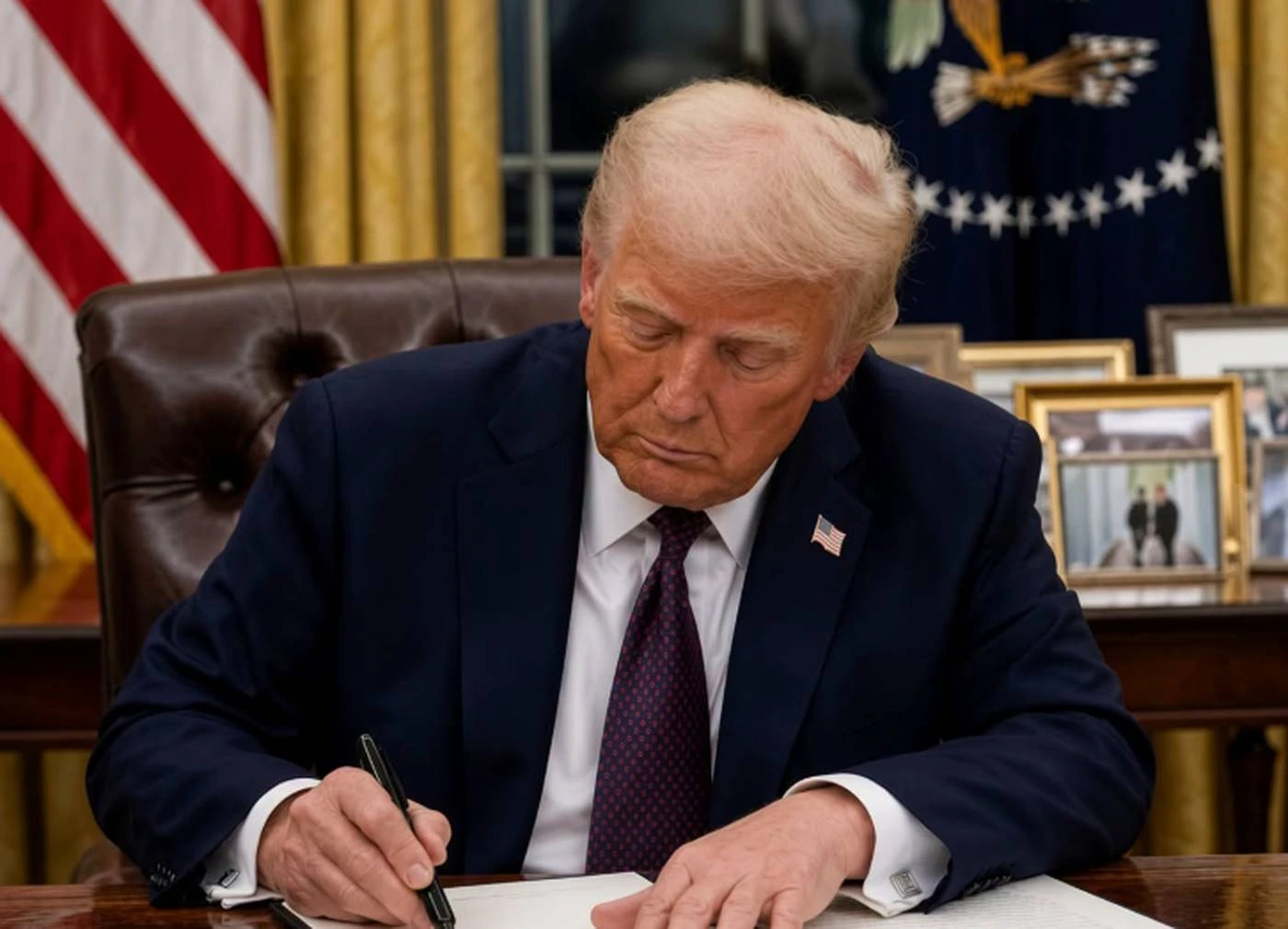
President Donald Trump signed an executive order on Tuesday titled “Restoring Integrity to America’s Financial System” that would require U.S. financial institutions to consider customers’ immigration status when assessing financial risks related to money laundering, terrorism financing, and labor trafficking.
The directive builds on the 1970 Bank Secrecy Act and mandates that the Treasury Secretary and federal financial regulators provide guidance to banks on identifying customers whose profiles or transactions may pose risks to the financial system. The administration framed the order as addressing what it describes as “gaps in customer identification practices” that could allow illicit actors to exploit U.S. banks.
What Happened
The executive order instructs the Treasury Department to work with federal banking regulators to establish “red flags and typologies” that institutions should monitor. These indicators include repetitive cash withdrawals, the use of shell companies to obscure account ownership, and use of certain platforms for wage payments that may not be formally documented.
One provision specifically directs attention to accounts opened or transactions conducted using Individual Taxpayer Identification Numbers (ITINs) rather than Social Security numbers. An ITIN is available to all individuals regardless of immigration status and is used to file and pay taxes. The White House fact sheet characterized foreign consular identification cards as a “potential threat” to the financial system’s integrity.
The order also directs Treasury to consider regulatory changes that would allow financial institutions to more readily collect customer data, including immigration status and employment authorization. The White House argued that lenders extending credit to undocumented immigrants and employers underreporting wages for such workers create costs passed to other consumers through higher fees and interest rates.
The Reaction
The White House stated that “President Trump is taking action to restore integrity to America’s financial system, cracking down on illicit activity that threatens national security and ending the extension of credit to high-risk borrowers that American citizens are forced to subsidize.” The administration cited documented cases involving Chinese-linked money laundering networks as justification for the new approach.
Economists generally point to different factors when explaining consumer lending rates. Benchmark interest rates, which are set by the Federal Reserve to manage inflation and employment, funding costs for banks, and individual borrower characteristics like credit scores typically drive rate changes rather than lending patterns to undocumented immigrants.
Data shows the actual scale of lending to ITIN holders remains modest. A study by the Urban Institute found lenders issued approximately 5,000 to 6,000 mortgages to customers with ITINs. Banks have historically been reluctant to extend credit to ITIN holders, and the government-sponsored enterprises Fannie Mae and Freddie Mac typically do not guarantee mortgages for such borrowers.
What This Means
The order arrives as the administration pursues a broader immigration enforcement agenda and follows a Treasury Department move in November to reclassify certain refundable tax credits as “federal public benefits,” which would restrict eligibility for some non-citizens who file U.S. taxes. Non-citizens, particularly undocumented immigrants, may face additional obstacles in accessing financial services if banks broadly adopt the new guidance.
The measure also reflects ongoing tensions between the administration and financial institutions. Trump has filed a $5 billion lawsuit against JPMorgan Chase and CEO Jamie Dimon over the closure of his accounts following January 6, 2021, repeatedly accusing banks of discriminating against conservatives. JPMorgan Chase said it closes accounts based on “legal or regulatory risk,” not political ideology.
Simultaneously, the White House has pursued a deregulatory agenda benefiting financial firms outside traditional banking frameworks while embracing cryptocurrency. Trump has pledged to make the United States the “crypto capital of the planet,” signaling a mixed approach to financial regulation that combines stricter oversight of certain banking practices with looser constraints on emerging financial sectors.