An Emirates airline flight carrying 300 people crash-landed at Dubai International Airport on Wednesday after the aircraft reported landing gear issues, with all passengers and crew surviving but one firefighter losing his life during the emergency response.
The Boeing 777 aircraft, operating as Flight EK521 from India’s Thiruvananthapuram, touched down at 12:45 p.m. local time. The plane carried 282 passengers and 18 crew members, all of whom evacuated safely within minutes of landing.
What Happened
Flight EK521 declared a landing gear malfunction as it approached Dubai, prompting the crew to prepare for an emergency landing. A passenger, Iype Vallikadan, recounted that pilots informed travelers of the technical issue and the precautions being taken. Social media images showed the aircraft on fire along the runway immediately after touchdown.
Emergency crews responded to the scene, and cabin staff opened all emergency exits simultaneously. Evacuation of all 300 people was completed within minutes, preventing additional casualties among passengers and crew. The airport’s emergency protocols activated as rescue operations began.
Emirates Chairman and CEO Ahmed bin Saeed Al Maktoum confirmed that one firefighter died in the course of emergency response operations. Ten individuals from the flight received hospital treatment for injuries sustained during the evacuation.
The Reaction
Dubai’s General Civil Aviation Authority activated its investigation team in coordination with Emirates and airport officials. Director General Saif Mohamed Al Suwaidi said, “Our primary concern at this moment is the safety and well-being of all passengers and cabin crew.” Boeing, the aircraft’s manufacturer, announced a technical team stands ready to assist the National Transportation Safety Board in investigating the incident.
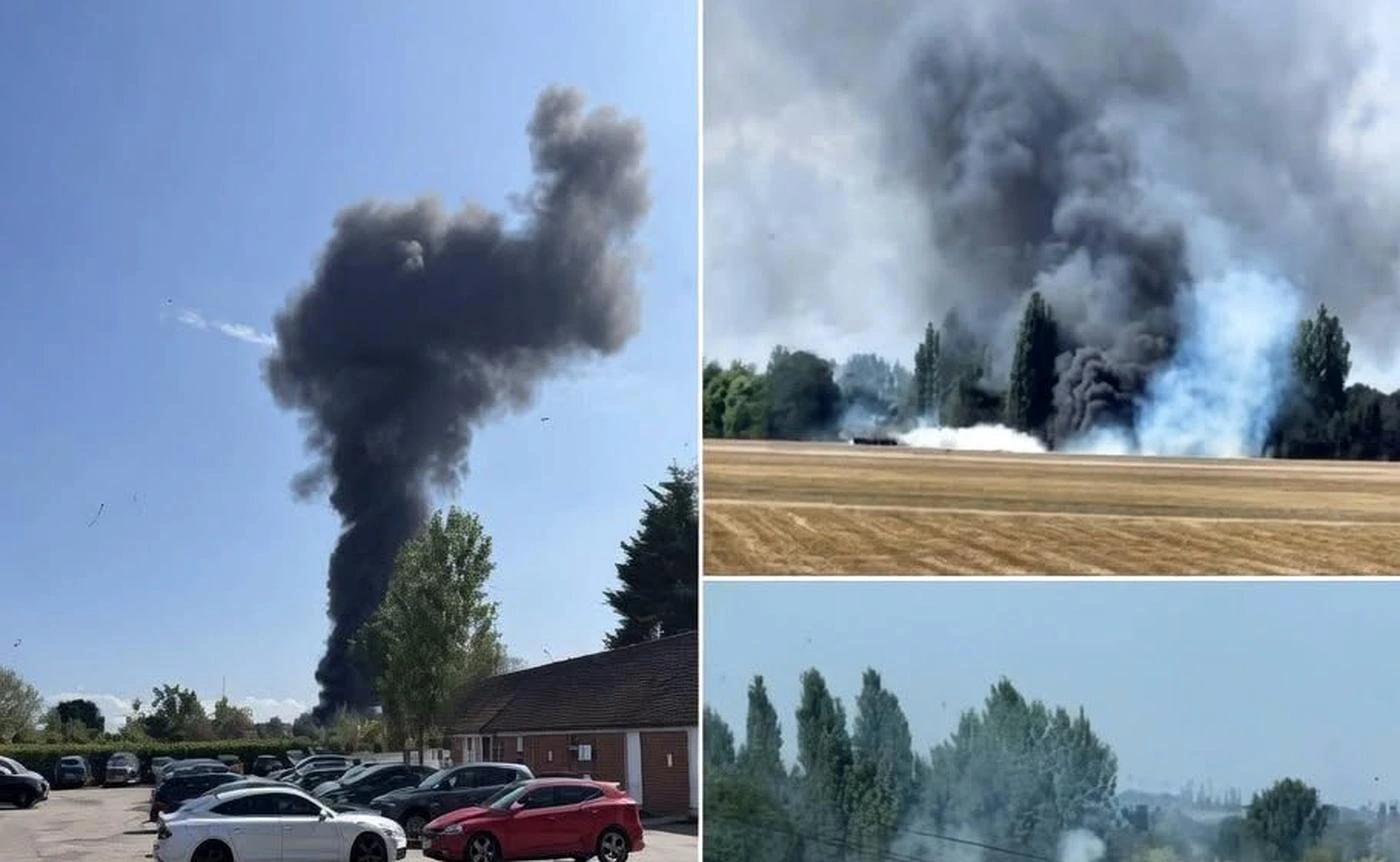
The airline noted that wind shear, or sudden downward air currents, were present at the airport during the aircraft’s descent, though it remained unclear whether this factor contributed to the landing gear malfunction. The crew’s rapid decision to declare an emergency and prepare for an alternative landing procedure proved decisive in preventing more severe outcomes.
What This Means
The passenger manifest reflected the international nature of Dubai’s aviation hub: 226 passengers were from India, 24 from Britain, 11 from the United Arab Emirates, six from Saudi Arabia, and five from Turkey. Citizens of Australia, Brazil, Germany, Malaysia, Thailand, Croatia, Egypt, Bosnia and Herzegovina, Lebanon, the Philippines, South Africa, Switzerland, and Tunisia also were aboard, along with four passengers from Ireland.
Dubai International Airport, the region’s busiest facility with 78 million passengers handled last year, suspended operations while crews cleared the runway. Other flights experienced delays of approximately six hours, with operations resuming shortly before 7 p.m. local time.
Emirates, founded in 1985, has maintained a strong safety record throughout its operational history. The incident underscores both the critical role of pilot training and emergency preparation in aviation safety, as well as the coordination between airlines, airport authorities, and rescue services that enabled such a rapid and successful evacuation outcome despite the emergency circumstances.



