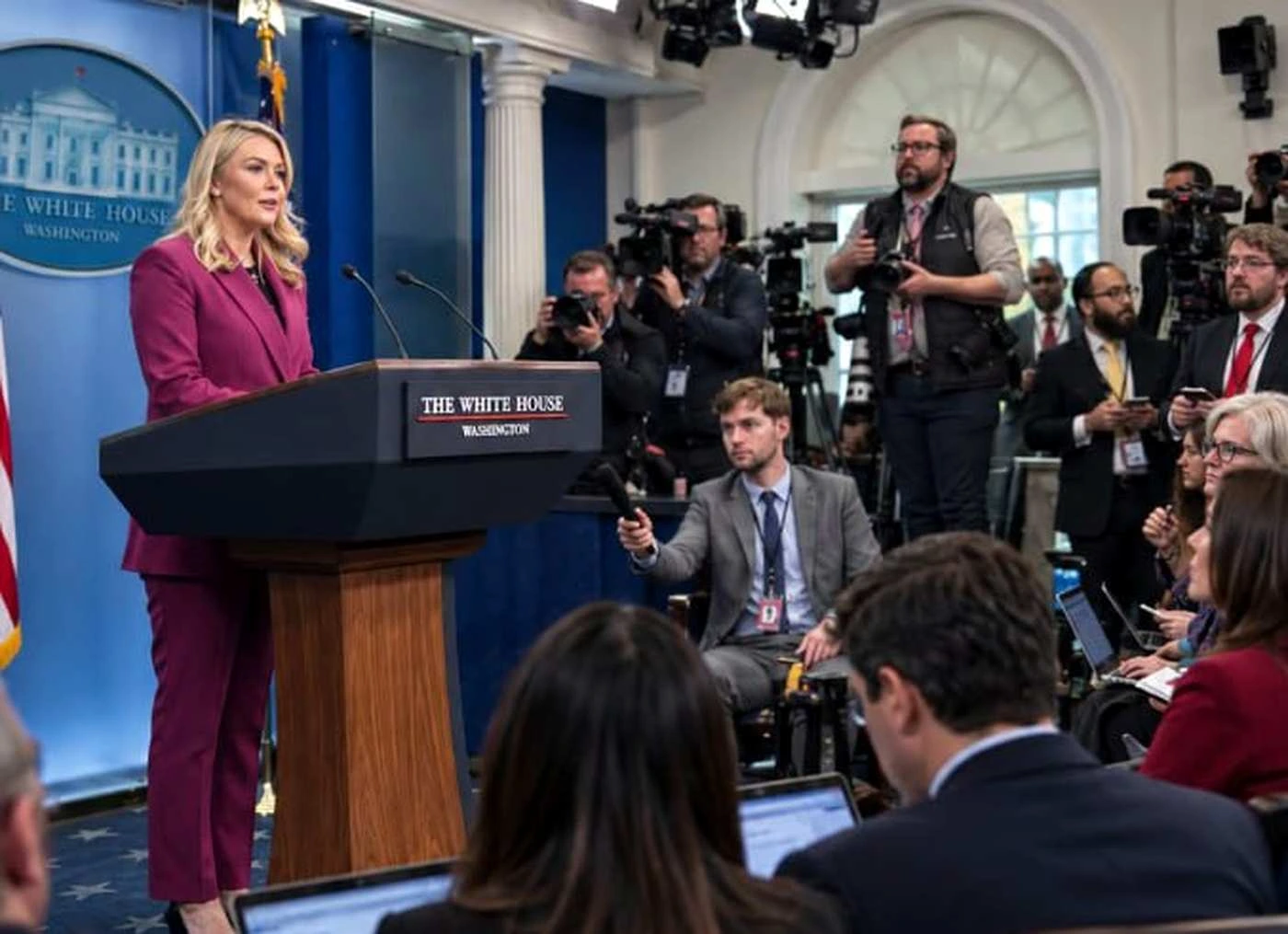
Vice President JD Vance led Thursday’s White House briefing as part of an interim arrangement in which senior officials rotate through the podium while President Donald Trump determines a permanent replacement for departing press secretary Karoline Leavitt.
Leavitt concluded her role on August 27, citing a desire to spend more time with her two young children. Trump has not yet publicly identified a successor, instead directing the White House to implement a temporary system of rotating surrogates to handle daily press briefings.
Vance’s appearance underscores a broader transition period at the White House communications office and reflects the administration’s approach to managing the briefing room in the interim.
What Happened
Vance opened Thursday’s briefing by detailing administration efforts to dismantle what he characterized as fraudulent commercial-driver-license operations. “We have taken over 2,000 fraudulent CDL mills out of business,” Vance said, framing the crackdown as part of broader highway safety and labor protections. He alleged that the previous administration had allowed unqualified immigrants to obtain credentials to operate commercial trucks, a claim the vice president said the Trump administration’s anti-fraud campaign had corrected by removing improperly licensed drivers.
The vice president also cited wage gains in the trucking industry, noting that “we’ve seen trucker wages go up by 7.5 percent,” though he provided no specifics about the time period or wage metric underlying the figure.
A significant portion of the briefing focused on the February 2023 Norfolk Southern train derailment near East Palestine, Ohio, an issue closely tied to Vance’s political career. Before becoming vice president, Vance represented Ohio in the Senate and had repeatedly criticized the federal government’s response to the disaster.
On August 28, Vance and Environmental Protection Agency Administrator Lee Zeldin formally requested that the EPA’s Office of Inspector General conduct an independent investigation into how the Biden administration handled the derailment and its aftermath. The Norfolk Southern train was carrying hazardous materials when it derailed along the Ohio-Pennsylvania border. Several days later, federal officials authorized a controlled vent-and-burn operation involving vinyl chloride from tank cars due to concerns the cars could explode, producing a large chemical plume over the community.
The National Transportation Safety Board later determined that the vent-and-burn operation was unnecessary and had exposed residents and first responders to additional hazards. During Thursday’s briefing, Vance said recently disclosed information had reinforced his conviction that the federal response warranted further scrutiny. “What we’ve learned over the last couple of months is something that I suspected but frankly could never prove,” Vance said, suggesting that the Biden administration had underestimated potential risks.
The Reaction
Vance’s request for an inspector-general review reflects ongoing concern within the Trump administration about decisions made during the derailment response. The inquiry would examine whether federal officials withheld information, made errors, or deliberately misled the public—allegations that remain unproven and would be subject to independent investigation.
The request followed the release of government documents revealing that federal officials possessed modeling data concerning potential hazardous exposure from the chemical plume. Vance and Zeldin asked investigators to assess actions taken by federal, state and private entities involved in the response and to determine whether those decisions adequately safeguarded residents.
When asked about the possibility of the administration declaring an emergency to provide additional assistance to East Palestine, Vance declined to commit. “I wouldn’t want to commit to something unless I would know that it would do some good,” he said, adding only that he would consider the proposal.
What This Means
The derailment has already generated substantial litigation. In 2024, Norfolk Southern agreed to a $600 million class-action settlement with residents and businesses affected by the disaster, though the company denied wrongdoing as part of the accord. Questions about long-term health risks, environmental monitoring and the handling of information have persisted among residents.
Vance’s appearance highlighted the practical realities of the White House briefing room in the absence of a permanent press secretary. The rotation system signals that the administration intends to use senior officials, not just career communications staff, to shape public messaging on priority issues. As the Trump administration continues its search for a permanent replacement, the pattern of rotating surrogates may continue to define how the White House engages with the press.



