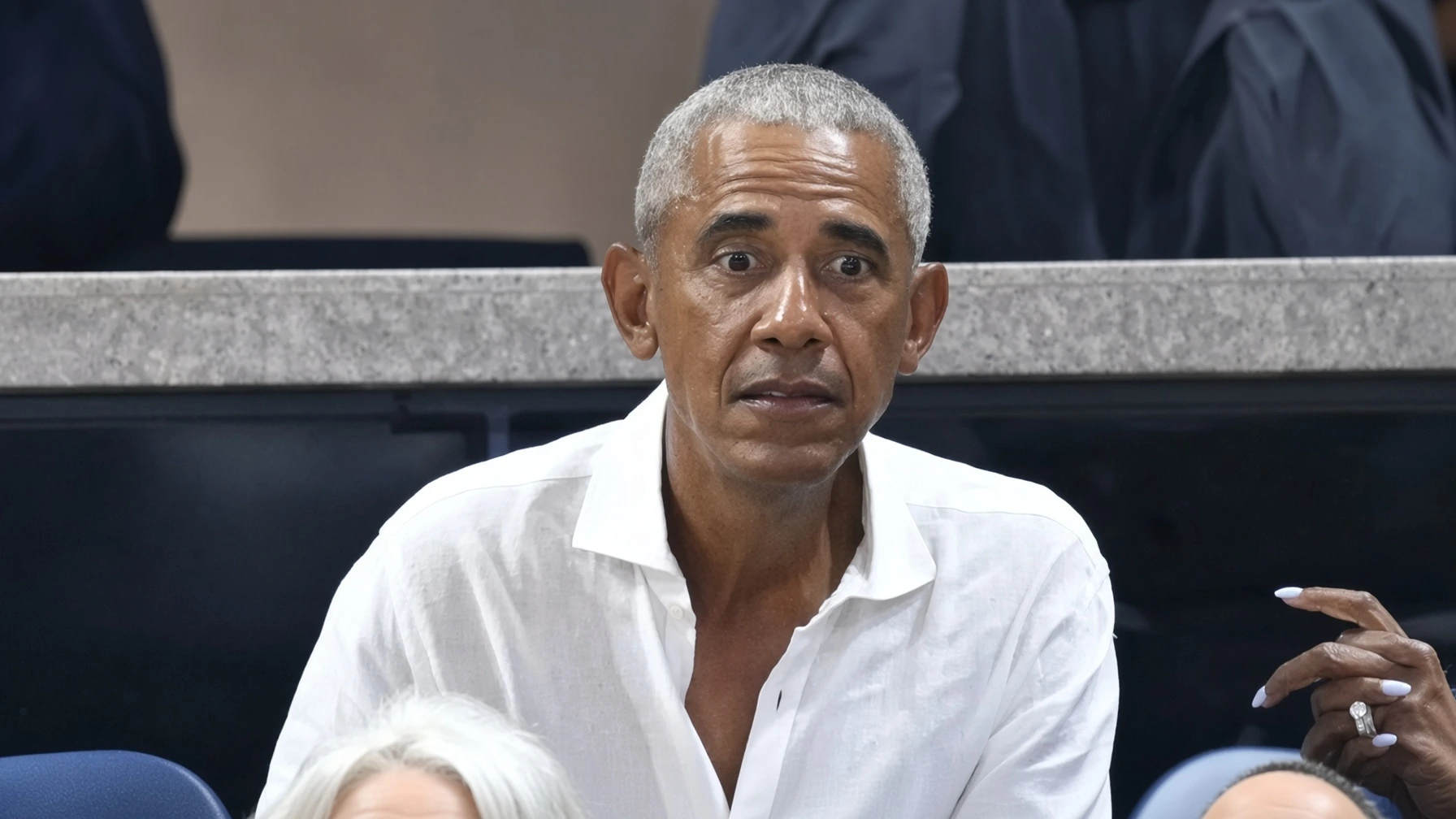
Former President Barack Obama faced criticism from NBA player Kyle Kuzma over his campaign messaging in Michigan on Saturday, with the athlete arguing that voters prioritize economic concerns over the religious identities of candidates.
Obama traveled to Detroit to campaign for Democratic Senate nominee Abdul El-Sayed and gubernatorial nominee Jocelyn Benson at a rally held at Cass Technical High School. During his remarks, Obama highlighted El-Sayed’s Muslim faith and Democratic Sen. Elissa Slotkin’s Jewish faith, describing them as a potential “power duo” that Michigan voters could be proud of.
Kuzma, a 31-year-old Milwaukee Bucks forward and native of Flint, Michigan, responded swiftly on social media. “This desperate psyop is unbearable to watch in Michigan. So tired of listening to it,” Kuzma wrote, adding that one in four Black people in Michigan live below the poverty line. “The message is Muslim/Jewish duo is what we’re talking about,” he continued, questioning the campaign’s priorities.
What Happened
Obama’s Detroit appearance aimed to mobilize voters during the campaign’s final stretch, part of a broader Democratic effort across Midwestern battlegrounds. During his speech, Obama defended El-Sayed against political attacks tied to his Muslim faith, drawing parallels to false claims about Obama’s own background during his presidential campaigns. “They may even use your name or your faith to somehow suggest you are dangerous,” Obama told the crowd, referencing his own experience with similar allegations.
El-Sayed, whose family immigrated from Egypt, used the rally to emphasize his patriotism and argue that criticism of American policies should not be conflated with hostility toward the country. He has previously denied any ties to or support for the Muslim Brotherhood, an Islamic organization designated as a terrorist group by the United States and other nations.
Kuzma’s critique focused on what he viewed as a disconnect between campaign messaging and voter priorities. “Last thing that Michiganders care about is a religious identity pitch. And on top of that, Michigan is a state where the population of Muslims and Jews are both 1 percent. What are we talking about,” Kuzma wrote, emphasizing economic hardship as the central concern for the state’s residents.
The Reaction
Kuzma’s use of social media to engage in political commentary reflects his growing willingness to address issues beyond basketball. The University of Utah alumnus entered the NBA in 2017, won a championship with the Los Angeles Lakers in 2020, and later joined the Milwaukee Bucks. His criticism carried particular weight given his roots in Flint, a city that has faced significant economic challenges in recent decades.
Michigan voters have consistently ranked economic concerns among their top priorities in recent polling. A Fox News survey conducted in late September found that cost of living ranked alongside immigration and U.S. policy toward Israel as issues deemed extremely important by Michigan voters when deciding their Senate vote. That same poll showed El-Sayed holding a narrow one-point advantage over Republican nominee Mike Rogers, a margin within the survey’s sampling error.
Rogers, a former congressman and chairman of the House Intelligence Committee, previously competed in Michigan’s other 2024 Senate race, narrowly losing to Slotkin. Trump carried Michigan in the 2024 presidential election by less than two percentage points, highlighting the state’s competitive political landscape in statewide contests.
What This Means
The exchange underscores ongoing debate within Democratic circles about messaging strategy and voter priorities heading into major elections. Campaign decisions about which issues to emphasize and which candidate qualities to highlight can significantly influence voter engagement, particularly in closely divided swing states.
The Michigan race illustrates how competing campaign strategies reflect different assumptions about what motivates voters. Whether voters respond more strongly to messaging centered on diversity and representation or to discussions of economic policy and poverty could shape not only individual races but broader strategic approaches across multiple campaigns. The coming weeks will reveal how these contrasting messages resonate with Michigan’s electorate.



