An election analyst asked ChatGPT to forecast the 2028 U.S. presidential race, and the artificial intelligence model produced a detailed state-by-state projection showing a commanding Republican victory in a hypothetical matchup between Vice President JD Vance and California Governor Gavin Newsom.
The simulation, which went viral on YouTube’s Election Time channel, walked through an entire Electoral College map filled in by poll-closing order. The video generated fresh discussion around the 2028 race by demonstrating how a large language model approaches electoral forecasting when given minimal parameters beyond candidate names.
What Happened
The election content creator began by asking ChatGPT to select the most likely nominees from each party. On the Democratic side, the model chose Newsom despite polling that showed him trailing former Vice President Kamala Harris by 15 points at the time of the simulation. The host noted that betting markets on Kalshi listed Newsom as a 19 percent favorite in the Democratic primary, ahead of Rep. Alexandria Ocasio-Cortez and Senator Jon Ossoff.
For Republicans, ChatGPT selected Vance without hesitation. “On the Republican side, AI chose JD Vance. He’s the clear leader in the polls and according to Kalshi, the vice president has a 41 percent chance of being the next GOP nominee,” the host explained. This set the stage for the AI to simulate a general election between the two figures.
The simulation unfolded hour by hour, matching actual poll-closing times. In the 7 p.m. Eastern wave, Indiana and Kentucky went solidly Republican, while South Carolina leaned Republican by 14 points. Georgia, according to the projection, would lean Vance by 4 percentage points—described as “doubling President Trump’s margin from 2024″—while Virginia remained lean Democratic for Newsom by 3 points. After the initial closings, Vance led 44 electoral votes to Newsom’s 16.
The 8 p.m. wave proved consequential. ChatGPT projected that New Hampshire would tip Republican by 0.9 percent, marking the first GOP win in that state since 2000. Pennsylvania was shown leaning Republican. By the end of that hour, Vance had accumulated 178 electoral votes, positioning him within striking distance of the 270 needed for victory.
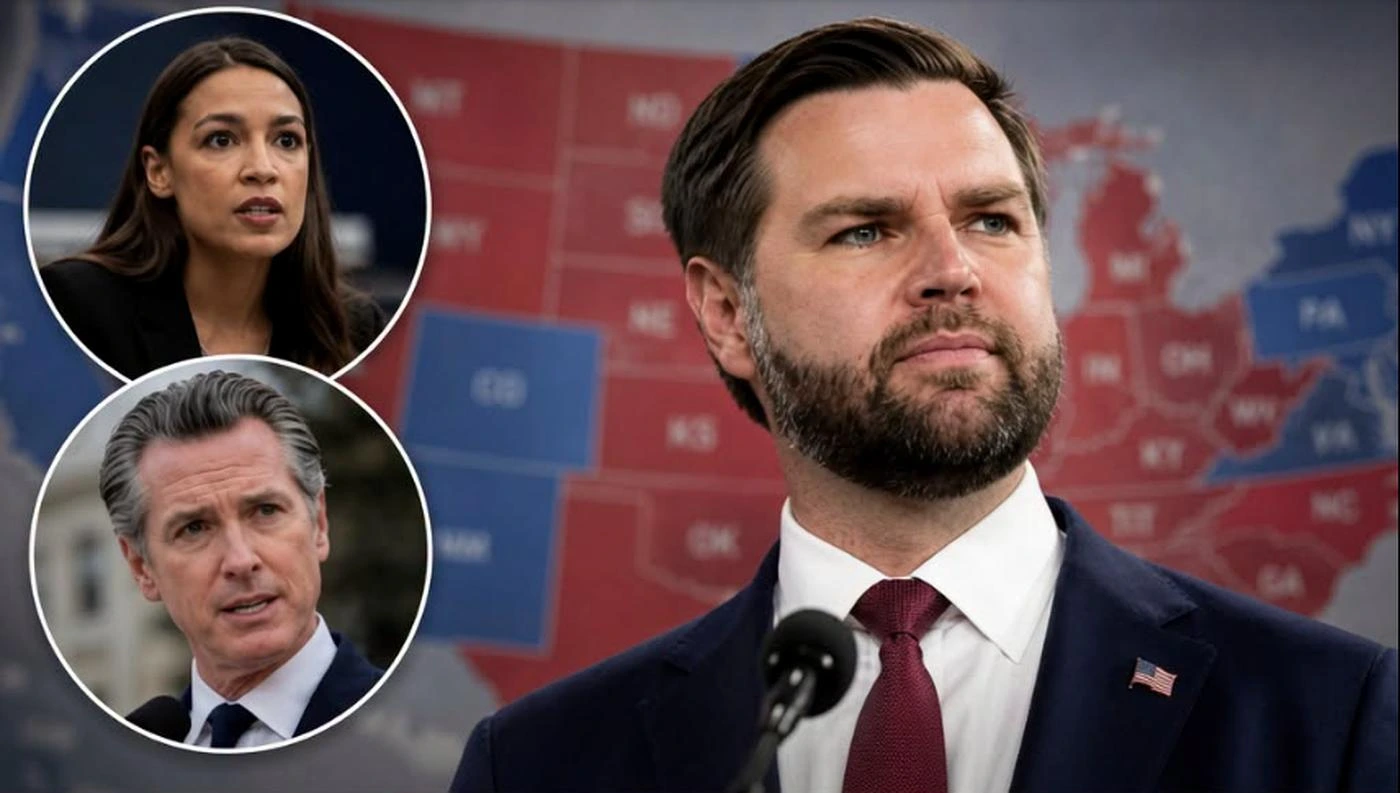
The model’s most striking projections emerged in the 9 p.m. closings. Minnesota went lean Republican by 1.2 points in the simulation, which would mark the first Republican victory there since Richard Nixon in 1972. Wisconsin and Michigan both leaned Republican by 2 to 4 points. Arizona leaned Republican by 4 percent, and Nevada followed as lean Republican by 3 to 4 points.
The Reaction
As the simulation concluded, ChatGPT’s final projection showed Vance winning 326 electoral votes to Newsom’s 212. The host framed this outcome as historically significant, noting that “this would make Newsom’s performance the worst for any Democrat since Michael Dukakis in 1988.” The video went viral across social media platforms, sparking debate about artificial intelligence’s capacity to model electoral scenarios and whether large language models can meaningfully contribute to political forecasting.
The projections were not presented as actual predictions of what will occur in 2028, but rather as a demonstration of how an AI system processes historical data, polling trends, and market probabilities when asked to simulate an election. The scenario served as a thought experiment, illustrating both the capabilities and limitations of generative AI when applied to political analysis.
What This Means
The exercise highlighted how artificial intelligence tools are increasingly being used to explore electoral possibilities, though such simulations come with significant caveats. ChatGPT’s projection was based on available information at the time, betting market odds, and its training data—not proprietary polling or insider knowledge. Actual election outcomes depend on countless variables, from economic conditions to unforeseen events, that cannot be reliably predicted months or years in advance.
The viral video underscores growing public interest in using technology to explore political scenarios as the 2028 race takes shape. Whether AI-generated election forecasts influence how voters think about the coming campaign or simply serve as entertainment remains an open question heading into the election cycle.



