The Supreme Court ruled 6-3 on Tuesday in Cisco Systems v. Doe that private plaintiffs can no longer bring lawsuits against American companies for aiding and abetting violations of international law under the Alien Tort Statute or Torture Victim Protection Act, fundamentally reshaping how U.S. courts handle allegations of corporate complicity in overseas human rights abuses.
The decision reversed decades of judicial expansion in this area, closing off a legal path that opened after the Court’s landmark 1980 Sosa decision. Justice Amy Coney Barrett authored the majority opinion, joined by Chief Justice John Roberts and Justices Clarence Thomas, Samuel Alito, Neil Gorsuch, and Brett Kavanaugh.
What Happened
The case originated from claims brought by Falun Gong practitioners who alleged that Cisco Systems and its executives aided China’s government persecution by supplying surveillance networking equipment. The Ninth Circuit had allowed the claims to move forward, but the Supreme Court reversed that decision. “Today, we close the door that Sosa cracked and hold that courts may not create new causes of action for violations of international norms,” Barrett wrote in the majority opinion.
Barrett emphasized that while the Torture Victim Protection Act of 1991 provides an express cause of action for direct torture, it does not extend to aiding-and-abetting liability. The core question centered on whether companies and their leaders could face legal consequences for selling products or services to governments that subsequently deploy those tools in human rights violations.
The Reaction
The three dissenters offered sharp critiques from different angles. Justice Sonia Sotomayor, joined by Justices Elena Kagan and Ketanji Brown Jackson in parts, argued the majority “jettisons two decades of settled precedent” and “shuts the courthouse doors to almost any claimed violation of international law under the ATS.” Justice Jackson concurred in part and dissented in part, agreeing with narrowing the Alien Tort Statute but contending the Torture Victim Protection Act’s text could support aiding-and-abetting liability in certain circumstances.
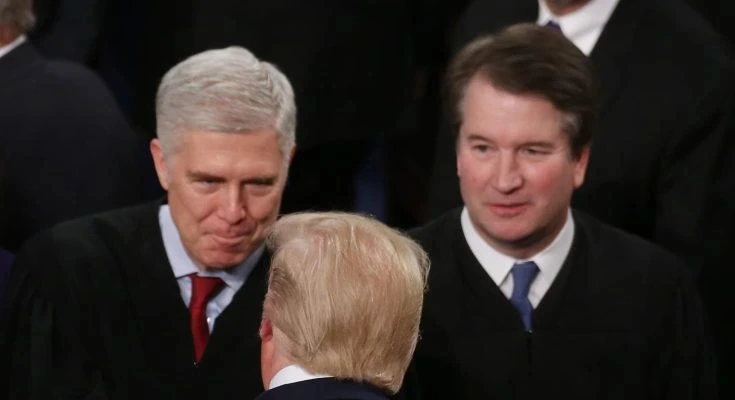
The Trump administration had supported Cisco’s position throughout the litigation, with the Solicitor General appearing at oral argument to characterize the lower court’s approach as judicial overreach that exposes American firms to unpredictable foreign-policy disputes.
What This Means
The ruling eliminates a substantial source of litigation risk for multinational corporations. Foreign plaintiffs alleging that American companies enabled overseas abuses will no longer have access to U.S. federal courts under these two statutes for aiding-and-abetting theories, narrowing the scope of international human rights cases considerably.
Barrett grounded the decision in separation of powers doctrine, stressing that Congress, not courts, holds authority to create causes of action. She cautioned that judicial creation of new liability under the Alien Tort Statute risks “adverse foreign policy consequences” and pulls the judiciary into areas properly reserved for executive and legislative branches.
The decision reflects a broader doctrinal trend toward textual constraints on judicial authority. By rejecting implied causes of action and requiring statutes to explicitly authorize aiding-and-abetting liability, the Court reinforced boundaries that limit judge-created remedies in federal law.



