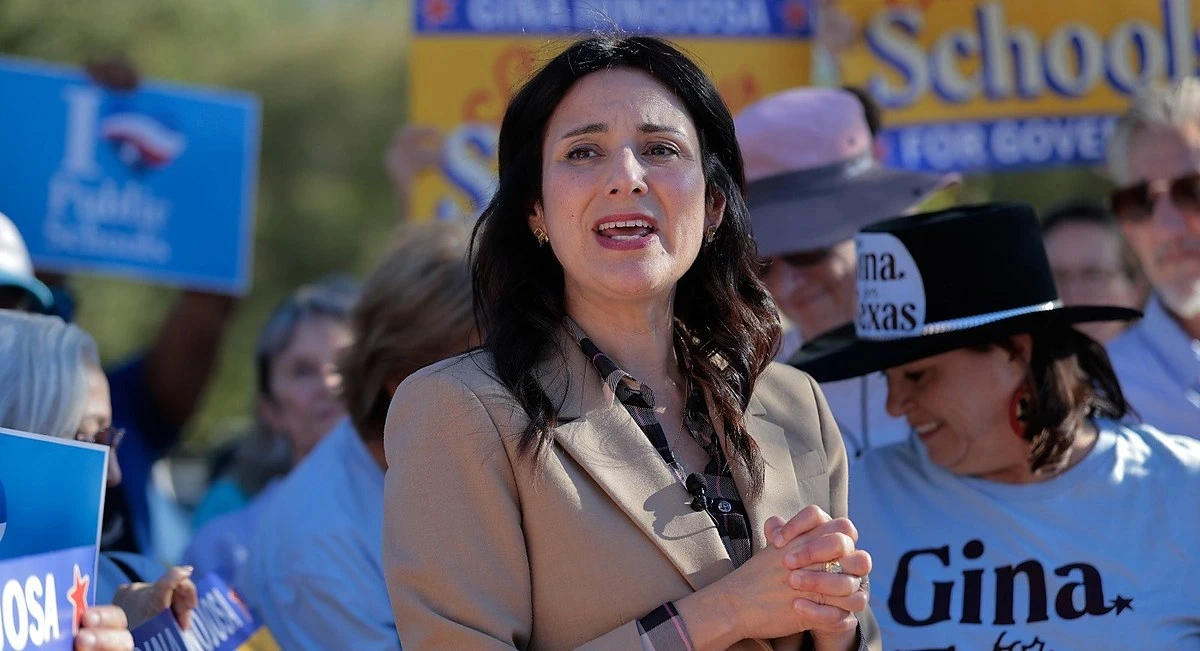
Texas Governor-elect Gina Hinojosa, a Democratic state representative from Austin who defeated three-term Republican incumbent Greg Abbott in this week’s election, has refused to pledge continuation of the state’s $11 billion Operation Lone Star border-security initiative, creating uncertainty about the direction of one of the nation’s most aggressive state-level immigration enforcement programs.
Hinojosa’s victory represents the first Democratic governor elected in Texas since Ann Richards in 1990. Her win immediately raises questions about the future of Abbott’s signature border initiative, which since its 2021 launch has positioned Texas as a leading state partner in federal immigration enforcement efforts.
Operation Lone Star has deployed more than 10,000 National Guard members and funded construction of sections of barrier along the Texas-Mexico border. Hinojosa voted against the program’s initial funding and has criticized Abbott’s border security approach, yet she has not committed to dismantling the entire operation when she takes office in January.
What Happened
In recent public remarks, Hinojosa has emphasized fiscal responsibility and questioned how border funding is being spent. “As governor, I’ll put in the work to secure the border, not waste working Texans’ money on political theater,” she said. When asked about specific spending cuts, Hinojosa noted that billions have been allocated to prosecuting migrants for trespassing while also financing their legal defense costs.
Hinojosa has drawn clear distinctions on certain border policy elements. She has opposed additional border-wall construction in the Big Bend region, arguing that barriers are unnecessary in that area. She has also criticized Immigration and Customs Enforcement operations and Texas cooperation with certain federal immigration programs, accusing Abbott of positioning the state as a “staging ground” for enforcement actions that she said harmed families.
Hinojosa’s statements leave open the possibility that portions of Operation Lone Star could continue under new management while other components are redirected or eliminated. Her position on immigration extends beyond her criticism of Abbott’s approach. She has publicly acknowledged that Trump administration immigration policies have contributed to reduced illegal border crossings, creating a more nuanced stance than her opposition rhetoric alone suggests.
Hinojosa pointed to international coordination as a model for success, citing an instance when she contacted Biden administration officials regarding a bridge closure, which led to negotiations with Mexican authorities. She has argued that cooperation with Mexico and federal agencies can produce better results than state-directed enforcement efforts operating independently.
The Reaction
Republican control of the Texas Senate may constrain portions of Hinojosa’s legislative agenda and require negotiations over future border appropriations. Operation Lone Star’s ultimate fate will depend on budget discussions and executive decisions made after she takes office.
Abbott emerged as one of the nation’s most aggressive Republican governors on border issues during the Biden presidency, deploying state personnel, installing razor wire, constructing barriers, and transporting migrants to cities across the country. A Democratic governor may be less willing to provide the same level of state resources for these operations.
Changing conditions at the southern border may provide flexibility as Hinojosa determines which portions of Operation Lone Star warrant continuation. During the Biden administration, border encounters repeatedly reached record levels, but crossings have declined under current federal policies.
What This Means
The implications are particularly significant given that Texas shares approximately 1,250 miles of international border with Mexico—more than any other state. Immigration enforcement decisions could shape some of Hinojosa’s earliest actions as governor.
Hinojosa focused her campaign on affordability, public education, and reducing corporate influence in state government, yet border policy will likely present both immediate choices and long-term budget implications for her administration. Her tenure will test whether a Democratic executive can reshape a state border program without facing legislative obstruction or escalating federal-state tensions over immigration enforcement.



