President Donald Trump warned Sunday that the United States would target Iran’s oil infrastructure and power plants if the Iranian government does not accept a peace agreement within days, while simultaneously signaling that negotiations are progressing.
Trump’s statement on Truth Social outlined conditions he said would trigger a substantial escalation of military operations. The remarks came as Secretary of State Marco Rubio told international partners that current U.S. military actions in Iran could conclude “within weeks” if present objectives continue on track.
What Happened
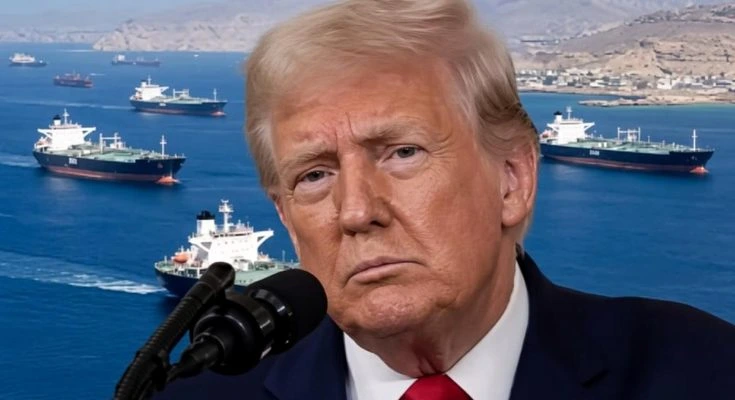
Trump said the United States is engaged in “serious discussions with a new, and more reasonable, regime” to end military operations. “Great progress has been made but, if for any reason a deal is not shortly reached, which it probably will be, and if the Hormuz Strait is not immediately ‘Open for Business,’ we will conclude our lovely ‘stay’ in Iran by blowing up and completely obliterating all of their Electric Generating Plants, Oil Wells and Kharg Island (and possibly all desalinization plants!), which we have purposefully not yet ‘touched,'” he wrote.
Trump characterized the threatened action as retaliation for what he described as Iranian killings of American service members and others under the previous regime. The military conflict between the U.S., Israel, and Iran began February 28 and has involved strikes on Iranian leadership and military installations.
Special envoy Steve Witkoff said a 15-point proposal has been presented to Iran and remains on the negotiating table. “We expect an answer from them and it would solve it all,” Witkoff said.
Rubio provided more concrete timing in remarks made Friday following meetings with Group of Seven foreign ministers in France. He said the military operations timeline aligns with earlier administration projections of four to seven weeks. “It’s a question of weeks, not months,” Rubio said when asked about the duration.
The Reaction
Rubio acknowledged that messages have been exchanged with Iranian representatives about potential negotiations, though he noted uncertainty about who would formally represent Tehran at talks. “We’ve had an exchange of messages and indications from the Iranian system, whatever’s left of it, about a willingness to talk about certain things,” Rubio said.
Iran’s Foreign Minister Abbas Araghchi warned that Tehran would impose a “heavy price” in response to what Iranian officials described as Israeli strikes on nuclear facilities and industrial sites. The Islamic Revolutionary Guard Corps threatened potential retaliation against infrastructure tied to the U.S. and Israel, including industrial and energy-related assets.
The G7 nations issued calls for restoration of full navigation through the Strait of Hormuz, a critical waterway through which approximately 20 percent of the world’s oil and liquefied natural gas transits. Iranian officials have been accused of restricting passage and reportedly charging some vessels for safe transit.
What This Means
The competing threats and diplomatic overtures reflect the delicate position both sides occupy. Trump’s statement suggests willingness to pursue negotiations while maintaining pressure through the threat of intensified military action. For global energy markets, the status of the Strait of Hormuz remains a central concern, with any prolonged restrictions potentially affecting oil prices and international shipping.
The timeline provided by Rubio indicates the administration expects resolution or a significant shift in military posture within the coming weeks. How Iran responds to the 15-point proposal and whether negotiations can overcome fundamental disagreements on key issues will likely determine whether the threatened escalation materializes or negotiations advance toward settlement.



