James Fishback, a former Florida gubernatorial candidate and investment executive, announced this week that he will seek the Republican presidential nomination in 2028, becoming an early entrant into what national polling suggests will be a wide-open race for both parties.
Fishback finished fourth in Florida’s August 2026 Republican gubernatorial primary, drawing approximately 10.4 percent of the vote after positioning himself as a conservative outsider focused on affordability and immigration restrictions. His entry into the 2028 field comes as early national surveys show significant divergence between Republican and Democratic primary voters in their readiness to coalesce around front-runners.
What Happened
Fishback, who founded the investment firm Azoria and established the student debate nonprofit Incubate Debate, centered his gubernatorial campaign on proposals to restrict corporate home purchases, limit employment visas, eliminate property taxes, and oppose large data center construction. These positions set him apart from other Republicans competing to succeed term-limited Governor Ron DeSantis, though he could not overcome the backing of President Donald Trump for Congressman Byron Donalds, who won the primary with 47.9 percent of the vote.
His campaign website, which previously detailed his gubernatorial ambitions, now frames that chapter as complete while signaling a new one ahead. Fishback’s announcement places him among the earliest candidates to formally declare for the 2028 contest, which remains more than two years from the first presidential primaries.
The Reaction
Recent polling from The New York Times and Siena University offers context for Fishback’s entry into a Republican field that early surveys suggest is already taking shape. Vice President JD Vance leads potential Republican primary voters with 33 percent support, holding a 10-point advantage over Secretary of State Marco Rubio, who stands at 23 percent. Trump himself registered 8 percent despite constitutional restrictions on a third term, while former Governor DeSantis received 3 percent.
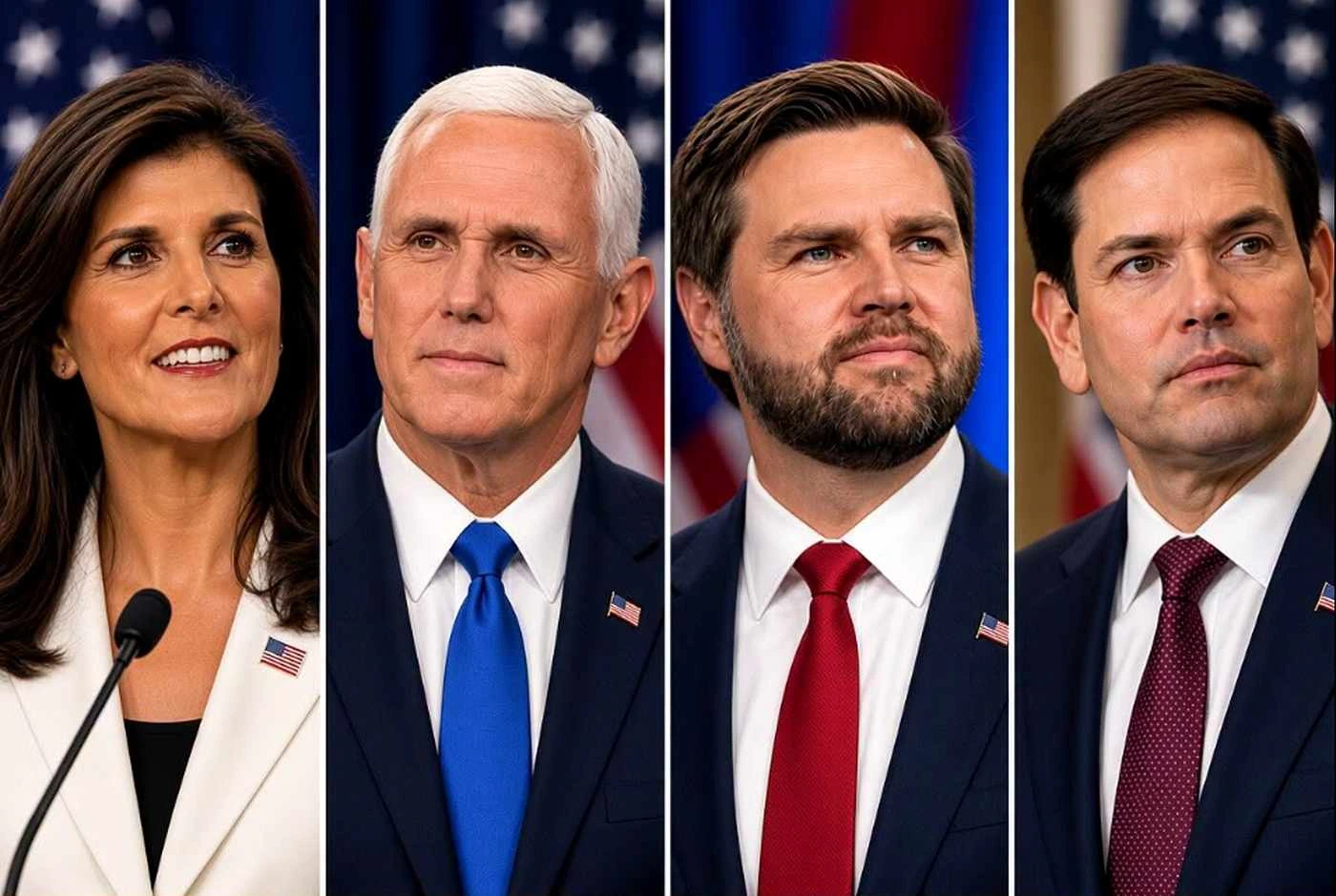
The Republican results show considerably more voter consolidation than the Democratic side, with Vance and Rubio combined accounting for 56 percent of GOP primary voter support. Only 26 percent of Republican respondents reported being undecided, suggesting the party has begun aligning behind figures closely associated with the Trump administration.
The Democratic primary picture presents a starkly different landscape. Forty-five percent of Democratic voters said they did not know whom they would support if a primary were held today. Former Vice President Kamala Harris, the most frequently named Democratic candidate, drew only 12 percent, followed by California Governor Gavin Newsom at 9 percent, former Transportation Secretary Pete Buttigieg at 7 percent, and New York Representative Alexandria Ocasio-Cortez at 6 percent.
What This Means
Fishback’s announcement signals early momentum in the Republican primary field, though early polling and name recognition typically shift substantially during the 18 months before formal campaigns conclude. No major Republican candidate has formally entered the race beyond Fishback, and Vice President Vance has not publicly declared his intentions for 2028. Trump has repeatedly praised both Vance and Rubio when discussing the party’s future, suggesting his endorsement could become decisive in a field that early surveys show gravitating toward the sitting administration’s figures.
The divergence between Republican consolidation and Democratic uncertainty reflects distinct party dynamics heading into the cycle. Republicans appear ready to coalesce around establishment-aligned candidates, while Democrats face an unsettled landscape with nearly half of primary voters still undecided and no consensus candidate emerging. The early nature of these surveys means substantial movement remains possible as the formal campaign season approaches.



