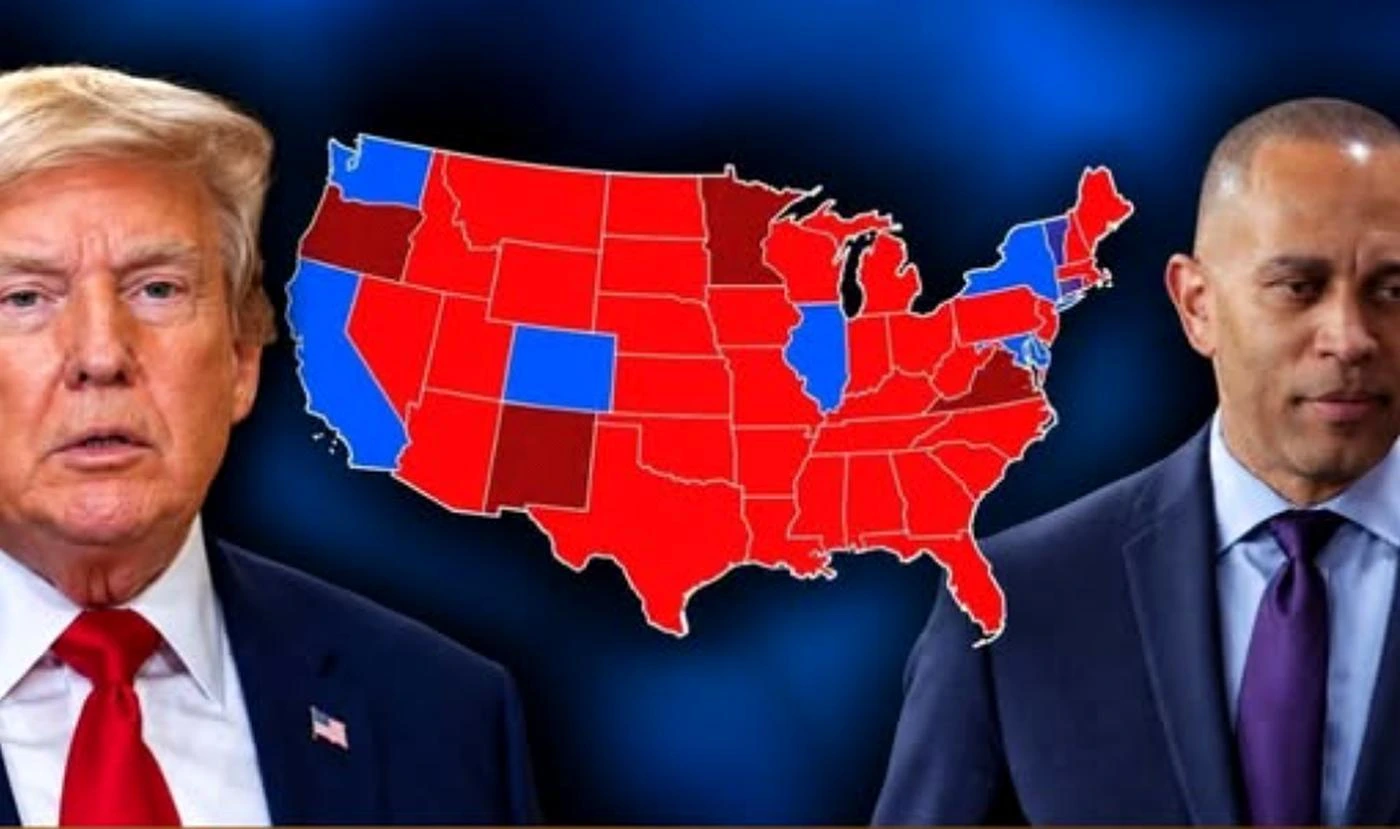
A recent analysis using predictive modeling projects Republicans will maintain control of the U.S. Senate following the November 2026 midterm elections, with Democrats facing steep odds despite multiple competitive races nationwide.
The projection comes as campaign spending accelerates and forecasting organizations release conflicting assessments of which party holds the advantage. Republicans currently control 53 Senate seats, while Democrats and two independents hold 47, meaning Democrats need a net gain of four seats to capture the majority given Vice President JD Vance’s tie-breaking power.
What Happened
Thirty-five Senate seats are contested in the 2026 cycle, including special elections in Florida and Ohio. A video presentation titled “My FINAL 2026 Senate Map Prediction, One Week Till The Midterms” detailed seat-by-seat projections across the country.
The Cook Political Report has identified seven races as tossups: Alaska, Iowa, Kansas, Maine, Michigan, Ohio, and Texas. Texas has emerged as an unexpected competitive battleground despite Republican dominance in recent statewide elections. Republican Attorney General Ken Paxton faces Democratic state Representative James Talarico for the seat being vacated by John Cornyn, though Trump won Texas comfortably in 2024.
Ohio features a matchup between Republican Senator Jon Husted and former Democratic Senator Sherrod Brown, whose statewide experience competes against Ohio’s recent Republican presidential voting patterns. In Maine, Republican Senator Susan Collins faces Democrat Troy Jackson despite her demonstrated crossover appeal. Michigan presents an open-seat contest between Republican Mike Rogers and Democrat Abdul El Sayed, while Alaska Republican Dan Sullivan defends against former Democratic Representative Mary Peltola.
Additional competitive races include Republican Ashley Hinson in Iowa and Republican Roger Marshall in Kansas. South Carolina, Nebraska, Mississippi, North Carolina, and Georgia have drawn significant party spending as both sides defend priorities. Democratic Senator Jon Ossoff seeks reelection in Georgia, a state with closely divided recent results.
The Reaction
Forecasting organizations diverge on Senate control probabilities. Decision Desk HQ’s October 28 forecast assigned Democrats a 58% chance of taking the chamber, projecting a 51-to-49 Democratic majority as its central scenario. Another forecast model placed Republicans at a 67% chance of retaining control, indicating substantial uncertainty among analysts.
Republican financial resources remain substantial. President Donald Trump’s flagship super PAC, MAGA Inc., held more than $164 million on October 14 after spending nearly $277 million from early September through mid-October supporting Republican candidates. The organization transferred $200 million to No Going Back PAC and $25 million to Safety and Affordability PAC. Trump announced plans for his broader political operation to spend more than $400 million before Election Day across advertising, rallies, voter contact, and campaign activities.
Trump-aligned committees have deployed significant resources in key contests. Reuters reported these groups spent more than $36 million supporting Paxton in Texas, approximately $30.1 million backing Mike Rogers in Michigan, and over $28 million assisting Jon Husted in Ohio. Major contributors to MAGA Inc. include Stephen Wynn, who gave $8 million in September, and Stephen Schwarzman and Diane Hendricks, each contributing $5 million.
Republican party committees collectively held approximately $187 million at September’s end, compared to roughly $100 million for Democratic counterparts. The National Republican Congressional Committee reported raising $50 million during the third quarter and entering October with approximately $61 million available. Democratic Congressional Campaign Committee balances reached $55.7 million entering October after raising approximately $249 million this cycle.
What This Means
Republicans can afford to lose some competitive races and still maintain Senate control. The structural advantage of needing only four net seats rather than an outright majority provides a buffer as dozens of races remain fluid weeks before Election Day. The financial disparity between Republican and Democratic committees, combined with Trump’s political mobilization, creates operational advantages that could prove decisive in close contests.
The wide disparity in forecasting models—with Decision Desk HQ favoring Democratic control while other analysts project Republican retention—reflects genuine uncertainty about turnout, candidate performance, and late-breaking campaign dynamics. How these competitive states ultimately break could reshape the balance of power in the chamber and determine the legislative agenda for the remainder of Trump’s presidential term.



