An Emirates aircraft carrying 300 people crash-landed at Dubai International Airport after a landing gear malfunction, leading to a cabin fire, the safe evacuation of all passengers and crew, and the death of one firefighter during rescue operations.
Emirates Flight EK521, departing from Thiruvananthapuram, India, approached Dubai International Airport on Wednesday afternoon under clear skies. The flight carried 282 passengers and 18 crew members bound for what should have been a routine arrival. Minutes before touchdown, the pilot issued a precautionary warning about a possible landing gear issue, a signal that would soon prove significant.
What Happened
At 12:45 p.m. local time, the aircraft touched down on the runway. Within moments, the landing gear collapsed, causing the plane to skid across the tarmac. Flames erupted from the fuselage as the aircraft came to rest, and smoke rapidly filled the cabin.
The situation escalated quickly from a manageable technical problem to a full-scale emergency. Passengers, many of whom had remained calm during the descent, suddenly faced the immediate threat of fire and smoke. Flight attendants immediately activated emergency protocols, preparing the aircraft’s evacuation slides.
The Reaction
Evacuation proceeded with both urgency and order. Passengers described chaotic but coordinated moments as crew members directed them toward emergency exits, with many leaving behind luggage and belongings to prioritize survival. Within minutes, all 300 people on board had exited the aircraft via emergency slides.
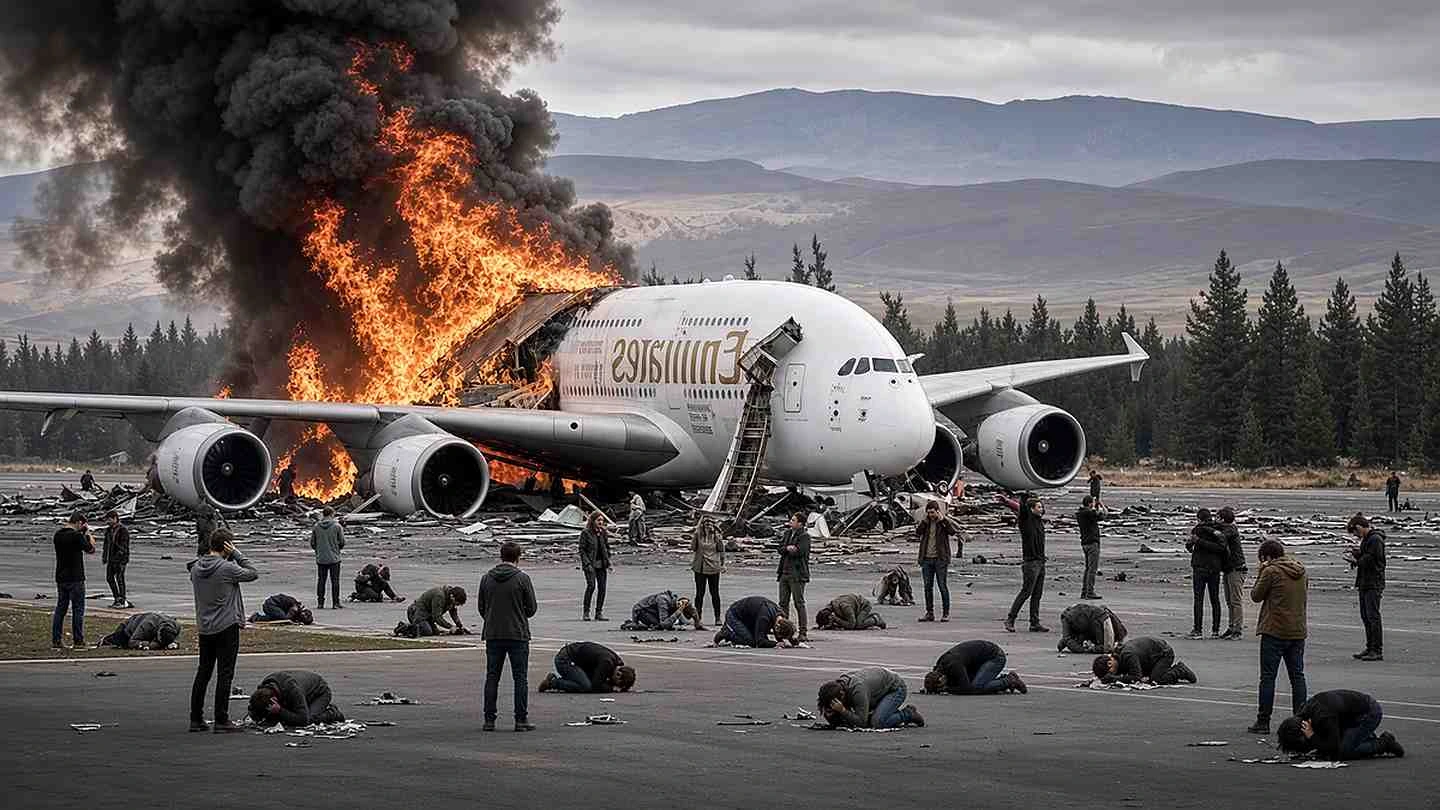
Ground rescue teams, meanwhile, faced extreme conditions as they battled the intensifying fire. A firefighter died during the rescue operation, his death occurring while first responders worked to control the blaze and ensure no one remained in the aircraft. Ten passengers were hospitalized with minor injuries, though officials reported none were life-threatening.
Emirates Airlines issued a statement expressing gratitude that all passengers and crew survived the incident. The airline also extended condolences to the family of the deceased firefighter. Dubai International Airport temporarily suspended operations while emergency services cleared the runway and documented the scene.
What This Means
Initial investigations point to wind shear—a sudden, localized change in wind speed or direction—as a possible contributing factor to the landing difficulties. Aviation experts note that wind shear can destabilize an aircraft during descent, making it one of the most challenging phenomena pilots encounter. However, officials have not yet confirmed whether the reported landing gear malfunction played a direct role in the accident.
The safe evacuation of 300 people from a burning aircraft underscores the effectiveness of modern safety protocols and crew training. Aircraft design incorporates multiple redundancies, fire suppression systems, and reinforced cabins specifically engineered to protect occupants during emergencies. The professionalism displayed by the Emirates flight attendants and the swift response of ground crews prevented what could have been a far more tragic outcome.
This incident serves as a reminder that while commercial aviation remains statistically one of the safest forms of transportation, emergencies remain possible. For the aviation industry, detailed analysis of black box recordings, maintenance records, and weather data will inform recommendations to further enhance safety measures. For the survivors aboard Flight EK521, the harrowing experience of those minutes will remain a stark reminder of both human vulnerability and the power of coordinated emergency response.



