Democrat Scott Colom has extended his narrow lead over incumbent Republican Sen. Cindy Hyde-Smith in Mississippi’s closely contested Senate race as election officials count thousands of remaining ballots that could still shift the outcome.
The race represents an unexpectedly competitive challenge for Republicans in a state President Donald Trump won by roughly 22 percentage points in 2024. Hyde-Smith won her previous Senate election in 2020 by approximately 10 points, but Colom, a district attorney and former federal judicial nominee, has mounted a stronger campaign than Republicans initially anticipated.
What Happened
As of Friday evening, Colom held 467,930 votes, representing 49.1% of the ballots counted, compared with Hyde-Smith’s 465,356 votes, or 48.8%. The Democratic challenger’s advantage widened to 2,574 votes as additional results were reported throughout the day. Independent candidate Ty Pinkins received 20,028 votes, or roughly 2.1% of the counted ballots.
The Associated Press had not called the race as ballot counting continued, with approximately 96.9% of expected statewide votes tabulated. Mississippi Secretary of State Michael Watson indicated that between 12,000 and 20,000 affidavit ballots—provisional ballots used when questions arise about voter registration or eligibility—could remain for county officials to review. Additionally, thousands of mail ballots could arrive before the state’s deadline if they were properly postmarked by Election Day.
Counties have until November 13 to certify their election results. The timeline gives both campaigns time to monitor the counting process and prepare legal strategies if the margin remains extremely tight. Election commissioners must determine whether each affidavit ballot meets state requirements before including it in the final count.
The Reaction
Both campaigns have deployed attorneys and observers across Mississippi’s 82 counties as the process unfolds. Hyde-Smith’s legal team asked election officials to preserve and separately maintain affidavit ballots while determining their validity. Colom’s attorneys objected to this approach, arguing that counties should continue following their standard procedures for reviewing and counting legally cast ballots.
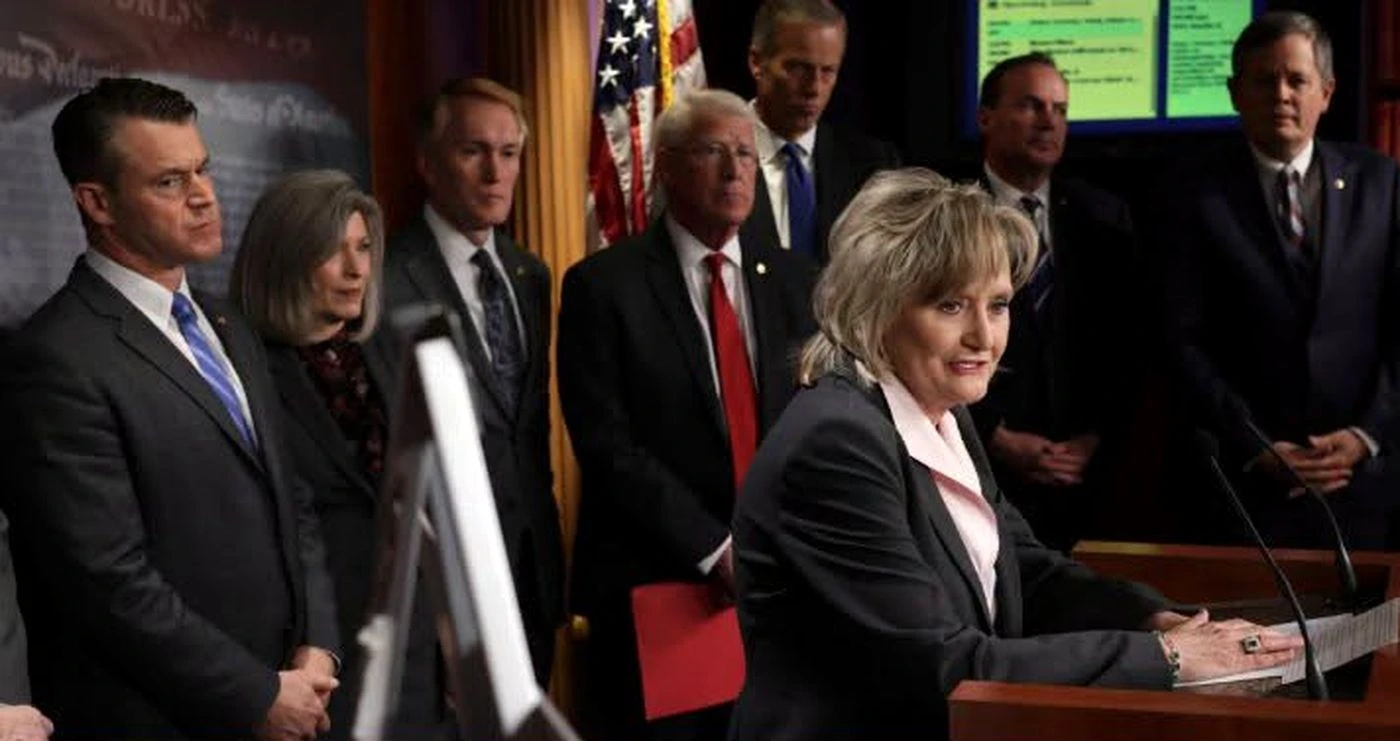
Colom expressed confidence Friday that remaining ballots would confirm his advantage. “I’m ready to accept the results, right? That’s what our democracy is all about,” Colom said, adding that losing candidates “can’t be sore losers; they have to accept the results.” He challenged Hyde-Smith to publicly discuss the state of the race and outline a path to victory.
Hyde-Smith’s campaign maintained a different assessment, stating that “thousands of votes remain to be counted from dozens of Republican counties, and we are confident those votes will reinforce her path to victory.” The campaign declined to concede and continued preparing for scenarios in which late-reported ballots could shift the result.
What This Means
A Colom victory would make him Mississippi’s first Black U.S. senator since Reconstruction and give Democrats another Senate pickup following their capture of the chamber in this week’s elections. Mississippi has not elected a Democrat to the U.S. Senate since 1982, making a Colom win a significant political development in the state.
The state’s election laws could complicate matters if the final margin remains extremely narrow. Unlike many states, Mississippi does not provide an automatic recount in a statewide election based solely on a close margin. Candidates cannot simply request a traditional recount; instead, a losing candidate can examine election materials after certification and potentially pursue a court challenge involving disputed ballots.
The outcome of this race will test how remaining ballots break between the two candidates and whether legal maneuvering by either campaign alters the counting process. The result will clarify whether Republicans can hold a seat they consider essential to their Senate strategy or whether Democrats can expand their majority with an unexpected pickup in a traditionally Republican state.



