A Utah judge on Wednesday rejected a defense request to display all exhibits during a preliminary hearing in Provo, including evidence prosecutors plan to introduce in connection with the fatal shooting of Charlie Kirk during a campus event.
Judge Tony Graf made the ruling during the second day of the preliminary hearing for Tyler Robinson, who is charged in Kirk’s death. The hearing has featured testimony from investigators detailing forensic evidence recovered at the scene.
What Happened
Jennifer Faumina, a sergeant with the Utah Department of Public Safety who was assigned to the State Bureau of Investigation, testified Wednesday about DNA analysis performed on items recovered during the investigation. She presented findings showing that male DNA belonging to Lance Twiggs, Robinson’s romantic partner, was identified on two significant items.
“Male DNA was obtained from item 7-1. Item 7-1 was interpreted as originating from two individuals, one of whom is Twiggs,” Faumina testified. She also noted that a second item, referred to as item 8-1, was similarly interpreted as originating from two individuals, one of whom is Twiggs.
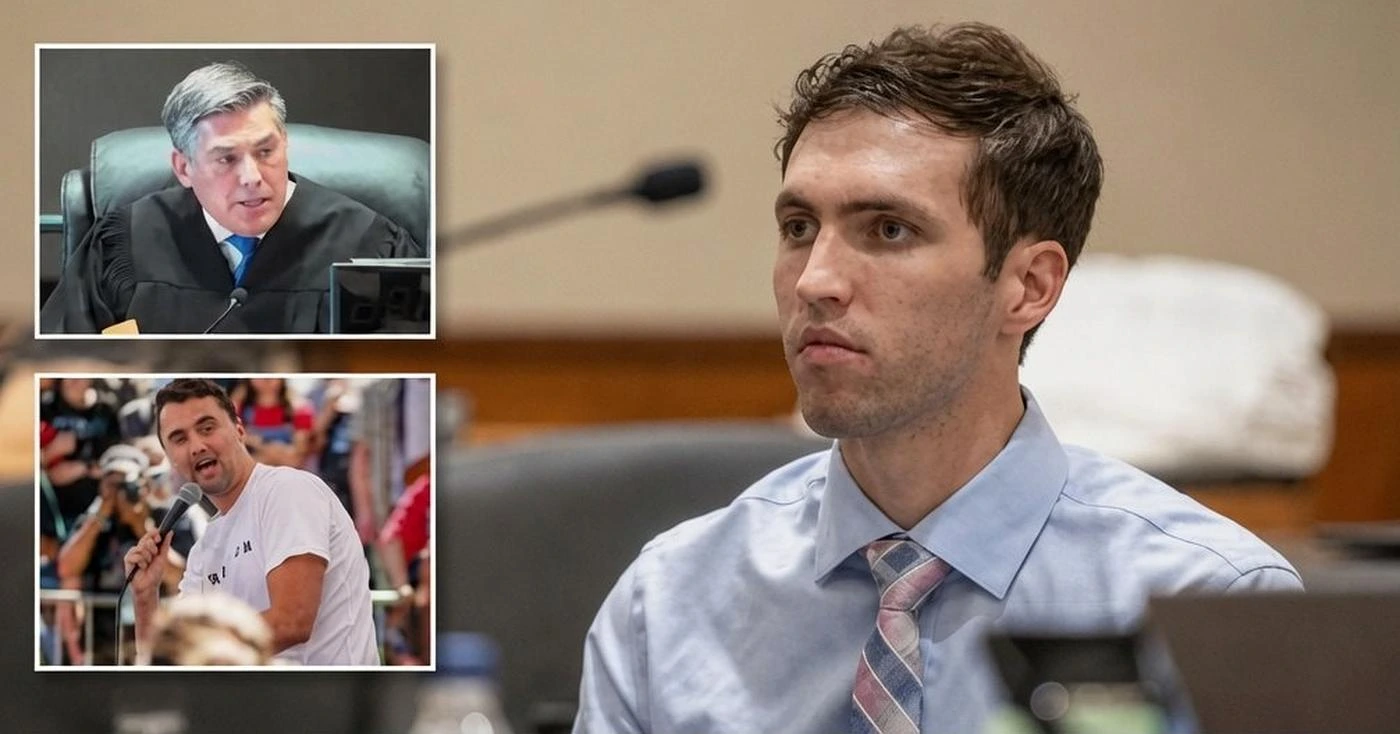
The items in question were a screwdriver recovered from the rooftop of the Losee Center for Student Success and a towel that had been wrapped around the rifle allegedly used in the shooting. FBI forensic examiner Amanda Bakker has testified that Robinson’s DNA profile aligned with a 95 percent contributor to the recovered items, while Twiggs’ DNA aligned with approximately 5 percent.
The Reaction
The defense team sought to compel the court to display all exhibits to the public, a request that Graf denied. The ruling maintains Graf’s earlier approach to managing courtroom access during the proceedings. The defense has repeatedly challenged several of the judge’s pretrial decisions, including rulings on camera access and the admissibility of certain evidence during the preliminary hearing.
Last week, the Utah Supreme Court declined to hear the defense’s appeal of two pretrial rulings by Graf. The state’s highest court found that the defense had not met the threshold for appellate review and denied the motion to stay the proceedings. Graf has maintained authority to decide on a case-by-case basis whether electronic media coverage will be permitted, and he has rejected most defense requests for camera restrictions during hearings.
What This Means
The preliminary hearing continues to move forward with limited restrictions on the prosecution’s ability to present forensic evidence. The judge’s denial of the defense’s exhibit request indicates that the courtroom proceedings will maintain the confidentiality of certain materials while evidence is presented to establish probable cause. Robinson remains charged with Kirk’s death, and prosecutors must demonstrate sufficient evidence to proceed to trial. The case has drawn significant public attention, with ongoing debates over judicial transparency and the scope of courtroom camera access in high-profile proceedings.



